

Loading…
Festival
Aja Ekadashi 2026: Date, Significance & Rituals
Sanatan Sansaar|7 सितंबर 2026|4 मिनट पढ़ें|
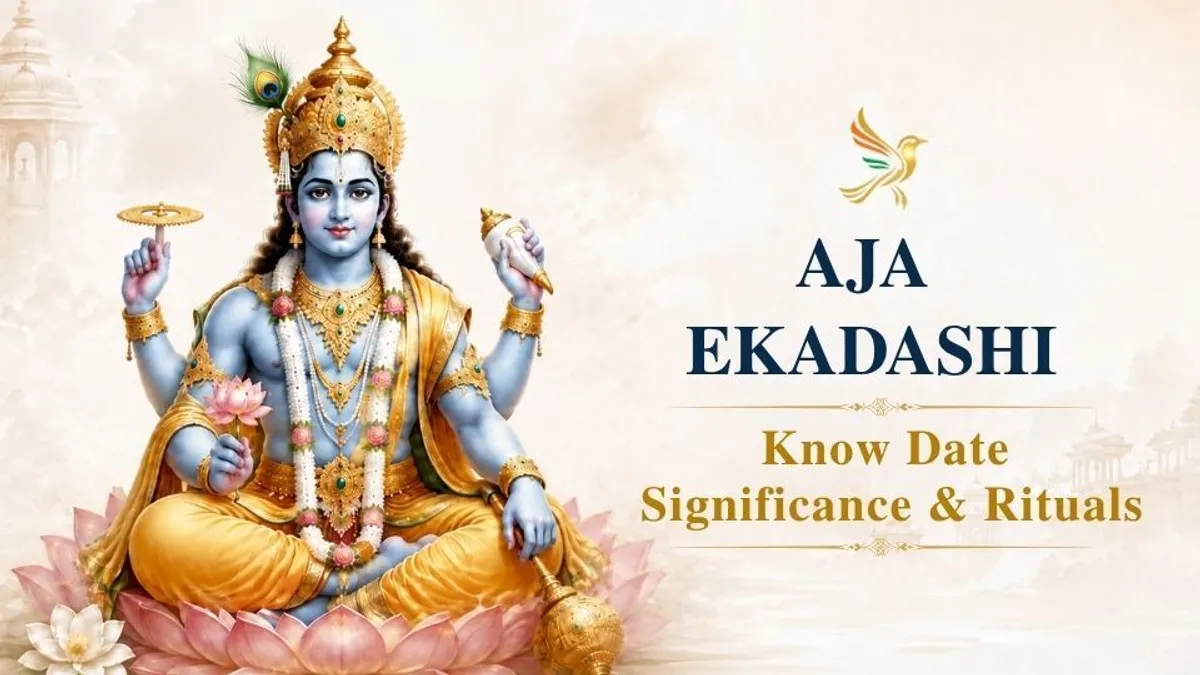
Aja Ekadashi, a.k.a. Annada Ekadashi, will be observed on Monday, September 7, 2026. It falls on the Krishna Paksha Ekadashi of the Bhadrapada month. Devotees observe this sacred vrat with devotion to Bhagwan Vishnu and pray for freedom from past sins and peace.
Aja Ekadashi 2026 Tithi Timings
- Ekadashi Tithi starts at 07:29 PM on September 6, 2026
- Ekadashi Tithi ends at 05:03 PM on September 7, 2026
- Parana (ideal fast breaking time) time: Between 06:10 AM and 08:41 AM on September 8, 2026
- Dwadashi Tithi ends at 02:42 PM on September 8, 2026
Aja Ekadashi Significance
The word “Aja” means “unborn” or “eternal” and refers to the timeless nature of “Bhagwan Vishnu.” This Ekadashi falls during the Krishna Paksha of the Bhadrapada month.
As per Hinduism, “observing the Aja Ekadashi vrat helps seek freedom from past sins and negative karma.” It is also believed to guide the soul towards: “Moksha” and free it from the cycle of birth and death.
King Harishchandra’s life is directly associated with Aja Ekadashi. Not only did his faith save him from his distresses, but it also gave him back his throne. Scriptures also state that listening to or reading the “Aja Ekadashi Vrat Katha” gives spiritual merit equal to that of performing an “Ashwamedha Yajna.”
Not only did his devotion and faith aided him in overcoming his sorrows, but it also helped him to restore his kingdom and achieve peace.
Aja Ekadashi Vrat Katha
King Harishchandra of Ayodhya was famous for his absolute truthfulness, honesty, and steadfast adherence to dharma no matter how challenging the tests were.
One day, King Harishchandra had a dream in which he gave his entire kingdom to Sage Vishwamitra. The following day, sage Vishwamitra appeared at the royal court and requested king Harishchandra to honor the pledge that he made in his dream. Being true to his nature, King Harishchandra gave away his entire kingdom. To pay the required dakshina, he even sold himself, along with his wife, Taramati, and his son, Rohitashva. He became a servant of a “Dom”, the one who was responsible for performing funeral rites in the cremation grounds.
After this, the king began working at a cremation ground. Years passed by and one day, Sage Gautama met him and advised him to observe Aja Ekadashi with devotion to free himself from this suffering. King Harishchandra followed the sage’s advice. On Aja Ekadashi, he fasted and spent the whole night in devotion.
But again, a tragedy struck. During the night, his son was bitten by a snake and died. His wife, who was once a queen, brought their son's lifeless body to the cremation ground. Seeing his son’s lifeless body, King Harishchandra tried to contain his sorrow and asked her for the cremation fee.
Taramati had nothing to offer as the cremation fee, so she tore a piece of her saree to complete her son's last rites. At that moment, Bhagwan Brahma, Bhagwan Vishnu, and Bhagwan Shiv appeared before them and restored their son to life. King Harishchandra also regained his kingdom.
What Devotees Do on Aja Ekadashi?
On Aja Ekadashi, devotees wake up early in the morning, take a bath, and wear clean clothes before beginning the vrat. Many people keep a strict fast without food, while others consume only fruits, milk, and simple sattvic food as part of the phalahar vrat.
Throughout the day, sanatanis worship Bhagwan Vishnu. They offer: “flowers, Tulsi leaves, incense, and diyas.” Many spend time chanting “Om Namo Bhagavate Vasudevaya,” reading Vishnu Sahasranama (1,000 names of Bhagwan Vishnu), or listening to Shri Hari bhajans with devotion.
In the spirit of devotion, many Sanatanis also offer food, clothes, and other essentials to Brahmins and the needy as an act of seva to Shri Hari.
Those who wish to participate in such devotional activities can also explore the sacred Sevas arranged by Sanatan Sansaar on this holy occasion.
Aja Ekadashi Puja Vidhi
- Wake up early, take a bath and wear clean clothes (Yellow-coloured, if possible)
- Prepare the puja area before placing the idol of Bhagwan Vishnu
- Light a ghee diya and offer yellow flowers, Tulsi leaves, fruits, and sweets at the feet of Shri Hari
- Chant “Om Namo Bhagavate Vasudevaya” or read “Aja Ekadashi Vrat Katha”
- Pray to Shri Hari for peace and prosperity
- Spend the night in prayer or bhajan-kirtan
- Break the fast during the prescribed Parana time on September 8
अक्सर पूछे जाने वाले प्रश्न
At what time can I break the Aja Ekadashi vrat?
You can break the fast between 06:10 AM and 08:41 AM on September 8.
Can I drink water during the Aja Ekadashi vrat?
If it's a phalahar vrat, you can drink water and eat permitted vrat foods.
Who is the presiding deity of Aja Ekadashi?
The presiding deity of Aja Ekadashi is: Bhagwan Hrishikesha Hrishikesha is one of the names of Bhagwan Vishnu, which means “the one who is in control of sense.”
What colour clothes are commonly worn on Aja Ekadashi?
Devotees usually wear yellow clothes on Aja Ekadashi. Yellow is traditionally associated with Bhagwan Vishnu.
How can I prepare for Aja Ekadashi?
You can prepare by arranging the essential puja items like: Ganga Jal, Tulsi leaves, diya, and incense, in advance.