

Loading…
Festival
Diwali 2026: Date, Lakshmi Puja Muhurat, 5-Day Calendar, Puja Vidhi & Significance
Sanatan Sansaar|4 नवंबर 2026|9 मिनट पढ़ें|
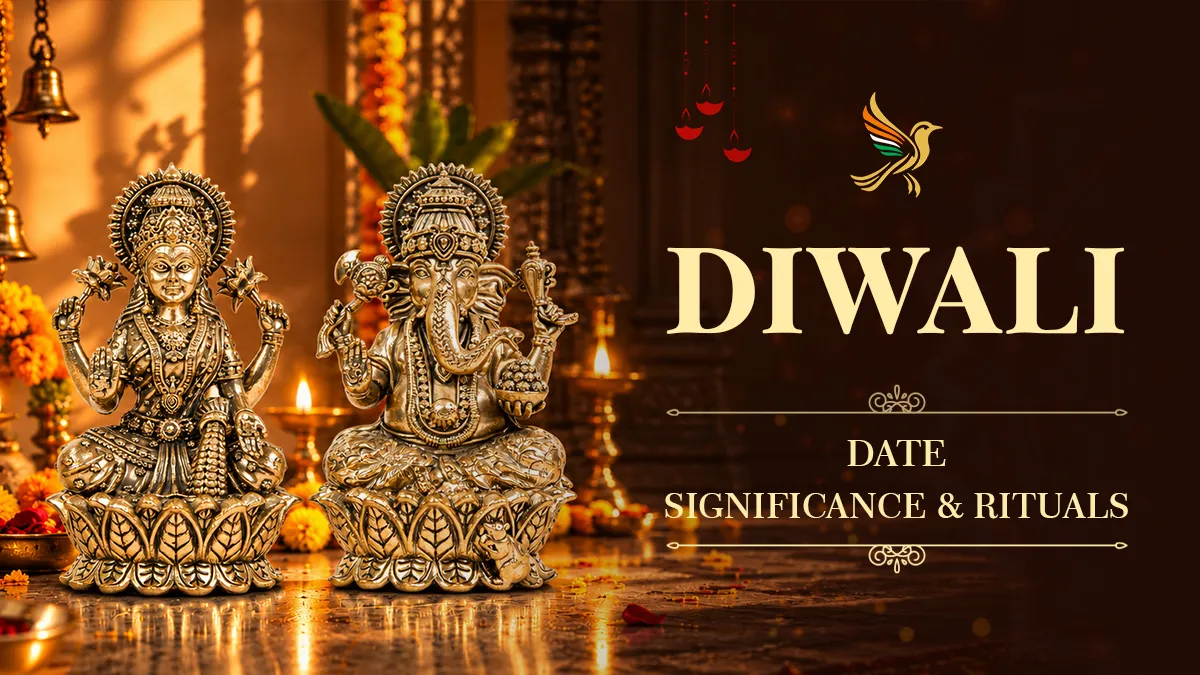
A unique form of silence precedes Diwali. The houses are cleaned, the entrances adorned, sweetmeats prepared and all is held up for one thing - Light!
Diwali in 2026, Deepavali being the more popular name, will be the festival of light, joy, rejuvenation, and prosperity. This will be the time when crores of people will light the diyas, worship Goddess Lakshmi and Lord Ganesha, and invite prosperity and joy into their home.
All the information that you would need about Diwali in 2026 is provided in one place. Find out Diwali 2026 Dates, Lakshmi Puja Muhurta, Five day Diwali Calendar, Vidhi of the Puja, List of Samagri, Mantras, Legends, Regional Customs, Do's & Don'ts, Remedies for a happy Diwali.
Diwali 2026 Date and Time
Diwali will be celebrated on 8 November 2026, which is a Sunday. The festival will be celebrated at the time of Kartik Amavasya (new moon day in Kartik month). The worship of Goddess Lakshmi is done in the evening Pradosh Kaal, which starts after sunset.
| Detail | Diwali 2026 |
| Diwali (Lakshmi Puja) date | Sunday, 8 November 2026 |
| Hindu month | Kartik (Purnimanta) |
| Tithi | Amavasya (new moon) |
| Pradosh Kaal (New Delhi) | Approx. 5:25 PM to 8:02 PM |
| Lakshmi Puja muhurat (New Delhi) | Approx. 5:32 PM to 7:28 PM (Vrishabha / Taurus Lagna) |
| Main deities worshipped | Goddess Lakshmi, Lord Ganesha, Goddess Saraswati and Lord Kubera |
Please note: Muhurat timings depend on your city's sunset and the Panchang you follow, so different sources show a difference of a few minutes. Always confirm the exact Lakshmi Puja muhurat for your city with a local Panchang or your family pandit.
Diwali 2026 Five-Day Calendar
Diwali is not one day but a five-day festival. Each day has its own meaning and ritual.
| Day | Festival | Date (2026) | What It Means |
| Day 1 | Dhanteras (Dhantrayodashi) | Friday, 6 November | Buying gold, silver, utensils and new items; worship of Lord Dhanvantari, Lakshmi and Kubera |
| Day 2 | Naraka Chaturdashi (Choti Diwali) | 7 November (some Panchangs show the early morning of 8 November) | Victory of good over evil; early morning oil bath; diyas lit in the evening |
| Day 3 | Diwali (Lakshmi Puja) | Sunday, 8 November | Main festival; Lakshmi-Ganesh puja, diyas, rangoli, fireworks and family gatherings |
| Day 4 | Govardhan Puja (Annakut) and Padwa | 9 or 10 November (varies by Panchang) | Worship of Lord Krishna and Govardhan hill; offering of Annakut |
| Day 5 | Bhai Dooj | 10 or 11 November (varies by Panchang) | Celebrates the bond between brothers and sisters |
Because the Amavasya tithi stretches across two days in 2026, Day 4 and Day 5 dates can differ by region. Check your local Panchang before planning.
What Is Diwali?
Diwali comes from the Sanskrit term Deepavali which means 'a string of lamps'. It signifies triumph of light over darkness, knowledge over ignorance and good over evil. The festival is celebrated by Hindus, Jains, Sikhs and Buddhists across the globe each having their own unique significance.
For the majority of Hindu households, Diwali is the night for Goddess Lakshmi, the bestower of wealth and Lord Ganesha, the obstacle remover. Both together bring blessings of prosperity and wisdom into one's house.
Significance of Diwali
Diwali is a festival as well as an emotion. The importance of Diwali lies in the following points:
A fresh start:- Houses are cleaned, debt is paid off and fresh resolutions are set. For many people, Diwali is the beginning of a new financial year.
Worshiping Lakshmi:- It is considered that the Goddess Lakshmi will visit houses which are cleaned and well-lighted and peaceful.
Light wins over darkness:- The lighting of diya is an indication to get rid of negative thoughts, fears and ignorance.
Unity:- People gather together at one place and enjoy each other’s company by having sweets and exchanging gifts.
Gratitude:- It is time to thank Almighty for all the blessings bestowed upon us during the past year.
Legends Behind Diwali
There are numerous stories associated with Diwali:
The return of Lord Rama. Lord Rama returned back to Ayodhya with Sita and Lakshmana after spending 14 years in exile. He killed Ravana in this period of time and he was greeted by rows of lamps lit across Ayodhya.
The birth of Goddess Lakshmi. Goddess Lakshmi was born on the day when the churning of the ocean took place, according to Puranas.
Lord Krishna and the defeat of Narakasura. Lord Krishna freed thousands of people from the rule of Narakasura.
The banishment of King Bali to the netherworld by Lord Vamana, who is Lord Vishnu in disguise. This event is celebrated during Diwali.
Return of Pandavas to Hastinapur after 14 years of exile. In some versions of the festival.
The celebration of nirvana of Lord Mahavira by Jains. For Sikhs, it marks the day when Guru Hargobind Ji got released from prison.
Diwali Lakshmi Puja Vidhi (Step by Step)
Here are the steps for the Diwali Lakshmi-Ganesh Puja that can be performed at home.
Cleaning and decorating the house. Do complete cleaning of the house and make decorations at the entrance of the house using rangoli and a toran made up of mango leaves and marigold and make sure that the front door is brightly decorated.
Making the altar. Put a new red/yellow cloth on an elevated platform and set the idols/pictures of goddess lakshmi, lord ganesh and if you wish then goddess saraswati and lord kubera.
Start in muhurat. Take a bath, change the clothes, and sit facing the east/north direction ideally during Pradosh Kaal muhurat.
Take a sankalp. Keep water in the right hand and take the vow to do this puja wholeheartedly for peace, good health, and prosperity.
Worshipping the lord Ganesh. Offer Durva, flowers, sweets, and roli and get his blessings to get all the obstacles away.
Worshipping the goddess Lakshmi. Offer Lotus/Red flowers, Kumkum, Akshat (rice), sweets, fruits, coins, and betel leaves and light a ghee lamp.
Chanting the mantras. Chant the Lakshmi and Ganesha mantras with a calm mind (given below).
Prasad se vandhan daalna aur aarti karna. Prasad mein meetha, makhana, batasha aur phale daal kar Lakshmi ji aur Ganesha ji ki aarti karna.
Diyaye jalaana. Diya jalana puja mandapa, ghar ke door darwaza, khana, chowk, tulsi ke patta aur ghar ke har jagah.
Prasad shares karna. Prasad share karna parivaar ke members aur neibours se lekar bade walo se benti lena.
Diwali Puja Samagri List
Idols or pictures of Lakshmi, Ganesha (and Saraswati, Kubera if desired)
Red or yellow cloth and a wooden platform (chowki)
Roli, kumkum, turmeric, akshat (rice) and sandalwood paste
Lotus or marigold flowers, garlands and durva grass
Ghee, cotton wicks and clay diyas
Incense sticks, camphor and a puja thali
Coins, a silver coin or Lakshmi-Ganesh coin
Betel leaves, betel nuts, cloves and cardamom
Fruits, makhana, batasha, sweets and dry fruits
A kalash (pot) with water, mango leaves and a coconut
Powerful Mantras for Diwali Puja
ॐ श्रीं ह्रीं श्रीं कमले कमलालये प्रसीद प्रसीद ॐ श्रीं ह्रीं श्रीं महालक्ष्म्ये नमः (Lakshmi mantra)
ॐ गं गणपतये नमः (Ganesha mantra)
ॐ महालक्ष्म्यै च विद्महे विष्णुपत्न्यै च धीमहि तन्नो लक्ष्मीः प्रचोदयात् (Lakshmi Gayatri)
ॐ यक्षाय कुबेराय वैश्रवणाय धनधान्याधिपतये धनधान्यसमृद्धिं मे देहि दापय स्वाहा (Kubera mantra)
Chant each mantra 11, 21 or 108 times with a rosary for the best focus.
Diwali Decoration Ideas: Welcome Lakshmi in Style
Rangoli
Diya
Toran
Lights and Lanterns
Flowers
Do
Clean and tidy up your house before Diwali
Conduct the puja at the time of Pradosh Kaal muhurat
Make the main entrance bright and welcoming
Wear fresh and colorful clothes to perform the puja
Distribute sweets and gifts among family members and others
Ask for the blessing of the elders
Use diyas with ghee or sesame oil
Maintain positive vibes inside and outside you\
Don’t
Don’t keep your house dark or dirty during Diwali night
Don’t quarrel, tell lies, or be rude on such an auspicious day
Don’t drink or eat non-vegetarian food on the day of puja
Don’t gamble in the name of tradition or borrow money for celebrations
Don’t explode firecrackers unnecessarily; the safety of kids, animals, and elders is more important than anything else
Don’t turn away anybody who comes to your door
Simple Diwali Remedies for Wealth and Peace
Light ghee diya at the main door and puja room to invite Goddess Lakshmi.
Make sure that your house is clean and bright, especially the northeast side, the entrance and kitchen.
Put Shree Yantra or Lakshmi-Ganesh idol in the puja room and pray to it sincerely.
Give white sweets and kheer to Goddess Lakshmi as she loves it.
Give donations of food, clothing, lamps or sweet items to the poor on Diwali.
Recite Lakshmi mantra 108 times in the Pradosh Kaal.
Provide food to cows and sweets to children; this is a lucky act.
If you have any business, perform Chopda Pujan, and begin a fresh financial year after praying.
Diwali Traditions Across India
North India: Puja of Goddess Lakshmi & Lord Ganesh, lighting diyas, crackers, sweets, and card games in certain families.
West India (Gujarat and Maharashtra): Chopda Pujan, the beginning of a New Year (Bestu Varas in Gujarat) and Lakshmi Pujan.
South India: Oil Bath Ceremony followed by wearing new clothes, sweets, and crackers during the celebration of Diwali.
East India (Bengal and Orissa): Kali Puja performed on the Diwali night in Orissa; worshipping of ancestors with lights.
Throughout the world: Celebrations by Hindus in the UK, USA, Canada, Singapore, Mauritius, and other places across the globe.
Diwali 2026 and Astrology
From the astrological perspective, Diwali occurs during Kartik Amavasya when the moon is invisible and the night is dark. The Pradosh Kaal along with Vrishabha (Taurus) Lagna forms the most favorable time for performing the Lakshmi Puja. The reason being that when the lagna is fixed, then prosperity and fortune remain fixed at the household level. This is why many households perform new activities after this puja because it marks the beginning of something new.
अक्सर पूछे जाने वाले प्रश्न
When is Diwali in 2026?
Diwali 2026 is observed on Sunday, 8 November 2026.
What is the Lakshmi Puja Muhurat on Diwali 2026?
The Lakshmi Puja Muhurat is between 5:32 PM to 7:28 PM in Pradosh Kaal for New Delhi. However, timings may differ according to different cities and Panchangs. So, please refer to your local Panchang.
What is the day of Diwali and Dhanteras in 2026?
Diwali is observed on Sunday, 8 November. Dhanteras falls on Friday, 6 November, two days before Diwali.
Who are the Gods worshipped on Diwali?
Goddess Lakshmi and Lord Ganesha are the principal deities worshipped on Diwali. Many households also worship Goddess Saraswati and Lord Kubera.
Why is Diwali celebrated?
It is celebrated because it marks the victory of light over darkness and good over evil. It is associated with the return of Lord Rama to Ayodhya, the birth of Goddess Lakshmi, and Lord Krishna's victory over Narakasura.