Free shipping above ₹999

Sanatan SansaarSanatan SansaarSanatan Sansaar
Home
Sanatan Bazaar
Sanatan PujaSanatan Seva
Offers
About UsSanatanClub
Consult an Astrologer
  1. Home
  2. Sanskar
  3. Does Bhagwan Vishnu Really Sleep During Chaturmas

When Does Chaturmas Begin and End?

Chaturmas is considered a sacred period of 4 months. It begins on Ashadha Shukla Ekadashi, which is called Devshayani Ekadashi. And it ends on Kartik Shukla Ekadashi, which is called Devuthani Ekadashi or Prabodhini Ekadashi.

This is the very time when the rainy season is at its height. Nature slows down. Travel becomes less frequent. A kind of stillness enters life. And it is precisely this stillness that becomes the finest opportunity for sadhana. Chaturmas reminds us that life is not only about constantly rushing forward. Sometimes it is necessary to pause and reflect on our thoughts, our actions, our dharma, and our devotion.

What Does Bhagwan Vishnu's Yoga Nidra Mean?

Bhagwan Vishnu is worshipped as the sustainer of the universe. He is connected with the balance of creation, the protection of dharma, and his grace upon devotees.

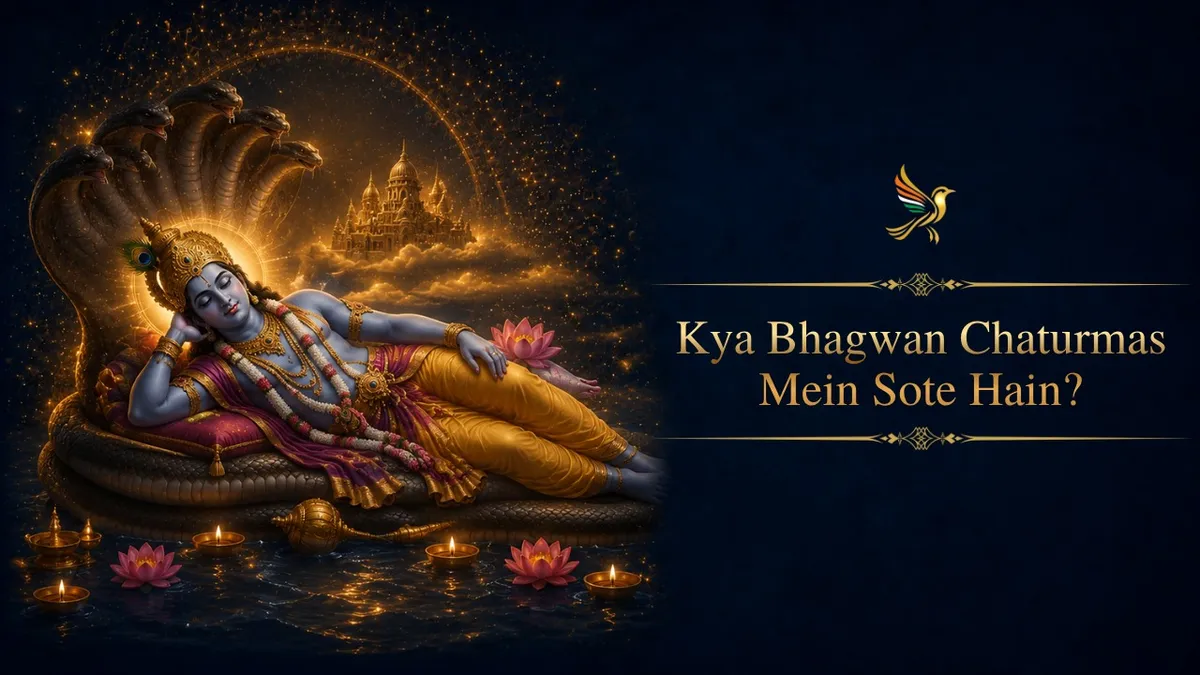
When it is said that Bhagwan Vishnu enters Yoga Nidra during Chaturmas, it does not mean that he withdraws from the world. Yoga Nidra is not ordinary sleep. It is a spiritual state, a condition of divine consciousness. Bhagwan appears to be at rest from the outside, but his power and grace remain fully present in the world.

This is the greatest teaching of Chaturmas. Bhagwan's sleep tells the devotee life is not only about celebration, running forward, and acquiring things. Sometimes it is necessary to stop, look within, and pay attention to what we eat, what we think, how we behave, and what we do. 

Why Are Auspicious Activities Avoided During Chaturmas?

Many people ask this question. According to tradition, weddings, housewarming ceremonies, mundan, and other auspicious activities are generally avoided during this time. But the reason is not that this period is inauspicious.

Chaturmas is traditionally regarded as a period dedicated more to inner sadhana than outward celebrations. During this period, vrat, jap, path, daan, seva, and the worship of Bhagwan Vishnu are given greater importance. So Chaturmas should be understood not as a time of fear but as a time of restraint and inner reflection. And remember this too: Puja does not stop during Chaturmas. In fact, devotion, Jap, vrat, and sadhana are given even greater importance during this time.

Why Do Saints and Sages Stay in One Place During Chaturmas?

In Sanatan tradition, Chaturmas has a very deep connection with saints and sages. In ancient times, saints and sages would travel throughout the year, spreading dharma, going on pilgrimages, and moving from place to place. But during the rainy season, travel became difficult. Small creatures were more abundant on the ground, paths became hard to navigate, and travel could also cause harm to nature.

For this reason, saints and sages traditionally stayed in one place during Chaturmas—doing sadhana, holding satsang, discussing the scriptures, and guiding devotees. This created an atmosphere of dharma, knowledge, and spiritual practice throughout society. This aspect of Chaturmas also teaches us compassion towards nature and sensitivity towards all forms of life.

What Do Devotees Do During Chaturmas?

Chaturmas is considered a time of special significance for the worship of Bhagwan Vishnu. Devotees recite Vishnu Sahasranama, remember Bhagwan Narayan, offer puja to Tulsi Mata, and observe the Ekadashi vrat. Many people take on certain personal disciplines during this period. Some adopt sattvic food, some give up something they are attached to, some do mantra japa every day, and some take a resolve of seva and dan.

The purpose of Chaturmas is not to cause hardship to the body; it is to cultivate discipline in the mind.

✦ Remember Bhagwan Vishnu.

✦ Recite Vishnu Sahasranama or the names of Bhagwan Narayan.

✦ Offer water to Tulsi Mata.

✦ Observe the Ekadashi vrat.

✦ Help those who are in need.

✦ Adopt sattvic food and a disciplined way of living.

✦ Make an effort to stay away from anger, harsh words, and harmful habits.

The Story of Vaman Avatar and Raja Bali

There is also a story connected with Chaturmas that relates to the Vaman avatar and Raja Bali. It is believed that Bhagwan Vishnu, in the form of Vaman, asked Raja Bali for 3 paces of land. With 2 paces, Bhagwan measured the earth and the heavens. For the third pace, Raja Bali offered his own head.

Pleased by his devotion and surrender, Bhagwan Vishnu blessed him. In some traditions, it is believed that during Chaturmas, Bhagwan Vishnu resides in the realm of Raja Bali. This story tells us that Bhagwan is deeply pleased by devotion, generosity, and surrender.

Does Puja Diminish During Chaturmas?

This is a common misunderstanding. Puja does not diminish during Chaturmas; it deepens. Jap, vrat, daan, and sadhana are given even greater importance during this time. This is not a time to move away from Bhagwan; it is a time to move closer to him.

Auspicious ceremonies may be set aside, but the path of devotion and seva remains wide open. If you understand Chaturmas only through its words, the idea that Bhagwan sleeps may seem puzzling. But if you understand it through its feeling, the meaning becomes very beautiful.

The Spiritual Message of Chaturmas

Chaturmas teaches us that when Bhagwan is in Yoga Nidra, the devotee too should bring their senses under restraint. Just as Bhagwan rests peacefully in the Ksheer Sagar, so too should the devotee bring their mind to a place of peace. Just as Bhagwan's sleep signals a rest from outward activity, so too should the devotee turn their attention to the sadhana within.

In today's world, this teaching has become even more necessary. We are running constantly. Between work, worry, distraction, comparison, and endless desires, the mind is becoming more and more unsettled. In such times, Chaturmas reminds us a sacred pause in life is essential. Some time must be kept for oneself, for one's dharma, for the values of one's family and for the remembrance of Bhagwan.

The Feeling Behind Sanatan Sansaar

This is what we try to do at Sanatan Sansaar. To bring Sanatan traditions to people not through fear or confusion but through right knowledge, devotion, and simple understanding. Chaturmas is not a time to be feared. It is a sacred period through which Bhagwan Vishnu's Yoga Nidra sends devotees the message of restraint, devotion, and inner reflection.

Chaturmas teaches us that by taking a small step back from outward activity, we should awaken the devotion within. This is the beauty of Sanatan, where every tradition shows a way to bring life into balance.

A Final Word

Bhagwan does not sleep during Chaturmas the way human beings do. He enters Yoga Nidra, and this Yoga Nidra is a symbol of divine consciousness. It is a spiritual signal that awakens the devotee.

Chaturmas teaches us that sometimes in life, we must pause from the outward rush and make a journey inward. We should deepen our devotion. We should practice restraint. We should serve. And we should turn our mind towards the feet of Bhagwan.

This is the true meaning of Chaturmas. Bhagwan's sleep is meant to awaken the devotee. When Bhagwan Vishnu enters Yoga Nidra, the awakening of devotion, sadhana, and inner reflection begins within the devotee.


Frequently Asked Questions

Does Bhagwan Vishnu really sleep during Chaturmas?

According to Sanatan belief, Bhagwan Vishnu enters Yoga Nidra from Devshayani Ekadashi. This is not ordinary sleep; it is considered a divine and spiritual state.

When does Chaturmas begin?

Chaturmas generally begins on Ashadha Shukla Ekadashi, which is Devshayani Ekadashi.

When does Chaturmas end?

Chaturmas ends on Kartik Shukla Ekadashi, which is known as Devuthani Ekadashi or Prabodhini Ekadashi.

Why are auspicious activities avoided during Chaturmas?

Chaturmas is considered a time for devotion, vrat, daan, restraint, and inner reflection rather than outward auspicious celebrations. This is why weddings and other auspicious activities are generally avoided.

Is Chaturmas an inauspicious time?

No. Chaturmas is not an inauspicious time. It is considered a sacred period of sadhana, devotion, and restraint.

Which puja should one do during Chaturmas?

During Chaturmas, the worship of Bhagwan Vishnu, recitation of Vishnu Sahasranama, Tulsi puja, the Ekadashi vrat, daan, and jap are considered especially significant.

Does puja stop during Chaturmas?

No. Puja does not stop during Chaturmas. During this time, devotion, vrat, jap, path, and seva are given even greater importance.

Does Bhagwan Vishnu Really Sleep During Chaturmas?
Stories

Does Bhagwan Vishnu Really Sleep During Chaturmas?

This question has perhaps crossed your mind too, at some point. In Sanatan Dharma, behind every festival, every vrat, and every tradition, there is not merely a religious rule. There is a deep feeling that helps us understand life. Chaturmas is one such tradition, and the moment you hear about it, questions begin to arise.

Does Bhagwan Vishnu really sleep for 4 months? If he sleeps, what happens to this world? And if he enters Yoga Nidra, why are auspicious activities avoided during this time? According to many Sanatan (especially Vaishnava) traditions, Bhagwan Vishnu enters Yoga Nidra from Devshayani Ekadashi until Devuthani Ekadashi. This 4-month period is called Chaturmas.

But one thing is very important to understand here. Bhagwan Vishnu's sleep is not like that of human beings. He does not sleep out of tiredness. His yoga nidra is a divine state, a spiritual symbol that shows devotees the path of restraint, sadhana, inner reflection, and devotion.

Sanatan Sansaar|24 July 2026|8 min read|

When Does Chaturmas Begin and End?

Chaturmas is considered a sacred period of 4 months. It begins on Ashadha Shukla Ekadashi, which is called Devshayani Ekadashi. And it ends on Kartik Shukla Ekadashi, which is called Devuthani Ekadashi or Prabodhini Ekadashi.

This is the very time when the rainy season is at its height. Nature slows down. Travel becomes less frequent. A kind of stillness enters life. And it is precisely this stillness that becomes the finest opportunity for sadhana. Chaturmas reminds us that life is not only about constantly rushing forward. Sometimes it is necessary to pause and reflect on our thoughts, our actions, our dharma, and our devotion.

What Does Bhagwan Vishnu's Yoga Nidra Mean?

Bhagwan Vishnu is worshipped as the sustainer of the universe. He is connected with the balance of creation, the protection of dharma, and his grace upon devotees.

When it is said that Bhagwan Vishnu enters Yoga Nidra during Chaturmas, it does not mean that he withdraws from the world. Yoga Nidra is not ordinary sleep. It is a spiritual state, a condition of divine consciousness. Bhagwan appears to be at rest from the outside, but his power and grace remain fully present in the world.

This is the greatest teaching of Chaturmas. Bhagwan's sleep tells the devotee life is not only about celebration, running forward, and acquiring things. Sometimes it is necessary to stop, look within, and pay attention to what we eat, what we think, how we behave, and what we do. 

Why Are Auspicious Activities Avoided During Chaturmas?

Many people ask this question. According to tradition, weddings, housewarming ceremonies, mundan, and other auspicious activities are generally avoided during this time. But the reason is not that this period is inauspicious.

Chaturmas is traditionally regarded as a period dedicated more to inner sadhana than outward celebrations. During this period, vrat, jap, path, daan, seva, and the worship of Bhagwan Vishnu are given greater importance. So Chaturmas should be understood not as a time of fear but as a time of restraint and inner reflection. And remember this too: Puja does not stop during Chaturmas. In fact, devotion, Jap, vrat, and sadhana are given even greater importance during this time.

Why Do Saints and Sages Stay in One Place During Chaturmas?

In Sanatan tradition, Chaturmas has a very deep connection with saints and sages. In ancient times, saints and sages would travel throughout the year, spreading dharma, going on pilgrimages, and moving from place to place. But during the rainy season, travel became difficult. Small creatures were more abundant on the ground, paths became hard to navigate, and travel could also cause harm to nature.

For this reason, saints and sages traditionally stayed in one place during Chaturmas—doing sadhana, holding satsang, discussing the scriptures, and guiding devotees. This created an atmosphere of dharma, knowledge, and spiritual practice throughout society. This aspect of Chaturmas also teaches us compassion towards nature and sensitivity towards all forms of life.

What Do Devotees Do During Chaturmas?

Chaturmas is considered a time of special significance for the worship of Bhagwan Vishnu. Devotees recite Vishnu Sahasranama, remember Bhagwan Narayan, offer puja to Tulsi Mata, and observe the Ekadashi vrat. Many people take on certain personal disciplines during this period. Some adopt sattvic food, some give up something they are attached to, some do mantra japa every day, and some take a resolve of seva and dan.

The purpose of Chaturmas is not to cause hardship to the body; it is to cultivate discipline in the mind.

✦ Remember Bhagwan Vishnu.

✦ Recite Vishnu Sahasranama or the names of Bhagwan Narayan.

✦ Offer water to Tulsi Mata.

✦ Observe the Ekadashi vrat.

✦ Help those who are in need.

✦ Adopt sattvic food and a disciplined way of living.

✦ Make an effort to stay away from anger, harsh words, and harmful habits.

The Story of Vaman Avatar and Raja Bali

There is also a story connected with Chaturmas that relates to the Vaman avatar and Raja Bali. It is believed that Bhagwan Vishnu, in the form of Vaman, asked Raja Bali for 3 paces of land. With 2 paces, Bhagwan measured the earth and the heavens. For the third pace, Raja Bali offered his own head.

Pleased by his devotion and surrender, Bhagwan Vishnu blessed him. In some traditions, it is believed that during Chaturmas, Bhagwan Vishnu resides in the realm of Raja Bali. This story tells us that Bhagwan is deeply pleased by devotion, generosity, and surrender.

Does Puja Diminish During Chaturmas?

This is a common misunderstanding. Puja does not diminish during Chaturmas; it deepens. Jap, vrat, daan, and sadhana are given even greater importance during this time. This is not a time to move away from Bhagwan; it is a time to move closer to him.

Auspicious ceremonies may be set aside, but the path of devotion and seva remains wide open. If you understand Chaturmas only through its words, the idea that Bhagwan sleeps may seem puzzling. But if you understand it through its feeling, the meaning becomes very beautiful.

The Spiritual Message of Chaturmas

Chaturmas teaches us that when Bhagwan is in Yoga Nidra, the devotee too should bring their senses under restraint. Just as Bhagwan rests peacefully in the Ksheer Sagar, so too should the devotee bring their mind to a place of peace. Just as Bhagwan's sleep signals a rest from outward activity, so too should the devotee turn their attention to the sadhana within.

In today's world, this teaching has become even more necessary. We are running constantly. Between work, worry, distraction, comparison, and endless desires, the mind is becoming more and more unsettled. In such times, Chaturmas reminds us a sacred pause in life is essential. Some time must be kept for oneself, for one's dharma, for the values of one's family and for the remembrance of Bhagwan.

The Feeling Behind Sanatan Sansaar

This is what we try to do at Sanatan Sansaar. To bring Sanatan traditions to people not through fear or confusion but through right knowledge, devotion, and simple understanding. Chaturmas is not a time to be feared. It is a sacred period through which Bhagwan Vishnu's Yoga Nidra sends devotees the message of restraint, devotion, and inner reflection.

Chaturmas teaches us that by taking a small step back from outward activity, we should awaken the devotion within. This is the beauty of Sanatan, where every tradition shows a way to bring life into balance.

A Final Word

Bhagwan does not sleep during Chaturmas the way human beings do. He enters Yoga Nidra, and this Yoga Nidra is a symbol of divine consciousness. It is a spiritual signal that awakens the devotee.

Chaturmas teaches us that sometimes in life, we must pause from the outward rush and make a journey inward. We should deepen our devotion. We should practice restraint. We should serve. And we should turn our mind towards the feet of Bhagwan.

This is the true meaning of Chaturmas. Bhagwan's sleep is meant to awaken the devotee. When Bhagwan Vishnu enters Yoga Nidra, the awakening of devotion, sadhana, and inner reflection begins within the devotee.

FAQs

Does Bhagwan Vishnu really sleep during Chaturmas?

According to Sanatan belief, Bhagwan Vishnu enters Yoga Nidra from Devshayani Ekadashi. This is not ordinary sleep; it is considered a divine and spiritual state.

When does Chaturmas begin?

Chaturmas generally begins on Ashadha Shukla Ekadashi, which is Devshayani Ekadashi.

When does Chaturmas end?

Chaturmas ends on Kartik Shukla Ekadashi, which is known as Devuthani Ekadashi or Prabodhini Ekadashi.

Why are auspicious activities avoided during Chaturmas?

Chaturmas is considered a time for devotion, vrat, daan, restraint, and inner reflection rather than outward auspicious celebrations. This is why weddings and other auspicious activities are generally avoided.

Is Chaturmas an inauspicious time?

No. Chaturmas is not an inauspicious time. It is considered a sacred period of sadhana, devotion, and restraint.

Which puja should one do during Chaturmas?

During Chaturmas, the worship of Bhagwan Vishnu, recitation of Vishnu Sahasranama, Tulsi puja, the Ekadashi vrat, daan, and jap are considered especially significant.

Does puja stop during Chaturmas?

No. Puja does not stop during Chaturmas. During this time, devotion, vrat, jap, path, and seva are given even greater importance.

Sanatan Sansaar

Reviving Dharma through Seva, Knowledge & Tradition.

Authentic Wisdom
Community Driven
Rooted in Tradition
Trusted & Secure
Our Services
  • Sanatan Bazaar
  • Sanatan Puja
  • Sanatan Seva
  • Divya Jyotish
  • Vedic Vaastu
  • Temples
  • Events
Quick Links
  • Home
  • About Us
  • Contact Us
Legal
  • Disclaimer
  • Terms and Conditions
  • Privacy Policy
  • Refund, Return & Cancellation Policy
  • Shipping Policy
Connect With Us

Building No.2, Adjacent to Janak Cinema, C-Block Jankpuri, Pankha Road

New Delhi

Mon–Sat: 9:00 AM – 6:00 PM

FREE ON APP

Get Your Free Kundali Report on the App

Download the app to save your kundali and explore more personalized astrology insights.

Download on theApp StoreGet it onGoogle Play
© 2026 Synonyms Online Pvt. Ltd. All Rights Reserved.ॐMade withfor Dharma & Devotees