
Sanatan SansaarSanatan SansaarSanatan Sansaar
होम
सनातन बाज़ार
सनातन पूजासनातन सेवासनातन उपहार
हमारे बारे मेंसनातनक्लब
ज्योतिषी से परामर्श करें
  1. होम
  2. संस्कार
  3. Little Souls Timeless Wisdom Rediscovering Childhood Through Sanatan Dharma
Loading…
Sanatan Sansaar

सेवा, ज्ञान और परंपरा के माध्यम से धर्म को पुनर्जीवित करना.

प्रामाणिक ज्ञान
समुदाय संचालित
परंपरा में निहित
विश्वसनीय और सुरक्षित
हमारी सेवाएं
  • सनातन बाज़ार
  • सनातन पूजा
  • सनातन सेवा
  • दिव्य ज्योतिष
  • वैदिक वास्तु
  • मंदिर
  • आयोजन
त्वरित लिंक
  • होम
  • हमारे बारे में
  • संपर्क करें
कानूनी
  • अस्वीकरण
  • सेवा की शर्तें
  • गोपनीयता नीति
  • रिफंड, वापसी और रद्दीकरण नीति
  • शिपिंग और डिलीवरी नीति
हमसे जुड़ें

बिल्डिंग नं. 2, जनक सिनेमा के पास, सी-ब्लॉक जनकपुरी, पंखा रोड

नई दिल्ली

सोम–शनि: सुबह 9:00 – शाम 6:00

ऐप पर निःशुल्क

ऐप पर अपनी निःशुल्क कुंडली रिपोर्ट पाएं

अपनी कुंडली सहेजने और अधिक व्यक्तिगत ज्योतिष जानकारी पाने के लिए ऐप डाउनलोड करें।

Download on theApp StoreGet it onGoogle Play
© 2026 सिनोनिम्स ऑनलाइन प्राइवेट लिमिटेड ॐबनाया गयाधर्म और भक्तों के लिए
Loading…

Children's Day 2026: Date and Why It Matters

The day is celebrated annually in India on 14th November which is the birthday of Pandit Jawaharlal Nehru and he is fondly called Chacha Nehru as he had a great liking for children. It will fall on 14th November, 2026 on Saturday in 2026.

Detail Children's Day 2026
Name Children's Day (Bal Diwas)
Date in India Saturday, 14 November 2026
Day of the week Saturday (a family-friendly weekend)
Universal Children's Day (UN) 20 November
Theme of this article Rediscovering childhood through Sanatan Dharma

The day is a reminder that children need more than good grades and gadgets. They need roots, values, stories and love, and this is exactly what Sanatan Dharma offers.

Why Sanatan Dharma Speaks So Beautifully to Children

Sanatan Dharma literally means "eternal lifestyle". Sanatani lifestyle is more than the performance of rituals. It is a soft but practical system of living that connects a child to his or her family, to nature, to society, and ultimately to God. This is how Sanatan Dharma is so compatible with childhood:

  • It imparts lessons through tales. Ramayana, Mahabharata, Puranas, Panchatantra and Hitopdesha turn the values into exciting adventures for children.

  • It perceives divinity everywhere. A child learns to respect the Sun, Mother Earth, rivers, forests, the cows and every living thing.

  • It instills gratitude. Starting from thanking one's elders to touching their feet to giving thanks before meals, little practices nurture gratitude.

  • It reveres self-power. Mantra, Meditation, Yoga and Prayer make the child calm, focused and self-assured.

  • It revels in celebrations. From Diwali to Holi, from Janmashtami to Navratri, festivals turn education into celebrations.

  • It encourages questioning. Even the Upanishads have come through questions and answers between a teacher and a student.

The Child in Sanatan Dharma: Little Souls With Big Stories

Some of the most revered heroes of Sanatan Dharma are those who were little kids. Their lives tell us that wisdom knows no age.

  1. Bal Krishna: Fun, pranks, and love. The little Krishna was a butter thief, he played the flute, lifted the Govardhan mountain, and befriended everybody in Gokul.

  2. Prahlad: Devotion unshaken. Though still a boy, Prahlad would continue to remain devoted to Lord Vishnu despite immense terror and threats to his life. He serves as a lesson to stand one's ground calmly and courageously.

  3. Dhruva: Determination. Five-year-old Dhruva would venture into the woods to search for the Lord without giving up till he was satisfied with the achievement.

  4. Nachiketa: Curiousity and valour. Young Nachiketa in the Katha Upanishad asks the great Yamraj some of the most profound questions in life regarding the subject of life and death.

  5. Lord Ganesha: Wisdom and devotion to parents. Ganesha in the famous story illustrates that devotion to parents is the greatest journey of all and explains why Lord Ganesha is so adored by children.

  6. Young Hanuman: Power and Humility. Little Hanuman jumped up to the Sun, considering it to be a fruit. This story teaches us that energy requires direction and strength requires humility.

  7. Luv and Kush: Honesty and Talent. These brothers brought up in the ashram of Sage Valmiki learnt singing along with knowledge and values. They sang Ramayana with boldness.

  8. Ashtavakra: Wisdom greater than looks. Although physically distinct, Ashtavakra was able to beat learned teachers due to his wisdom. This tale shows children that it is their inner qualities that define who they are.

  9. Markandeya: Faith vs. Fear. The child sage Markandeya was blessed with Lord Shiva and he could win over the fear of death through his strong faith.

  10. Abhimanyu: Courage and Knowledge. The brave warrior had known the secrets of war even before coming into the world. This story emphasizes the importance of prenatal learning.

None of these stories require much explaining. They just need to be narrated along with a little questioning.

Sanskaras: Nurturing the Child From the Very Beginning

One of the most amazing concepts of Sanatan Dharma is sanskara, which involves the purification of the person's character through certain rituals and stages of life.

Traditionally, there are 16 sanskaras (Shodasha Sanskaras), and quite many of them are associated with childhood.

Among the most popular sanskaras for children, we can mention:

  • Namakarana: The naming ceremony, during which the child receives a special name with blessings.

  • Annaprashana: The joyous celebration of the child's first grain.

  • Mundan or Chudakarana: The symbolic "fresh start".

  • Karnavedha: The traditional ear piercing.

  • Vidyarambha (Beginning of Learning): The child starts learning alphabets, usually while praying to the Goddess of Knowledge - Saraswati.

  • Upanayana: The sacred thread ceremony traditionally symbolises the beginning of education.

However, what is really important about sanskaras is not only the ritual itself but the intention behind it - namely, the blessing of the child at each step of its life journey.

10 Timeless Values Children Can Learn From Sanatan

  1. Satya (Truth). One of the teachings from the Taittiriya Upanishad is "Satyam vada" (speak the truth). Here's an experiment for you: Praising your kids for speaking the truth even when it may be difficult.

  2. Ahimsa (Non-violence and kindness). Gentle treatment to others by means of one's mind, speech, and deeds. Try doing this: Allow your kids to feed birds, water plants, and even look after an animal.

  3. Reverence to elders and teachers. The teaching of the Upanishads goes like "Matru Devo Bhava, Pitru Devo Bhava, Acharya Devo Bhava". This means respect towards one's mother, father, and teacher. Try doing this: Teach a child namaste or pranam daily to the elder.

  4. Kritagyata (gratitude). Express your thankfulness for the food you've had, the dawn of the day, and also Mother Earth. Try doing this: Say aloud one thing you feel grateful for while having dinner.

  5. Seva (selfless service). Helping other people selflessly, without expecting any reward for oneself. Try doing this: Encourage your children to help in providing food, toys, or clothes to poor people.

  6. Discipline & Focus. Children understand the power of habits through Dinacharya, Yoga, and Mantra. Here’s how to do that: Make a simple fixed morning and evening routine for them.

  7. Humility. Like Hanuman ji - strong but humble. Here’s how to make it work: Teach your child to say thank you and sorry easily.

  8. Kshama (Forgiveness). Being able to forgive and move on from angry moments. Here’s how to make it work: Make your child say sorry after any fight and make peace with hugs.

  9. Love for nature. The Sun, Moon, water bodies, trees, Cows, Mountains are all sacred in Sanatan traditions. Here’s how to make it work: Plant Tulsi or any plant together and make your child take care of it.

  10. Vasudhaiva Kutumbakam (The world is one family). A great slogan which teaches children about accepting people openly. Here’s how to make it work: Celebrate festivals with neighbors and friends from all backgrounds.

Simple Mantras and Shlokas for Kids

Simple chants with a melody are not only easy for kids to learn, but also help them feel relaxed and concentrated. Begin with one or two chants.

  • ॐ (Om): Reciting Om slowly and together is a great way to start and finish your day.

  • Gayatri Mantra: Universal prayer for wisdom and clarity of mind, recited daily by many families in the morning.

  • Saraswati Vandana: Prayer before studying dedicated to Goddess Saraswati who provides knowledge and wisdom.

  • गं गणपतये नमः (Om Gam Ganapataye Namah): Cheerful prayer to Lord Ganesha, who removes all obstacles, before exams or important days.

  • विद्या ददाति विनयं विनयाद् याति पात्रताम् (Vidya dadati vinayam, vinayad yati patratam): Verse from the book of Hitopadesha which means that knowledge gives humility, and humility makes us worthy.

  • Bhojan mantra: Short prayer of gratitude before meals that makes kids respect food.

Tip for parents: Keep it short, sing together, and explain the meaning simply. Children like chants that they understand

A Child-Friendly Daily Routine Inspired by Sanatan Dharma

Children thrive on routines, and Sanatan traditions have simple yet meaningful ones.

Morning

  • Get up early and express gratitude to God for a new day

  • Perform a pranam to your parents and elders

  • Perform some stretches and Surya Namaskar, with parental supervision

  • Chant Om or a prayer together

During the day

  • Say a prayer or express gratitude before meals

  • Focus on your studies at school, learning with enthusiasm

  • Help someone in need or do one kind deed every day

Evening

  • Light a diya or take a trip to your puja corner

  • Sing bhajans or a small aarti

  • Have dinner together, as a family, without using phones

Bedtime

  • Tell a story from Ramayana, Mahabharata, Panchatantra, Puranas

  • Ask a soft question: “What was the best thing that happened today?”

Rituals have more effect on a child’s soul than preaching.

Teaching Sanatan Dharma by Age

Age What works best
2 to 5 years Simple songs, short stories, Om chanting, picture books of Bal Krishna and Ganesha, festival crafts
6 to 9 years Longer stories, easy shlokas, diya lighting, plant care, learning the meaning of festivals, simple yoga
10 to 13 years Discussions on values, Panchatantra and Ramayana themes, Gita-inspired ideas, meditation, seva projects
14 years and above Deeper conversations on dharma, karma and purpose, reading excerpts of the Gita, mentoring younger children

Always follow your child's interests. When learning feels like play, it stays for life.

Learning Through Festivals: Every Celebration Is a Classroom

Celebrating festivals is an easy way to instill Sanatan values.

  • Diwali - “Light prevails over darkness”, cleaning, eating sweets and sharing. Encourage children to make diyas and rangolis.

  • Holi - Colors, forgiveness and friendship. Tell the story of Prahlad to children.

  • Janmashtami- Fun, reverence, and story-telling. Dress up children as Bal Krishna and have them narrate the story.

  • Ganesh Chaturthi - Wisdom and nature care. Create eco-friendly idols of Lord Ganesha.

  • Navratri - Power and strength of the divine feminine. Teach children to respect women.

  • Raksha Bandhan and Bhai Dooj - Bond of siblings. Encourage children to make their own gifts.

  • Govardhan Puja- Thanks to nature and food. Instruct children about the importance of food.

Tips for Parents: How to Share Sanatan Dharma With Joy

  • Lead by example. Kids learn more through observation rather than advice.

  • Tell, don’t preach. Stories always beat sermons.

  • Provide the reason. Give simple explanations to rituals to make them meaningful.

  • Be ready to answer any question. Never ignore curiosity. "Let's find out" is a great answer.

  • Keep it fun. Use music, art, drawing, drama and games.

  • Do it as a family project. Meditate, prepare food, read and have festivals together.

  • Stay away from fear and coercion. Religion is based on love, not force.

  • Respect other ways. The spirit of Sanatan Dharma is tolerance; therefore, teach kids to be tolerant to everybody.

  • Be patient. Values blossom slowly, like a tree.

Fun Children's Day 2026 Activities Inspired by Sanatan Dharma

  • Story circle: Invite family and friends to gather and encourage each child to narrate a story about a heroic child, such as Krishna, Dhruva or Prahlad.

  • Tulsi planting: Plant tulsi or any sapling and name it yourself.

  • Decorate diya and rangoli art: Create rangolis and decorate clay diya with your child.

  • Reciting shloka game: Make your child play an interesting game of reciting shloka and guessing its meaning.

  • Yoga activities: Perform simple stretching exercises and chanting of Om along with breathing techniques in the garden or at home.

  • Seva activity: Pack some goodies or snacks and share them with some needy individual.

  • Thank you messages: Every day write down at least one thank you message for the gratitude jar.

  • Dressing up activity: Encourage your children to dress up as Bal Krishna, Ganesha, Hanuman or Sita and enact something.

  • Cooking: Cook a simple prasad such as kheer or ladoo and offer them as prasad along with a prayer.

Gift Ideas for Children's Day With a Meaningful Touch

Every gift for Children’s Day should come with a bit of luck as well. Pick up gifts which are age appropriate and interesting, such as:

  • Illustrated books on the stories of Bal Krishna, Hanuman, Ganesha and Panchatantra

  • An idol or picture of your child’s favourite deity to place in his/her study

  • A Mantra/ Shloka Book with meanings and pictures

  • Craft sets for making diyas, rangolis and clay idols

  • A plant, like Tulsi, to look after

  • Yoga mat or a gratitude journal

The best gifts, in the end, remain you and your attention, and so choose gifts which come with stories attached to them!

Frequently Asked Questions

What is the date for Children’s Day in 2026?

The date of Children’s Day in India for 2026 is Saturday, 14th November 2026. The universal children’s day of the UN will be celebrated on 20th November.

How do I teach my kid Sanatan Dharma?

One must start by teaching through stories, mantras, gratitude, festivals, and by one’s own example.

What are some good Sanatan Dharma stories for kids?

Stories of Bal Krishna, Prahlad, Dhruva, Nachiketa, Ganesha, Hanuman, Luv Kush and Panchatantra stories make for great reading.

What are sanskaras in Sanatan Dharma?

Sanskaras are 16 rites of passage designed to improve a person's nature and shower blessings. Most of these like Namakarana, Annaprashana and Vidyarambha happen in childhood.

What are the good mantras to chant for kids?

Some common mantras for kids are Om, Gayatri Mantra, Saraswati Vandana, Om Gam Ganapataye Namah and Bhojan Mantra.

Festival

Little Souls, Timeless Wisdom: Rediscovering Childhood Through Sanatan Dharma

Sanatan Sansaar|12 नवंबर 2026|12 मिनट पढ़ें|
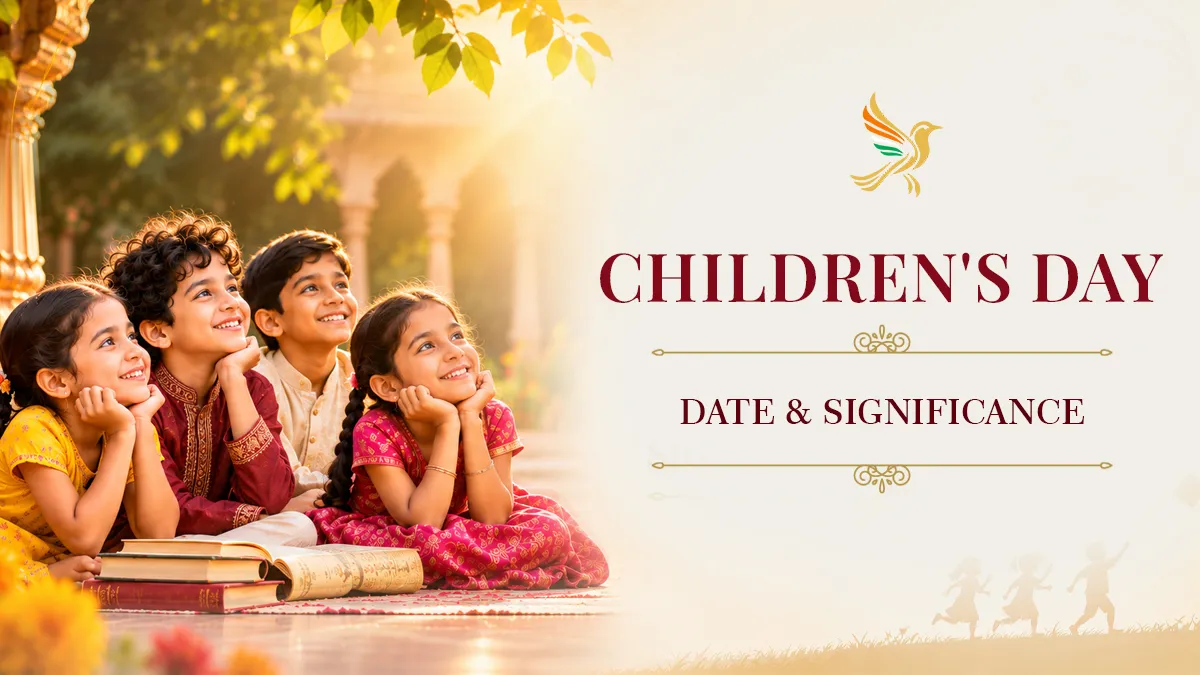
Little Souls, Timeless Wisdom: Rediscovering Childhood Through Sanatan Dharma

Every child comes into the world with an inner wisdom that he himself has. He looks at the moon, speaks with animals, asks 'why' a hundred times a day, and forgives instantly. Before he knows even one rule of conduct, he already knows in his heart when something is good and when it isn't.

The spiritual teachings of Sanatan Dharma have long considered the child just this way - not as a blank slate to be filled, but as a tiny soul full of the divine flame, waiting to be led gently through story and by example.

With Children's Day 2026 in mind, what could be a more appropriate time than now to think about how Sanatan Dharma principles will help your children become strong yet soft humans?

This book contains numerous tips about the various ways Sanatan Dharma lessons may be taught to a child in such an entertaining way. These include stories of the saints, sanskaras, mantras, routines, festivals, and tips for parents.

Children's Day 2026: Date and Why It Matters

The day is celebrated annually in India on 14th November which is the birthday of Pandit Jawaharlal Nehru and he is fondly called Chacha Nehru as he had a great liking for children. It will fall on 14th November, 2026 on Saturday in 2026.

Detail Children's Day 2026
Name Children's Day (Bal Diwas)
Date in India Saturday, 14 November 2026
Day of the week Saturday (a family-friendly weekend)
Universal Children's Day (UN) 20 November
Theme of this article Rediscovering childhood through Sanatan Dharma

The day is a reminder that children need more than good grades and gadgets. They need roots, values, stories and love, and this is exactly what Sanatan Dharma offers.

Why Sanatan Dharma Speaks So Beautifully to Children

Sanatan Dharma literally means "eternal lifestyle". Sanatani lifestyle is more than the performance of rituals. It is a soft but practical system of living that connects a child to his or her family, to nature, to society, and ultimately to God. This is how Sanatan Dharma is so compatible with childhood:

  • It imparts lessons through tales. Ramayana, Mahabharata, Puranas, Panchatantra and Hitopdesha turn the values into exciting adventures for children.

  • It perceives divinity everywhere. A child learns to respect the Sun, Mother Earth, rivers, forests, the cows and every living thing.

  • It instills gratitude. Starting from thanking one's elders to touching their feet to giving thanks before meals, little practices nurture gratitude.

  • It reveres self-power. Mantra, Meditation, Yoga and Prayer make the child calm, focused and self-assured.

  • It revels in celebrations. From Diwali to Holi, from Janmashtami to Navratri, festivals turn education into celebrations.

  • It encourages questioning. Even the Upanishads have come through questions and answers between a teacher and a student.

The Child in Sanatan Dharma: Little Souls With Big Stories

Some of the most revered heroes of Sanatan Dharma are those who were little kids. Their lives tell us that wisdom knows no age.

  • Bal Krishna: Fun, pranks, and love. The little Krishna was a butter thief, he played the flute, lifted the Govardhan mountain, and befriended everybody in Gokul.

  • Prahlad: Devotion unshaken. Though still a boy, Prahlad would continue to remain devoted to Lord Vishnu despite immense terror and threats to his life. He serves as a lesson to stand one's ground calmly and courageously.

  • Dhruva: Determination. Five-year-old Dhruva would venture into the woods to search for the Lord without giving up till he was satisfied with the achievement.

  • Nachiketa: Curiousity and valour. Young Nachiketa in the Katha Upanishad asks the great Yamraj some of the most profound questions in life regarding the subject of life and death.

  • Lord Ganesha: Wisdom and devotion to parents. Ganesha in the famous story illustrates that devotion to parents is the greatest journey of all and explains why Lord Ganesha is so adored by children.

  • Young Hanuman: Power and Humility. Little Hanuman jumped up to the Sun, considering it to be a fruit. This story teaches us that energy requires direction and strength requires humility.

  • Luv and Kush: Honesty and Talent. These brothers brought up in the ashram of Sage Valmiki learnt singing along with knowledge and values. They sang Ramayana with boldness.

  • Ashtavakra: Wisdom greater than looks. Although physically distinct, Ashtavakra was able to beat learned teachers due to his wisdom. This tale shows children that it is their inner qualities that define who they are.

  • Markandeya: Faith vs. Fear. The child sage Markandeya was blessed with Lord Shiva and he could win over the fear of death through his strong faith.

  • Abhimanyu: Courage and Knowledge. The brave warrior had known the secrets of war even before coming into the world. This story emphasizes the importance of prenatal learning.

None of these stories require much explaining. They just need to be narrated along with a little questioning.

Sanskaras: Nurturing the Child From the Very Beginning

One of the most amazing concepts of Sanatan Dharma is sanskara, which involves the purification of the person's character through certain rituals and stages of life.

Traditionally, there are 16 sanskaras (Shodasha Sanskaras), and quite many of them are associated with childhood.

Among the most popular sanskaras for children, we can mention:

  • Namakarana: The naming ceremony, during which the child receives a special name with blessings.

  • Annaprashana: The joyous celebration of the child's first grain.

  • Mundan or Chudakarana: The symbolic "fresh start".

  • Karnavedha: The traditional ear piercing.

  • Vidyarambha (Beginning of Learning): The child starts learning alphabets, usually while praying to the Goddess of Knowledge - Saraswati.

  • Upanayana: The sacred thread ceremony traditionally symbolises the beginning of education.

However, what is really important about sanskaras is not only the ritual itself but the intention behind it - namely, the blessing of the child at each step of its life journey.

10 Timeless Values Children Can Learn From Sanatan

  • Satya (Truth). One of the teachings from the Taittiriya Upanishad is "Satyam vada" (speak the truth). Here's an experiment for you: Praising your kids for speaking the truth even when it may be difficult.

  • Ahimsa (Non-violence and kindness). Gentle treatment to others by means of one's mind, speech, and deeds. Try doing this: Allow your kids to feed birds, water plants, and even look after an animal.

  • Reverence to elders and teachers. The teaching of the Upanishads goes like "Matru Devo Bhava, Pitru Devo Bhava, Acharya Devo Bhava". This means respect towards one's mother, father, and teacher. Try doing this: Teach a child namaste or pranam daily to the elder.

  • Kritagyata (gratitude). Express your thankfulness for the food you've had, the dawn of the day, and also Mother Earth. Try doing this: Say aloud one thing you feel grateful for while having dinner.

  • Seva (selfless service). Helping other people selflessly, without expecting any reward for oneself. Try doing this: Encourage your children to help in providing food, toys, or clothes to poor people.

  • Discipline & Focus. Children understand the power of habits through Dinacharya, Yoga, and Mantra. Here’s how to do that: Make a simple fixed morning and evening routine for them.

  • Humility. Like Hanuman ji - strong but humble. Here’s how to make it work: Teach your child to say thank you and sorry easily.

  • Kshama (Forgiveness). Being able to forgive and move on from angry moments. Here’s how to make it work: Make your child say sorry after any fight and make peace with hugs.

  • Love for nature. The Sun, Moon, water bodies, trees, Cows, Mountains are all sacred in Sanatan traditions. Here’s how to make it work: Plant Tulsi or any plant together and make your child take care of it.

  • Vasudhaiva Kutumbakam (The world is one family). A great slogan which teaches children about accepting people openly. Here’s how to make it work: Celebrate festivals with neighbors and friends from all backgrounds.

Simple Mantras and Shlokas for Kids

Simple chants with a melody are not only easy for kids to learn, but also help them feel relaxed and concentrated. Begin with one or two chants.

  • ॐ (Om): Reciting Om slowly and together is a great way to start and finish your day.

  • Gayatri Mantra: Universal prayer for wisdom and clarity of mind, recited daily by many families in the morning.

  • Saraswati Vandana: Prayer before studying dedicated to Goddess Saraswati who provides knowledge and wisdom.

  • गं गणपतये नमः (Om Gam Ganapataye Namah): Cheerful prayer to Lord Ganesha, who removes all obstacles, before exams or important days.

  • विद्या ददाति विनयं विनयाद् याति पात्रताम् (Vidya dadati vinayam, vinayad yati patratam): Verse from the book of Hitopadesha which means that knowledge gives humility, and humility makes us worthy.

  • Bhojan mantra: Short prayer of gratitude before meals that makes kids respect food.

Tip for parents: Keep it short, sing together, and explain the meaning simply. Children like chants that they understand

A Child-Friendly Daily Routine Inspired by Sanatan Dharma

Children thrive on routines, and Sanatan traditions have simple yet meaningful ones.

Morning

  • Get up early and express gratitude to God for a new day

  • Perform a pranam to your parents and elders

  • Perform some stretches and Surya Namaskar, with parental supervision

  • Chant Om or a prayer together

During the day

  • Say a prayer or express gratitude before meals

  • Focus on your studies at school, learning with enthusiasm

  • Help someone in need or do one kind deed every day

Evening

  • Light a diya or take a trip to your puja corner

  • Sing bhajans or a small aarti

  • Have dinner together, as a family, without using phones

Bedtime

  • Tell a story from Ramayana, Mahabharata, Panchatantra, Puranas

  • Ask a soft question: “What was the best thing that happened today?”

Rituals have more effect on a child’s soul than preaching.

Teaching Sanatan Dharma by Age

Age What works best
2 to 5 years Simple songs, short stories, Om chanting, picture books of Bal Krishna and Ganesha, festival crafts
6 to 9 years Longer stories, easy shlokas, diya lighting, plant care, learning the meaning of festivals, simple yoga
10 to 13 years Discussions on values, Panchatantra and Ramayana themes, Gita-inspired ideas, meditation, seva projects
14 years and above Deeper conversations on dharma, karma and purpose, reading excerpts of the Gita, mentoring younger children

Always follow your child's interests. When learning feels like play, it stays for life.

Learning Through Festivals: Every Celebration Is a Classroom

Celebrating festivals is an easy way to instill Sanatan values.

  • Diwali - “Light prevails over darkness”, cleaning, eating sweets and sharing. Encourage children to make diyas and rangolis.

  • Holi - Colors, forgiveness and friendship. Tell the story of Prahlad to children.

  • Janmashtami- Fun, reverence, and story-telling. Dress up children as Bal Krishna and have them narrate the story.

  • Ganesh Chaturthi - Wisdom and nature care. Create eco-friendly idols of Lord Ganesha.

  • Navratri - Power and strength of the divine feminine. Teach children to respect women.

  • Raksha Bandhan and Bhai Dooj - Bond of siblings. Encourage children to make their own gifts.

  • Govardhan Puja- Thanks to nature and food. Instruct children about the importance of food.

Tips for Parents: How to Share Sanatan Dharma With Joy

  • Lead by example. Kids learn more through observation rather than advice.

  • Tell, don’t preach. Stories always beat sermons.

  • Provide the reason. Give simple explanations to rituals to make them meaningful.

  • Be ready to answer any question. Never ignore curiosity. "Let's find out" is a great answer.

  • Keep it fun. Use music, art, drawing, drama and games.

  • Do it as a family project. Meditate, prepare food, read and have festivals together.

  • Stay away from fear and coercion. Religion is based on love, not force.

  • Respect other ways. The spirit of Sanatan Dharma is tolerance; therefore, teach kids to be tolerant to everybody.

  • Be patient. Values blossom slowly, like a tree.

Fun Children's Day 2026 Activities Inspired by Sanatan Dharma

  • Story circle: Invite family and friends to gather and encourage each child to narrate a story about a heroic child, such as Krishna, Dhruva or Prahlad.

  • Tulsi planting: Plant tulsi or any sapling and name it yourself.

  • Decorate diya and rangoli art: Create rangolis and decorate clay diya with your child.

  • Reciting shloka game: Make your child play an interesting game of reciting shloka and guessing its meaning.

  • Yoga activities: Perform simple stretching exercises and chanting of Om along with breathing techniques in the garden or at home.

  • Seva activity: Pack some goodies or snacks and share them with some needy individual.

  • Thank you messages: Every day write down at least one thank you message for the gratitude jar.

  • Dressing up activity: Encourage your children to dress up as Bal Krishna, Ganesha, Hanuman or Sita and enact something.

  • Cooking: Cook a simple prasad such as kheer or ladoo and offer them as prasad along with a prayer.

Gift Ideas for Children's Day With a Meaningful Touch

Every gift for Children’s Day should come with a bit of luck as well. Pick up gifts which are age appropriate and interesting, such as:

  • Illustrated books on the stories of Bal Krishna, Hanuman, Ganesha and Panchatantra

  • An idol or picture of your child’s favourite deity to place in his/her study

  • A Mantra/ Shloka Book with meanings and pictures

  • Craft sets for making diyas, rangolis and clay idols

  • A plant, like Tulsi, to look after

  • Yoga mat or a gratitude journal

The best gifts, in the end, remain you and your attention, and so choose gifts which come with stories attached to them!

अक्सर पूछे जाने वाले प्रश्न

What is the date for Children’s Day in 2026?

The date of Children’s Day in India for 2026 is Saturday, 14th November 2026. The universal children’s day of the UN will be celebrated on 20th November.

How do I teach my kid Sanatan Dharma?

One must start by teaching through stories, mantras, gratitude, festivals, and by one’s own example.

What are some good Sanatan Dharma stories for kids?

Stories of Bal Krishna, Prahlad, Dhruva, Nachiketa, Ganesha, Hanuman, Luv Kush and Panchatantra stories make for great reading.

What are sanskaras in Sanatan Dharma?

Sanskaras are 16 rites of passage designed to improve a person's nature and shower blessings. Most of these like Namakarana, Annaprashana and Vidyarambha happen in childhood.

What are the good mantras to chant for kids?

Some common mantras for kids are Om, Gayatri Mantra, Saraswati Vandana, Om Gam Ganapataye Namah and Bhojan Mantra.

अनुशंसित उत्पाद