
Festival
Sawan Putrada Ekadashi 2026: Date, Significance & Rituals
Sanatan Sansaar|14 August 2026|5 min read|
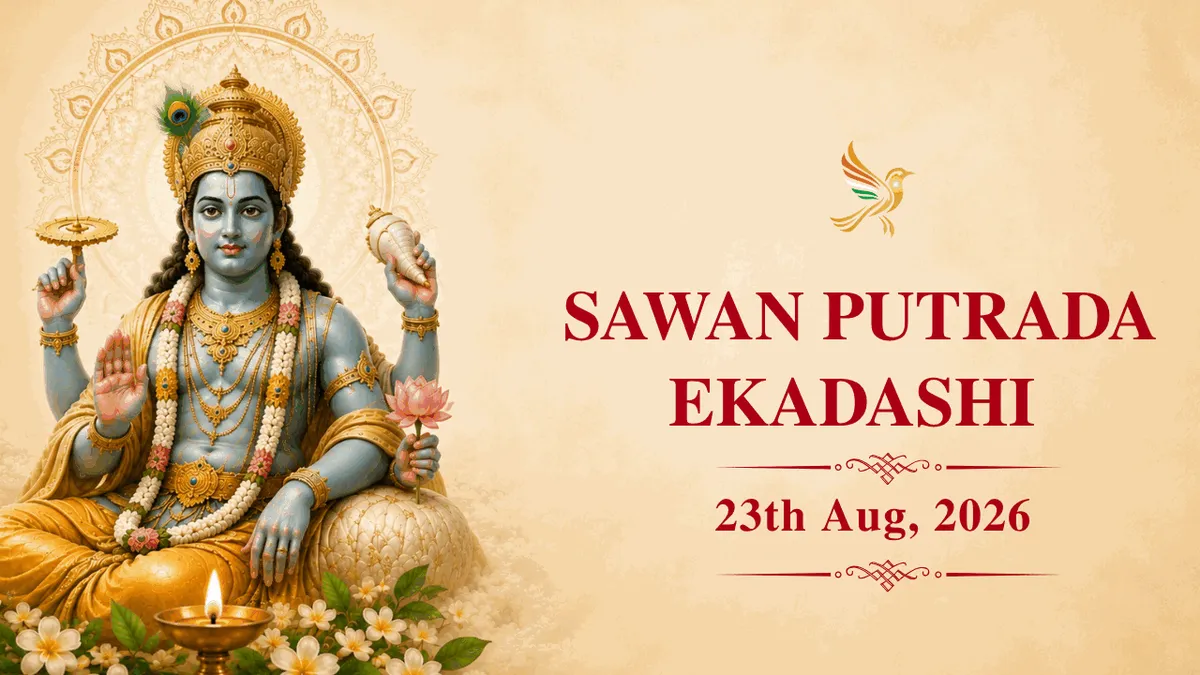
Sawan Putrada Ekadashi will be observed on Sunday, August 23, 2026, according to the Smarta tradition. Vaishnava devotees will observe it on Monday, August 24, 2026. This sacred Ekadashi falls during the holy month of Shravan and is dedicated to Bhagwan Vishnu. Married couples observe it to pray for the blessing of a healthy child and parental happiness.
Sawan Putrada Ekadashi 2026 Date & Timings
In 2026, Sawan Putrada Ekadashi will be observed on different dates according to Smarta and Vaishnava traditions.
Smarta Tradition
Sawan Putrada Ekadashi: Sunday, August 23, 2026
Ekadashi Tithi starts at 2:00 AM on Sunday, August 23, 2026
Ekadashi Tithi ends at 4:18 AM on Monday, August 24, 2026
Parana time is from 1:41 PM to 4:16 PM on Monday, August 24, 2026
Hari Vasara ends at 10:49 AM on Monday, August 24, 2026
Why Are There Two Dates for Sawan Putrada Ekadashi?
The difference comes from the rules followed by Smarta and Vaishnava traditions when determining the Ekadashi fasting day. On August 23, Ekadashi Tithi starts at 2:00 AM, before sunrise. Hence, as per the Smarta rule, devotees observe the vrat on Sunday because Ekadashi is present at sunrise.
Vaishnava tradition follows the rule of Dashami Vedha, which means Ekadashi fasting should not be observed when the previous Dashami Tithi extends into the period close to sunrise. Since the Ekadashi Tithi ends at 4:18 AM on August 24, Vaishnava devotees observe the fast on Monday instead. Doing so also allows them to follow the Dwadashi rule for breaking the fast early on Tuesday, before Dwadashi ends at 6:20 AM.
Sawan Putrada Ekadashi Significance
For married couples hoping to be blessed with a child, this Ekadashi holds particular weight. “Putrada” itself translates to “giver of children,” and devotees believe that keeping this vrat with real sincerity can help fulfill that wish. It's not only about having children either, parents already blessed with kids often observe this day too, praying for their health, happiness, and a long, good life ahead.
In addition, this vrat is also considered a way to seek forgiveness for past mistakes, purify the mind and soul, move closer to Bhagwan Vishnu and ultimately attain Moksha. The importance of the day is accentuated by the fact that it falls in the auspicious month of Shravan.
What is the Story Behind Sawan Putrada Ekadashi?
Hindu scriptures speak of a righteous king named Mahijit, who ruled over Mahishmati. Years into his marriage, he still had no children, and this weighed on him deeply, despite being known as a kind and devoted ruler.
Eventually, the king's people went to Sage Lomesh, asking him to help the royal couple. Using his divine insight, the sage traced the problem back to a mistake from the king's previous life: he had chased away a thirsty cow and her calf from a pond so he could drink the water himself. This one act, the sage explained, was the reason behind his childlessness.
Sage Lomesh then advised the king and queen to observe Sawan Putrada Ekadashi vrat with complete devotion to Bhagwan Vishnu. The couple followed his advice and kept the vrat. Pleased with their devotion, Bhagwan Vishnu blessed the couple with a son. Since then, devotees have observed Sawan Putrada Ekadashi with faith, especially couples who pray for the blessing of a child and parents who pray for the well-being of their children.
What Devotees Do on Sawan Putrada Ekadashi?
On Sawan Putrada Ekadashi, devotees wake up early in the morning, take a bath, and wear clean yellow-coloured clothes before beginning the vrat. Many people keep a strict fast, while some devotees consume only fruits, milk, and simple sattvic food as part of a Phalahar vrat.
Throughout the day, devotees worship Bhagwan Vishnu with Tulsi leaves, lotus flowers, incense,, and diyas. Many spend time chanting “Om Namo Bhagavate Vasudevaya,” reading Vishnu Sahasranama (the 1,000 names of Bhagwan Vishnu), or listening to bhajans with devotion.
Sawan Putrada Ekadashi Puja Vidhi at Home
Wake up early, add a few drops of Ganga Jal to the bathing water, and take a bath
Wear clean yellow-coloured clothes
Clean the puja area and take a sankalp (vow) to observe the vrat
Chant “Om Namo Bhagavate Vasudevaya” or recite “Vishnu Sahasranama”
Pray to Bhagwan Vishnu for the blessing of a child and the health, happiness, and long life of your children
End the puja with aarti and charity
FAQs
What colour clothes are commonly worn on Sawan Putrada Ekadashi?
Devotees commonly wear yellow colored clothes. Yellow is the most auspicious color for this occasion because it is associated with Bhagwan Vishnu (who is also known as Pitambari, the one who wears yellow robes).
What should devotees do if they accidentally break the fast?
It happens sometimes, so there is need to be worried. Pray to Bhagwan Vishnu with devotion and ask for his forgiveness, and complete the day with devotion
When should the Sawan Putrada Ekadashi fast be broken?
In 2026, Smarta devotees should break the fast on Monday, August 24, between 1:41 PM and 4:16 PM, after Hari Vasara ends at 10:49 AM. Meanwhile, Vaishnava devotees should break the fast on Tuesday, August 25, between 5:55 AM and 6:20 AM, before Dwadashi Tithi ends.
How can I prepare for Sawan Putrada Ekadashi?
You can prepare by arranging the essential puja items like Ganga Jal, diya, and incense, in advance.