

Loading…
Bazaar
What Is the Religious Significance of Copper?
Sanatan Sansaar|28 जुलाई 2026|7 मिनट पढ़ें|
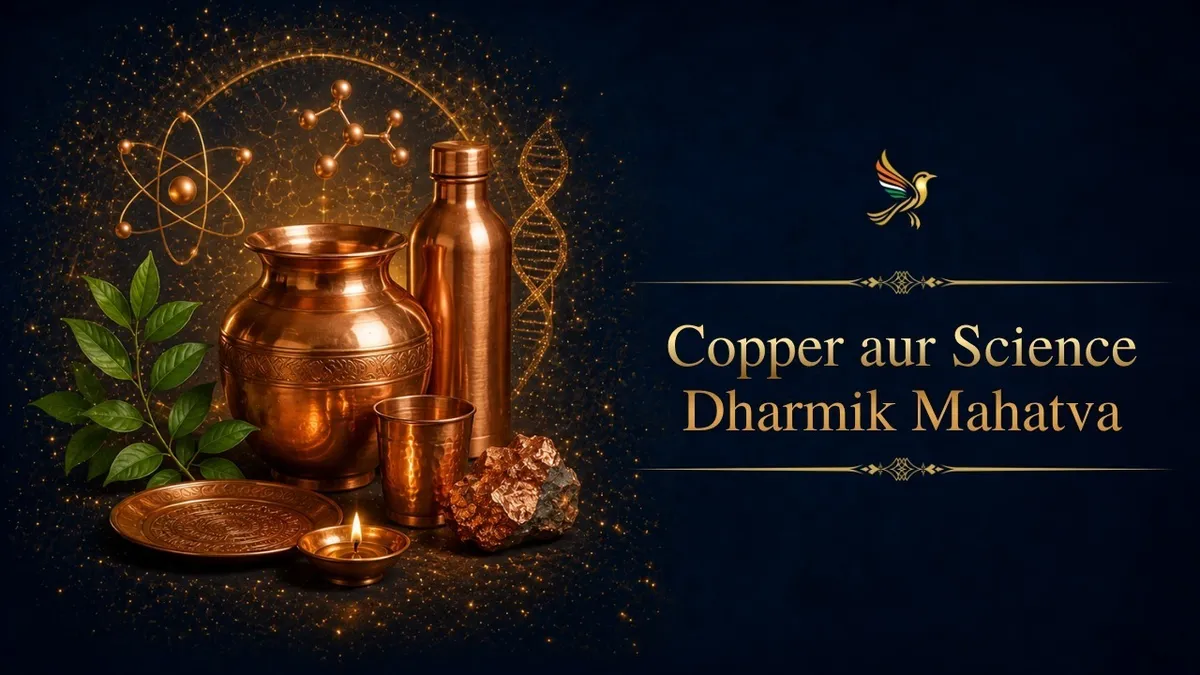
The traditions that have lived in our homes for generations were never created without thoughtful purpose. Why light a diya during puja? Why place a Kalash? Why offer water? Why use a copper vessel? Behind all of this lies a deep understanding. An understanding that was never fully written in books, not always put into words, yet passed from hand to hand generation after generation.
In Sanatan tradition, copper has long been associated with water, with the sun, with purity, and with vital life energy. Whether it is worship at home, abhishek at a temple, offering arghya to Surya Dev, or establishing a Kalash, the use of copper vessels is as old as our tradition of puja itself. Our homes once had copper lotas, Tamra Kalash, Panchapatra, and Achamani. These were not merely religious rules. They were a language of purity and sattva expressed through sacred vessels.
Why is a Copper Vessel Used in Puja?
Water holds a place of great importance in puja. In the Sanatan view, water is not simply water. It is the foundation of life, the medium of purification and the language of offering to the divine. And when this very water is held in a copper vessel, its meaning becomes even more profound. Observe the reddish glow of copper. It carries the memory of the Sun's radiance. The memory of the fire element. It symbolises vitality and life force. This is precisely why the tradition of offering water to Surya Dev from a copper Lota is so widely followed. This is not merely a religious act; it is discipline, it is gratitude, and it is the reverence towards nature that lies at the very foundation of our tradition.
Rising in the morning, taking water in a copper lota, and offering it to Surya Dev – consider how simple a sadhana this is. No temple required. No special materials needed. Just a lota, a little water and a rising Sun. When a person does this, they are not simply offering water. They are also taking a resolve within themselves towards light, towards clarity, and towards beginning the day with intention. In Sanatan tradition, the Sun is not merely a star in the sky. In the Sanatan tradition, Surya represents life, time, health, and karma, The copper vessel completes this Arghya with that same sacred feeling.
What Is the Significance of the Tamra Kalash in Kalash Sthapana?
The Kalash - this one word brings a picture to mind. Mango leaves, a coconut resting upon them, a vessel filled with water, and the sanctity of everything around it. In puja, the kalash is understood as the symbol of auspiciousness, completeness, prosperity, and divine presence.
When this Kalash is made of copper, its connection with purity and radiance deepens. This is why in major religious rituals, yagnas and vratas, the Tamra Kalash has always held a place of special importance. The Tamra Kalash also reminds us of something important. Every object used in puja carries its own meaning. The Kalash is not merely a vessel. When water is filled within it and it is placed in the puja, it becomes a center of auspiciousness, energy, and divine presence.
What Does Science Say About Copper?
What modern research has discovered about copper, hearing it only deepens one's sense of reverence. Modern scientific research considers copper an essential trace mineral for the human body. In the processes of energy production, blood vessels, the nervous system, and immune function, copper plays a quiet but significant role.
And most notably copper's antimicrobial properties. Several studies have found that on copper surfaces and in copper vessels, the growth of certain harmful bacteria can be inhibited, and the survival of certain harmful microorganisms under specific conditions may be inhibited. Now consider why our ancestors kept water in copper vessels. Was it simply because someone told them to? No. They observed, they experienced, they tested, and then they wove that knowledge into tradition. So that it would never be lost.
An Important Point About Copper Water
There is no scientific evidence that drinking copper water cures all diseases. Sanatan tradition teaches balance, not excess. Copper has useful properties, but it is not a medicine. Those who present it as the answer to every ailment do a disservice to both dharma and science.
Sour things like lemon water, curd, buttermilk, and pickles should not be stored in copper vessels. This can cause an excess of copper to enter food and drink, which is not considered beneficial for the body. The vessel must be kept clean regularly. If a green or bluish-green deposit (verdigris) appears, clean the vessel thoroughly before using it again. And for those who have any health condition, please consult a physician before beginning regular consumption of copper water.
How to Use a Copper Vessel Correctly
Keep the copper vessel clean regularly.
Do not store sour or acidic things in it.
Consume copper water in a balanced, moderate amount.
If rust or a green deposit appears, do not use the vessel.
If you have a health condition, seek medical advice before regular use.
Understand copper not as a medicine but as a useful metal connected with tradition and care.
The Feeling Behind Sanatan Sansaar
At Sanatan Sansaar, we do not look at Sanatan traditions merely as beliefs. We try to understand their feelings, their culture, and the thinking behind them. The significance of Tamra is a beautiful example of this balance. On one hand, it is connected with purity in puja, with offerings to the divine and with Surya energy. On the other hand, science acknowledges its antimicrobial properties and its role within the human body.
Our ancestors did not see life divided into two separate things called dharma and science. For them, pure water was sadhana. The morning sun was sadhana. The vessel of puja was sadhana. And discipline itself was sadhana. When a person offers arghya to the sun from a copper lota, they are not merely offering water. They are making a resolve to leave behind inertia and move towards light. When a Tamra Kalash is established in puja, it does not remain simply a vessel of metal. It becomes a center of auspiciousness, prosperity, and divine energy.
A Final Word
The religious significance of copper is not merely tradition. It tells us that in Sanatan Dharma, even the smallest object carries a deep meaning. Copper gives us a feeling of purity. It connects us with the Sun. It reminds us of the importance of water. It points towards discipline in life.
Science helps us understand its qualities. And dharma gives us the feeling behind its use. The copper vessel teaches us that puja is not confined to the temple. It lives in our water, in our daily rhythm, in our cleanliness and in the way we look at life. This is the beauty of Sanatan—where faith is present, knowledge is present, and a gentle inspiration to live better is also always present.
अक्सर पूछे जाने वाले प्रश्न
Why is a copper vessel used in puja?
In puja, a copper vessel is considered a symbol of purity, sattva, and offerings to the divine. Copper is also regarded as connected with water, the sun, and vital life energy.
Is it considered auspicious to offer water to the sun from a copper lota?
Yes. In Sanatan tradition, offering water to Surya Dev from a copper lota is considered auspicious. It is a symbol of discipline, gratitude and reverence towards the energy of the Sun.
What is the religious significance of the Tamra Kalash?
The Tamra Kalash is regarded as a symbol of auspiciousness, completeness, prosperity, and divine presence. Its use is considered sacred in puja, yagnas, and religious rituals.
Is copper water a cure for all diseases?
No. Claiming copper water as a cure for all diseases is not accurate. Copper is regarded as having certain antimicrobial properties, but it should not be understood as a medicine or replacement for medical care.
What should not be stored in a copper vessel?
Lemon water, curd, buttermilk, pickles, and other sour or acidic things should not be stored in a copper vessel. These can cause an excess of copper to enter food or drink.
What care should be taken when using a copper vessel?
Keep the copper vessel clean, use it in moderation, and if you have a health condition, seek medical advice before beginning regular use.
What is the most important message of Tamra?
Copper teaches us that in Sanatan tradition, faith, purity, discipline, and practical understanding of life can all walk together.