

Loading…
Festival
Bhadrapada Purnima 2026: Date, Significance, Story, & Puja Vidhi
Sanatan Sansaar|22 September 2026|4 min read|
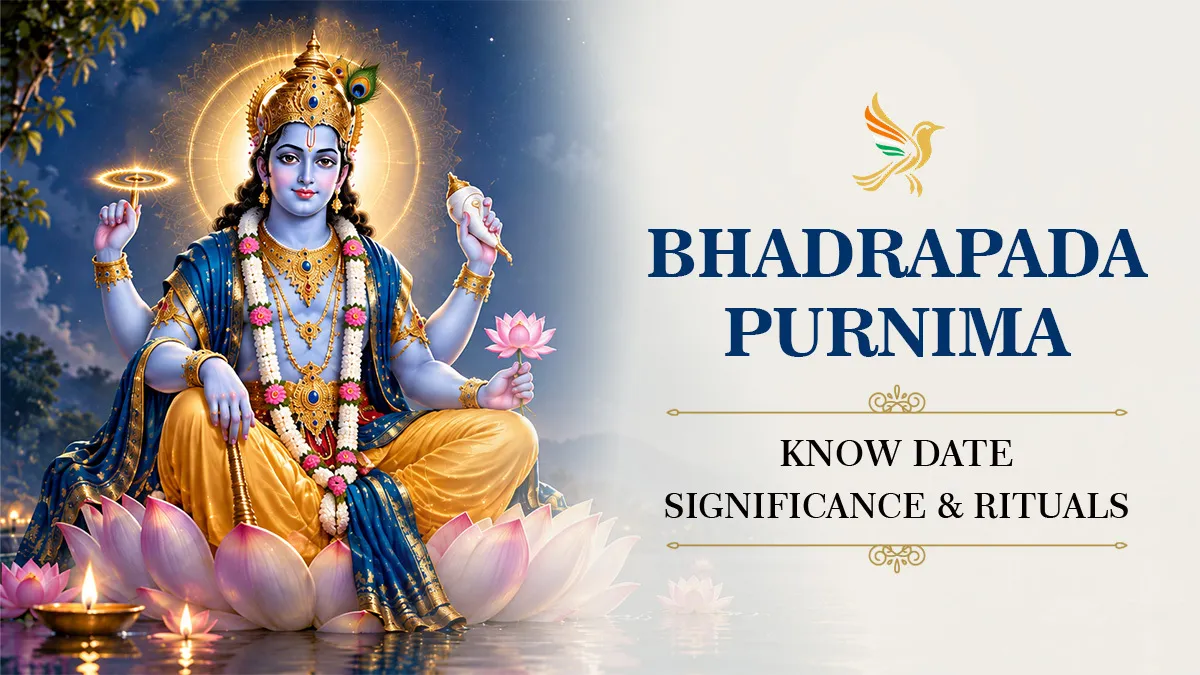
Bhadrapada Purnima will be observed on Saturday, 26 September 2026. It is the sacred full moon day of the month of “Bhadrapada” and is associated with the worship of “Bhagwan Satyanarayan,” a benevolent form of “Bhagwan Vishnu,” and “Bhagwan Shiv” with “Mata Parvati.” The day also marks the transition towards “Pitru Paksha” (a 16-day lunar period in the Hindu calendar when people honor and pay respect to their departed ancestors.)
Bhadrapada Purnima 2026 Tithi Timings
- Purnima tithi starts at 11:06 PM on 25 September 2026
- Purnima tithi ends at 10:18 PM on 26 September 2026
- Moonrise is at 06:06 PM on 26 September 2026
Point to consider: Purnima timings and moonrise can vary by location. You should check your local “Panchang” for the exact timing of fasting, puja, Chandra Arghya, and other observances.
What is the Significance of Bhadrapada Purnima?
The full moon is closely tied to the mind and emotions. Hence, this day naturally becomes a time to “slow down, find peace, and think clearly.” It also holds special meaning for Bhagwan Vishnu worshipers, as they see this sacred day as a moment to get closer to Bhagwan Vishnu and seek his guidance.
There is another layer to this day too. It is meant for remembering ancestors. “Purnima Shraddha” is traditionally performed on this day for ancestors according to family and regional customs. It is a way of remembering those who came before us and expressing gratitude for our family lineage.
Bhadrapada Purnima is also considered an auspicious day for daan. Even a small act of giving, such as food, clothes, or something useful, carries real weight on this day. In short, the true significance of Bhadrapada Purnima is “to be a little calmer, more grateful, and kinder.”
What is the Story Behind Bhadrapada Purnima?
Unlike some Hindu festivals, Bhadrapada Purnima “does not” have one single vrat katha that is followed everywhere. One tradition associated with this day is the “Battisi Purnima vrat,” also known as the “Dvatrimshi Purnima vrat.” It is a longer Purnima observance described in traditional texts, with Bhadrapada Purnima serving as an important point of completion in some traditions. The number 32 gives this vrat its name and represents a long period of devotion, discipline, and spiritual commitment.
Bhadrapada Purnima is also associated with the “Satyanarayan Katha.” In the story, “Narada Muni” asks Bhagwan Vishnu about a way to help people overcome suffering. Bhagwan Vishnu then explains the importance of Satyanarayan vrat and puja.
The day is also connected with the “Uma-Maheshwar vrat,” dedicated to “Bhagwan Shiv and Mata Parvati.” Traditional observances may also include the worship of Bhagwan Vishnu, Mata Lakshmi, and Chandra Dev, along with charity and prayers. As Bhadrapada Purnima comes just before “Pitru Paksha,” it also offers a meaningful time to devotees to remember their ancestors and express gratitude for their family lineage.
How is Bhadrapada Purnima Celebrated?
Devotees wake up early and take a bath. Many devotees bathe in sacred rivers such as the “Ganga” or “Narmada.” But those who cannot visit a sacred river add a few drops of “Gangajal” to their bath water.
Many families then perform the “Satyanarayan Puja.” A clean puja space is set up, and “Bhagwan Vishnu” is worshipped with flowers, fruits, “Panchamrit,” a diya, and other traditional offerings. The “Satyanarayan Katha” is also read or heard. Fasting plays an important role too. Some devotees keep a fruit-based fast, while others opt for milk or a simple sattvic meal, as per their health and family custom.
In the evening, after moonrise, “Arghya” is offered to “Bhagwan Chandra Dev.” In some traditions, the day also brings the “Uma-Maheshwar vrat,” where “Bhagwan Shiv” and “Mata Parvati” are worship[ed for family happiness and well-being.
Bhadrapada Purnima also has regional traditions. In Gujarat, the day is associated with the “Ambaji Fair,” where devotees gather at the famous “Ambaji Temple.” Since this Purnima comes just before “Pitru Paksha,” many families also use this day to remember their ancestors and seek their blessings.
Bhadrapada Purnima Puja Vidhi
You can follow these simple steps to observe Bhadrapada Purnima at home:
- Wake up early and take a bath
- Clean the home mandir and puja space
- Place a picture or Bhagwan Vishnu idol on a clean chowki.
- Light a ghee diya before Bhagwan Vishnu and offer flowers, akshat, fruits, and traditional bhog
- Chant “Om Namo Bhagavate Vasudevaya” and read or listen to “Satyanarayan Katha or another Purnima vrat katha as per your family tradition
- After moonrise, offer “Chandra Arghya” if this is part of your tradition and perform aarti
- If your family observes “Purnima Shraddha” or “Tarpan,” perform it as per your customary procedure
FAQs
Frequently Asked Questions
Bhadrapada Purnima will be observed on 26 September 2026 (Saturday).
What to donate on Bhadrapada Purnima?
You may donate:
- Food grains
- Cooked food
- Clothes
- Fruits
- Essential supplies
- Money to someone in need
Is Bhadrapada Purnima part of Pitru Paksha?
No. Bhadrapada Purnima falls immediately before the regular “Pitru Paksha” period.
What is Chandra Arghya?
Chandra Arghya is the traditional offering of water to “Bhagwan Chandra.” It is performed after moonrise.