

Loading…
Vrat
Can You Eat Unlimited Fruits on Ekadashi?
Sanatan Sansaar|24 July 2026|7 min read|
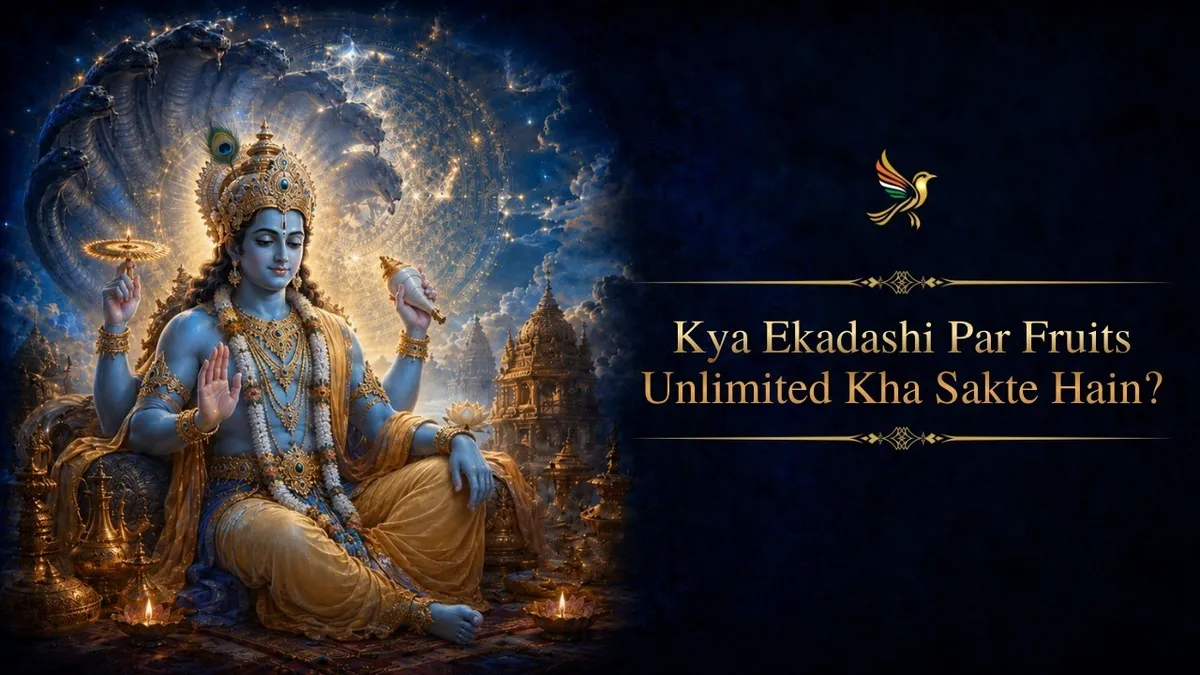
Ekadashi Vrat is considered one of the most sacred and popular vrats in Sanatan Dharma. This day is regarded as special for the devotion of Bhagwan Vishnu, purification of the mind, control of the senses, and a sattvic way of life. Every month, 2 Ekadashis occur, one in Krishna Paksha and one in Shukla Paksha. Many devotees observe a fast on this day, worship Bhagwan Vishnu, listen to the vrat katha, chant mantras, and try to keep their mind engaged in devotion.
In Sanatan Dharma, Ekadashi is not only a vrat related to food. It is an opportunity to discipline the mind, speech, and actions. On this day, devotees give up grains and try to control their inner desires while spending time in the remembrance of Bhagwan Vishnu.
Can you eat unlimited fruits on Ekadashi?
Many people have questions about Ekadashi Vrat. One of the most common questions is whether fruits can be eaten in unlimited quantity on Ekadashi. Many people think that if they are not eating grains, they can eat as many fruits as they want. Some people keep eating fruits, dried fruits, sweets, milk, shakes, and vrat snacks throughout the day in the name of falahar. In such a situation, the question arises whether this is the true spirit of the vrat.
The simple answer is that fruits can be eaten on Ekadashi, but eating unlimited fruits is not considered right according to the true spirit of the vrat. "Falahar" does not mean eating again and again until the stomach is full. Falahar means giving the body necessary support so that the devotee can spend the day in the remembrance, chanting, worship, and discipline of Bhagwan Vishnu. The main purpose of the vrat is not to change the food but to discipline the mind.
What is the right spirit of falahar in Ekadashi Vrat?
Rules of Ekadashi Vrat may differ according to different traditions. Some devotees observe Nirjala Vrat, which means they do not even consume water. Some take only water or milk. Some observe falahar. Some people, depending on their health, age, work, and circumstances, take light, sattvic food. Therefore, it is important to understand that Ekadashi Vrat is not a matter of show or extreme strictness. It is a matter of devotion, capacity, and sincere feeling.
In Sanatan Dharma, vrat does not simply mean staying hungry. "Vrat" means "sankalp," a sacred resolve. When a devotee observes Ekadashi Vrat, he or she makes a resolve that this day will be dedicated to Bhagwan Vishnu. On this day, anger should reduce, greed should reduce, laziness should reduce, and the mind should move more and more toward devotion. Therefore, if a person has given up grains but the mind is occupied with eating all day, the true spirit of the vrat becomes weak.
Falahar is support, not indulgence
Falahar is a support, not the final goal. Its purpose is to keep the body light and balanced so that the mind can remain engaged in worship. If Falahar itself becomes heavy, the stomach feels full, laziness begins to come, and the mind moves away from devotion toward food, then the simplicity of the vrat starts fading.
That is why eating fruits on Ekadashi is fine, but fruits should also be taken in limited quantity and with a sattvic feeling. Many people ask how much fruit should be eaten. There cannot be one fixed rule for everyone. Every person's age, health, routine, work, and bodily needs may be different. Still, in general, fruits should be taken only as much as the body needs for necessary energy. Eating too many fruits, too many dry fruits, or too many sweet drinks or eating something again and again can reduce the spiritual feeling of the vrat.
How should one observe the vrat according to health?
One more thing is important to understand here. Fruits are natural, but that does not mean eating them in unlimited quantity is always right. Many fruits contain natural sugar. People who have diabetes, blood sugar issues, acidity, kidney problems, or digestion-related concerns should observe vrat and falahar according to their health condition. Such people should consult a doctor or a qualified health expert before observing any difficult fast.
According to Sanatan tradition, Bhagwan values the sincerity and devotion of the devotee more than external rituals. It is not necessary to give unnecessary pain to the body. The purpose of a vrat is not to weaken the body but to strengthen the mind. Therefore, vrat should be observed according to one's capacity, health, and circumstances.
What should be kept in mind while doing falahar on Ekadashi?
While doing a fast on Ekadashi, one should keep sattvikta in mind. It is better to avoid too much fried vrat food, excessive sweets, packaged snacks, repeated tea or coffee, and heavy drinks. If you are eating fruits, take them in a simple form. Along with fruits, water, coconut water, milk, or light sattvic items may be taken according to your tradition and health condition.
But the feeling of restraint is most important in everything.
• Eat fruits in limited quantity.
• Avoid eating something again and again.
• Do not eat too many dry fruits.
• Avoid very sweet drinks and packaged snacks.
• If you have a health problem, observe the vrat after proper guidance.
• Spend more time in the remembrance of Bhagwan Vishnu on the day of vrat.
What does Ekadashi Vrat teach us?
Ekadashi Vrat is connected with Bhagwan Vishnu. Bhagwan Vishnu is regarded as the deity of preservation, balance, dharma, and maryada. That is why Ekadashi Vrat also teaches us that there should be balance in life. No overeating, no excessive harshness. No show, no carelessness.
The vrat should be such that it does not weaken the body but strengthens the mind. It should help bring the devotee closer to Bhagwan Vishnu. Many times, people turn a vow into a competition. Someone says they did not eat anything the whole day. Someone says they stayed only on water. Someone says they took only fruits.
But Sanatan Dharma does not teach comparison. In Ekadashi Vrat, the biggest question is not what you ate and how much you ate. The biggest question is how peaceful you kept your mind, how much you remembered Bhagwan Vishnu, and how much sattvikta you brought within yourself.
The feeling of Sanatan Sansaar
At Sanatan Sansaar, our effort is to bring Sanatan traditions to people not through fear or confusion, but through right knowledge, devotion, and practical understanding. Ekadashi Vrat should also be understood in the same way. Eating fruits is not wrong, but eating unlimited fruits in the name of falahar is not the purpose of the vrat.
"Vrat" means discipline in mind, speech, and food. If you feel hungry on Ekadashi, do not feel guilty. Do falahar according to your capacity. But also remember that falahar is meant to support devotion, not to increase indulgence. Ekadashi is connected to food, but it is connected much more deeply to the name of Bhagwan Vishnu, meditation, katha, charity, japa, and purification of the mind.
Final message
Fruits can be eaten on Ekadashi, but not in unlimited quantities. Falahar should be limited, simple, and sattvic. Bhagwan Vishnu does not look at the quantity on your plate. He looks at the devotion in your heart. If the vrat is observed with faith, restraint, and the right feeling, that itself is the true merit of Ekadashi.
FAQs
Can fruits be eaten on Ekadashi?
Yes. Fruits can be eaten on Ekadashi. Many devotees observe falahar according to their capacity and tradition.
Can you eat unlimited fruits on Ekadashi?
No. Eating fruits on Ekadashi is fine, but eating unlimited fruits is not considered right according to the restraint and sattvic spirit of the vrat.
What does "falahar" mean on Ekadashi?
Falahar means giving the body necessary support so that the devotee can keep the mind engaged in the remembrance, chanting, and worship of Bhagwan Vishnu. It does not mean eating again and again until the stomach is full.
Can dry fruits be eaten on Ekadashi?
Yes, dry fruits are taken in many traditions, but they should also be eaten in limited quantity. Eating too many dry fruits may cause heaviness or digestive discomfort.
Should one observe Ekadashi Vrat if there is a health problem?
If there is a health problem, the vrat should be observed according to one's capacity. If there are issues related to diabetes, blood sugar, kidneys, or digestion, it is better to consult a doctor or a qualified expert.
Can Ekadashi be observed without fasting?
Yes. If fasting is not possible due to health or circumstances, devotees can observe Ekadashi through worship, japa, katha, charity, and remembrance of Bhagwan Vishnu.
What is the real purpose of Ekadashi Vrat?
The real purpose of Ekadashi Vrat is devotion to Bhagwan Vishnu, purification of the mind, control of the senses, and adoption of a sattvic way of life.