
Loading…
Festival
Durga Ashtami 2026 - Date, Significance & Maha Ashtami Puja Vidhi
Sanatan Sansaar|9 October 2026|4 min read|
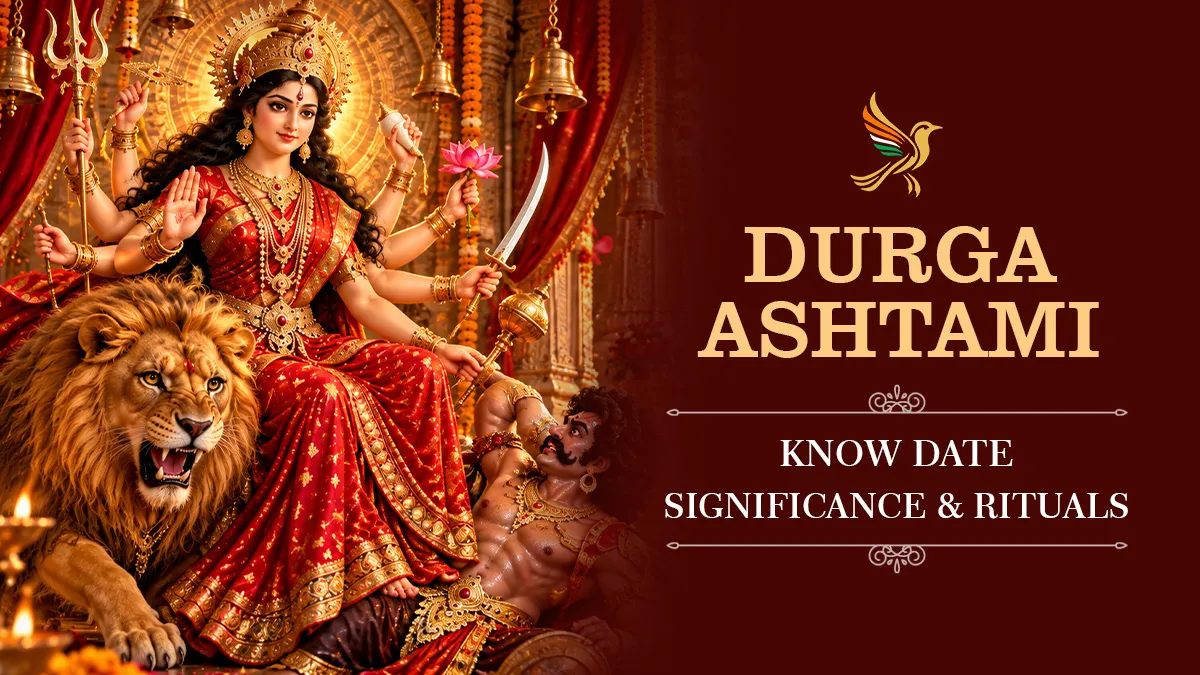
Durga Ashtami 2026 will be observed on 19 October (Monday). It is the eighth day of “Sharad Navratri” and is also known as “Maha Ashtami.” On this sacred day, devotees worship “Maa Durga” in the form of “Maa Mahagauri,” the eighth form of “Navadurga.”
Durga Ashtami 2026 Date & Timings
| Detail | Date / Timing |
| Ashtami Tithi Begins | Sunday, 18 October, around 8:28 AM |
| Ashtami Tithi Ends | Monday, 19 October, around 10:52 AM |
| Navami Tithi Begins | Monday, 19 October, around 10:52 AM |
| Vijayadashami | Tuesday, 20 October |
| Devi Worshipped | Maa Mahagauri |
| Navratri Day | Day 8 |
Points to Consider:
- In 2026, Ashtami and Navami tithis fall close together. Ashtami Tithi is present at sunrise on 19 October and ends later that morning, after which Navami begins. Hence, some Navratri rituals that are performed on Ashtami or Navami may be observed on the same calendar day.
- Tithi & muhurat timings differ based on location. Therefore, refer to your local Panchang for the exact timing
Durga Ashtami Significance
Ashtami is the high point of Navratri for many devotees, and below are the main reasons why:
● Maa Mahagauri: Her form is calm and radiant. Devotees link her with purity, peace and compassion. Many pray to her for strength and a peaceful mind.
● Victory of Shakti: This day recalls Maa Durga's win over “Adharma and evil forces.”
● Kanya Pujan: Many families invite “young girls home,” as they are seen as forms of the “divine feminine.” Their feet are washed with respect. They are then offered “bhog and dakshina.”
● Sandhi Puja: The transition from “Ashtami” to “Navami” is observed as “Sandhi puja” in several traditions, especially during “Bengali Durga puja.” It marks a sacred junction between the two tithis and is dedicated to the “fierce form” of Maa Durga.
What Devotees Do on Durga Ashtami?
Devotees observe Durga Ashtami as per their family and regional traditions. Some keep a fast throughout all nine days of Navratri, while others fast only on the first and the last day. Some perform Maha Ashtami puja at home, while some visit a Maa Durga temple. Apart from this, devotees also perform:
● Kanya Pujan: It is a tradition in which young girls are welcomed and worshipped as manifestations of Maa Durga. Families wash their feet, apply tilak, offer flowers and serve them halwa, puri and kala chana. “Dakshina” (small gifts) may also be offered.
● Durga Ashtami Havan: Some families perform havan after the main “Ashtami puja” and offer “Ahuti” while reciting mantras like “Om Hreem Dum Durgayai Namaha Swaha” or “Om Aim Hreem Kleem Chamundayai Vichche Swah.” Meanwhile some perform the concluding havan on “Navami,” as per their family tradition.
● Sandhi Puja: During the “Sandhi period” (dusk), devotees perform special prayers to Maa Durga, light lamps, offer flowers and bhog, and recite mantras. In Bengali Durga puja traditions, 108 lamps and 108 lotuses are also offered during this puja.
Durga Ashtami Puja Samagri
The samagri may vary depending on the family tradition and various other factors. Hence, are the common items that are used in Ashtami puja in most of the households:
- Maa Mahagauri or Maa Durga idol or picture
- Kalash
- Coconut
- Mango leaves
- Clean Red cloth
- Roli and Kumkum
- Akshat
- Flowers
- Diya
- Ghee or oil
- Dhoop or incense
- Fruits
- Coconut
- Betel leaves and nuts
- Moli or Kalawa
- Bhog ingredients
- Havan samagri (if performing havan)
- Dakshina and gifts for Kanya Pujan
Durga Ashtami Puja Vidhi
- Wake up, take a bath and wear clean clothes
- Clean the puja area and keep the “Kalash” and “Maa Durga” idol or picture on a clean chowki
- Light a diya and begin the puja
- Offer flowers, kumkum, akshat, and fruits to Maa Durga or Maa Mahagauri
- Recite Durga mantras like “Sarva Mangala Mangalye Shive Sarvartha Sadhike Sharanye Tryambake Gauri Narayani Namostute,” or “Durga Saptashati”
- Perform “havan” and then do “kanya pujan”
- Perform Maa Durga's aarti and distribute the prasad
FAQs
When is Durga Ashtami in 2026?
Durga Ashtami 2026 will be observed on 19 October, Monday.
When is Kanya Pujan performed in 2026?
Families will perform Kanya Pujan on 19 October.
Can Havan be performed on Durga Ashtami?
Yes. Some families perform havan on Ashtami, while others perform it on Navami. It depends on family and regional tradition.
What colour clothes should I wear on Durga Ashtami?
Purple. Many devotees also wear red during Durga worship.