

Loading…
Festival
Guru Purnima 2026: Date, Significance & Rituals
Sanatan Sansaar|27 July 2026|4 min read|
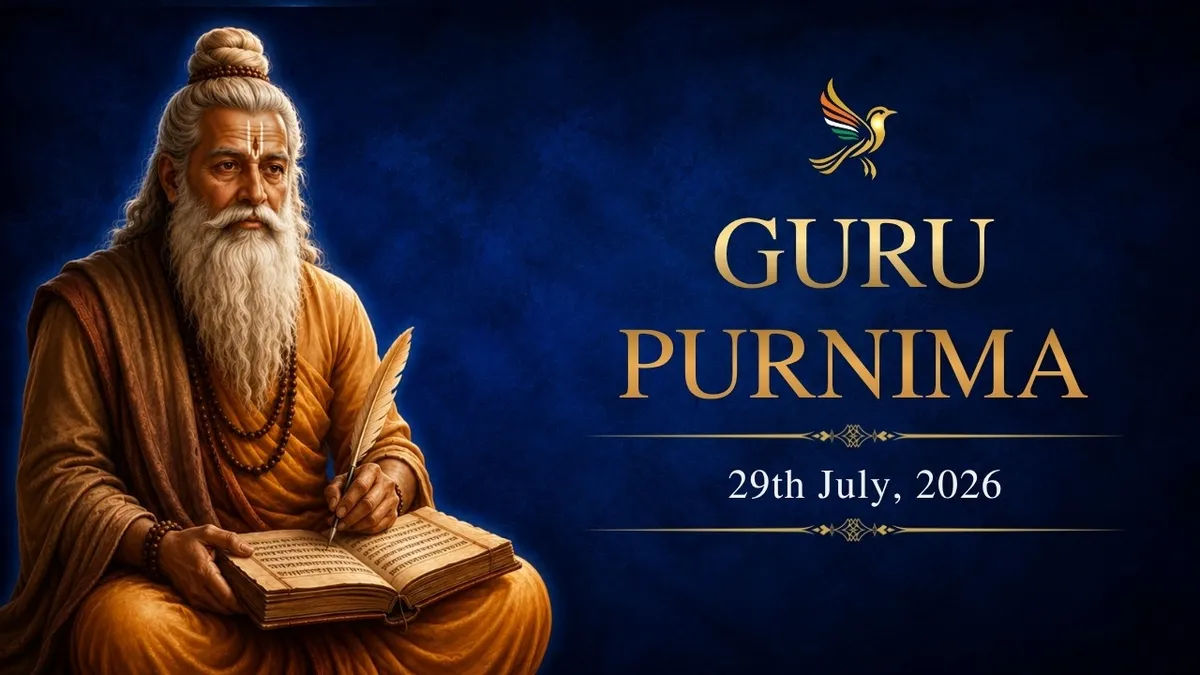
Guru Purnima, also known as Vyasa Purnima, will be observed on Wednesday, July 29, 2026. It falls on the Purnima Tithi (full moon day) of the Ashadha month. In Sanatan Dharma, the word “guru” means the one who removes darkness (ignorance) and fills our life with knowledge and wisdom. A Guru can be a spiritual master, a teacher, a parent, or anyone who guides us towards the right path.
Guru Purnima 2026 Tithi Timings
- Purnima Tithi starts at 06:18 PM on July 28, 2026
- Purnima Tithi ends at 08:05 PM on July 29, 2026
Guru Purnima Significance
Guru Purnima is celebrated in honour of Maharishi Ved Vyasa, one of the greatest sages of Sanatan Dharma. He compiled the four Vedas, wrote the Mahabharata, and preserved many sacred scriptures, so their wisdom could be passed down from one generation to the next. This is why Guru Purnima is also known as Vyasa Purnima.
This day also carries another message. No one walks the path of Dharma alone. Every person's journey is shaped by a guru who guides them along the way.
What is the Story Behind Guru Purnima?
Guru Purnima is tied to three important traditions. Each tells a different story, but all three carry the same message: the importance of a Guru and the wisdom that leads us to the right path.
Maharishi Ved Vyasa and Vyasa Purnima
Before Maharishi Ved Vyasa, the knowledge of the Vedas was passed down only through oral tradition. To make this wisdom easier to understand and preserve for future generations, he divided the Vedas into four parts. He also composed the Mahabharata, which contains the sacred teachings of the Bhagavad Gita, and wrote many Puranas. Because of his immense contribution to preserving Sanatan knowledge, Maharishi Ved Vyasa came to be known as the Adi Guru (the first great teacher). In his honour, devotees celebrate Guru Purnima every year.
Bhagwan Shiv as the First Guru
In the yogic tradition, Guru Purnima marks the day Bhagwan Shiv became the first guru, the Adi Guru. After years spent in deep meditation, he passed on the knowledge of yoga to the seven great sages, the Saptarishis. This moment is believed to mark the start of the Guru-Shishya tradition, where spiritual knowledge travels from guru to disciple.
Bhagwan Buddha's First Sermon
Guru Purnima is also important in the Buddhist tradition. After attaining enlightenment, Bhagwan Buddha gave his first sermon at Sarnath on this day. He shared his teachings with his first disciples and showed them the path towards wisdom and liberation. For this reason, Buddhists also celebrate Guru Purnima with great devotion.
What Devotees Do on Guru Purnima?
On Guru Purnima, devotees start the day early. They bathe, put on clean clothes, and only then sit down to pray to their guru or simply spend a moment remembering the people who have guided their lives. Many people visit their guru in person, just to seek their blessings directly. But those whose guru isn't nearby, they simply offer their prayers from home instead.
People read the Bhagavad Gita and other sacred scriptures, chant mantras such as “Akhanda-Mandaalakaram Vyaaptam Yena Chara-Charam, Tat-Padam Darshitam Yena Tasmai Shri Gurave Namah,” and spend time in prayer and meditation. Many also express their gratitude by serving their parents, teachers, saints, and elders, and by offering Guru Dakshina according to their ability.
Guru Purnima Puja Vidhi
- Wake up early, take a bath and wear clean clothes (Yellow-coloured, if possible)
- Prepare the puja area before placing an idol of Maharishi Ved Vyasa
- Light a ghee diya and offer yellow flowers, fruits, sweets, and sandalwood
- Chant “Om Gurur Brahma Gurur Vishnu Gurur Devo Maheshwaraha. Guru Sakshat Parabrahma Tasmai Shri Gurave Namah” mantra or read the “Bhagavad Gita”
- Offer Guru Dakshina or seek your Guru's blessings
FAQs
When is Guru Purnima in 2026?
It will be observed on Wednesday, July 29, 2026.
Who can celebrate Guru Purnima?
Anyone. You can offer prayers to your spiritual guru, your teacher, your parents, a mentor, or really anyone who's guided you toward the right path in life.
Is Guru Purnima only for spiritual Gurus?
Not really. The day is mainly built around spiritual gurus, but a lot of people use it to honour their teachers, parents, and elders too, anyone who's shaped their journey.
What is Guru Dakshina?
It's a humble offering made to one's guru, a way of saying thank you. This could be a gift, some seva, or anything at all, as long as it comes from sincere devotion.
Can I observe Guru Purnima if I don't have a Guru?
Yes, you can. If you haven't found a spiritual guru yet, you can offer prayers to Maharishi Ved Vyasa instead, honour your parents and teachers, and simply pray for the guidance to find the right guru someday.