

Sanatan SansaarSanatan SansaarSanatan Sansaar
HomeSanatan BazaarSanatan PujaSanatan Seva
About Us
  1. Home
  2. Sanskar
  3. Janmashtami Significance Rituals

When is Janmashtami 2026?

In 2026, Krishna Janmashtami will be observed on Friday, September 4 by the Smarta tradition. ISKCON and many Vaishnava traditions will observe it on Saturday, September 5.

Janmashtami 2026 Highlights

Janmashtami Event

Date & Time

Ashtami Tithi Begins

September 4, 2026, 2:25 AM

Ashtami Tithi Ends

September 5, 2026, 12:13 AM

Rohini Nakshatra Begins

September 4, 2026, 12:29 AM

Rohini Nakshatra Ends

September 4, 2026, 11:04 PM

Janmashtami

September 4, 2026

Nishita Puja

Around midnight, September 4-5

Dahi Handi

September 5, 2026

Note: The exact puja and Nishita Kaal timings vary by city. Check your local Panchang for the most accurate timing.

Why Are There Two Dates for Janmashtami in 2026?

Janmashtami is being celebrated on September 4 and September 5, 2026, since the Ashtami Tithi falls on both these days. Ashtami Tithi begins at 2:25 AM on September 4 and ends at 12:13 AM on September 5. Different traditions have different ways of calculating the day when Janmashtami should be celebrated.

The Smarta tradition considers whether Ashtami Tithi is present during Nishita Kaal, the midnight period associated with the birth of Bhagwan Krishna. With Ashtami Tithi falling in the midnight period on September 4, Smartas choose September 4 as Janmashtami.

On the other hand, for the Vaishnava tradition, the presence of Ashtami Tithi at sunrise, along with Rohini Nakshatra, is important. Both these criteria are met on September 5, which is why Vaishnavas observe Janmashtami on September 5.

Why Is Janmashtami Celebrated?

According to Hindu tradition, Bhagwan Krishna was born in Mathura to Devaki and Vasudeva. His birth took place at midnight when Mathura was under the rule of Kansa, Devaki's brother.

Kansa had been warned that Devaki's eighth child would bring his downfall. He imprisoned Devaki and Vasudeva and killed all six of their children. When Devaki conceived her seventh child, Balarama, the embryo was miraculously transferred to Rohini's womb. The prison guards and maids told Kansa that Devaki had a miscarriage (foetal elimination/garbha-srava). Finally, when Bhagwan Krishna, the eighth child, was born, divine events helped Vasudeva carry the newborn Krishna out of the prison and across the Yamuna to Gokul, where he was raised by Yashoda and Nanda.

Janmashtami remembers this divine birth and the hope it represents. Bhagwan Krishna's arrival brought an end to fear and gave people the courage to stand for dharma.

Janmashtami Celebrations in Mathura and Vrindavan

Mathura is closely associated with Krishna's birth, while Vrindavan is remembered as the place of his childhood pastimes. Janmashtami brings these places alive with bhajans, kirtans, temple decorations and midnight celebrations.

At Krishna Janmabhoomi in Mathura, devotees gather for the midnight Janmotsav. Temples across Vrindavan decorate their Krishna idols and hold special pujas and kirtans.

Gokul celebrates Nandotsav on the day after Janmashtami. The celebration remembers the joy of Nanda Baba and the people of Gokul after Krishna's arrival. Dahi Handi and other festive traditions are also seen in different parts of India.

Janmashtami Vrat Rules

Many devotees keep a fast on Janmashtami and continue it until the prescribed Parana time,when the fast is traditionally broken. Some observe a strict nirjala vrat, while others follow a phalahari vrat according to their health and family tradition.

During a phalahari vrat, devotees may have fruits, milk, makhana, sabudana, kuttu, singhara and rajgira preparations. Sendha namak is generally used instead of regular salt. Grains, pulses, onion, garlic, non-vegetarian food and alcohol are avoided during the vrat.

Note: Pregnant women, children, elderly people and those with health concerns should not force themselves to observe a strict fast. 

Janmashtami Puja Samagri:

Keep the puja items ready before the evening so that the midnight celebration remains peaceful and focused on devotion.

  • Bal Gopal or Krishna idol

  • Panchamrit ingredients: milk, curd, ghee, honey and sugar

  • Gangajal

  • Tulsi leaves

  • Roli or kumkum

  • Chandan

  • Akshat

  • Flowers

  • New clothes and shringar items for Bal Gopal

  • Mor pankh and bansuri

  • Makhan-mishri

  • Panjiri

  • Fruits and dry fruits

  • Ghee diya and cotton wicks

  • Dhoop and camphor

  • Shankh

  • Aarti thali

  • Jhula or cradle

Janmashtami Puja Vidhi

  • Start your day by bathing yourself and putting on clean clothes.

  • Take a sankalp to observe the Janmashtami vrat.

  • Clean the temple room. Set up an idol of Bal Gopal or Bhagwan Krishna on a new chowki.

  • Decorate the altar with flowers and Tulsi leaves, and place a jhula for Bal Gopal if you have one.

  • Spend the day in prayer, bhajans and naam jaap. Many people also prefer reading or listening to stories about Bhagwan Krishna's life.

  • Prepare everything before Nishita Kaal (midnight): Panchamrit, Gangajal, flowers, Tulsi leaves, clothes, shringar, and bhog.

  • At midnight, bathe the idol using Panchamrit and then clean it with water and Ganga Jal, if available.

  • After that, dress the idol. Apply chandan, roli, and akshat. 

  • Offer flowers, makhan-mishri, panjiri, fruit, Tulsi leaves in front of Bhagwan Krishna’s charan.

  • Put Bal Gopal in the jhula and gently rock it while singing Bhagwan Krishna bhajans.

  • Blow the shankh to mark the birth of Bhagwan Krishna.

  • Complete the midnight puja with aarti. Then serve prasad and charnamrit.

  • Finally, break the fast at the prescribed parana time.

Frequently Asked Questions

What is the date of Janmashtami in 2026?

Janmashtami will be observed on September 4, 2026, according to the Smarta tradition. ISKCON and many Vaishnava traditions will observe it on September 5.

Why are Tulsi leaves offered to Bhagwan Krishna?

Tulsi is considered extremely dear to Bhagwan Vishnu and Shri Krishna. Also, as per many devotees Bhagwan Krishna puja is incomplete without Tulsi leaves

When is Dahi Handi in 2026?

Dahi Handi will be celebrated on Saturday, September 5, 2026, the day after the main Janmashtami observance.

What to offer Bhagwan Krishna as bhog on Janmashtami?

Devotees commonly offer makhan mishri, peda, kheer, panjiri, fruits, and other sattvic sweets to Bhagwan Krishna.

How can I prepare for Krishna Janmashtami?

You can prepare by arranging essential puja items like Tulsi leaves, diya, incense, and Ganga Jal in advance from trusted platforms like Sanatan Sansaar

Janmashtami 2026: Date, Significance & Rituals
Festival

Janmashtami 2026: Date, Significance & Rituals

Janmashtami celebrates the birth of Bhagwan Krishna, the eighth avatar of Bhagwan Vishnu. It is one of the most loved Hindu festivals and is observed with devotion across India. Homes and temples are decorated with flowers, diyas and jhulas for Bal Gopal ji. Devotees keep a vrat, sing bhajans and wait for midnight, the time associated with Bhagwan Krishna's birth.

Sanatan Sansaar|26 August 2026|5 min read|
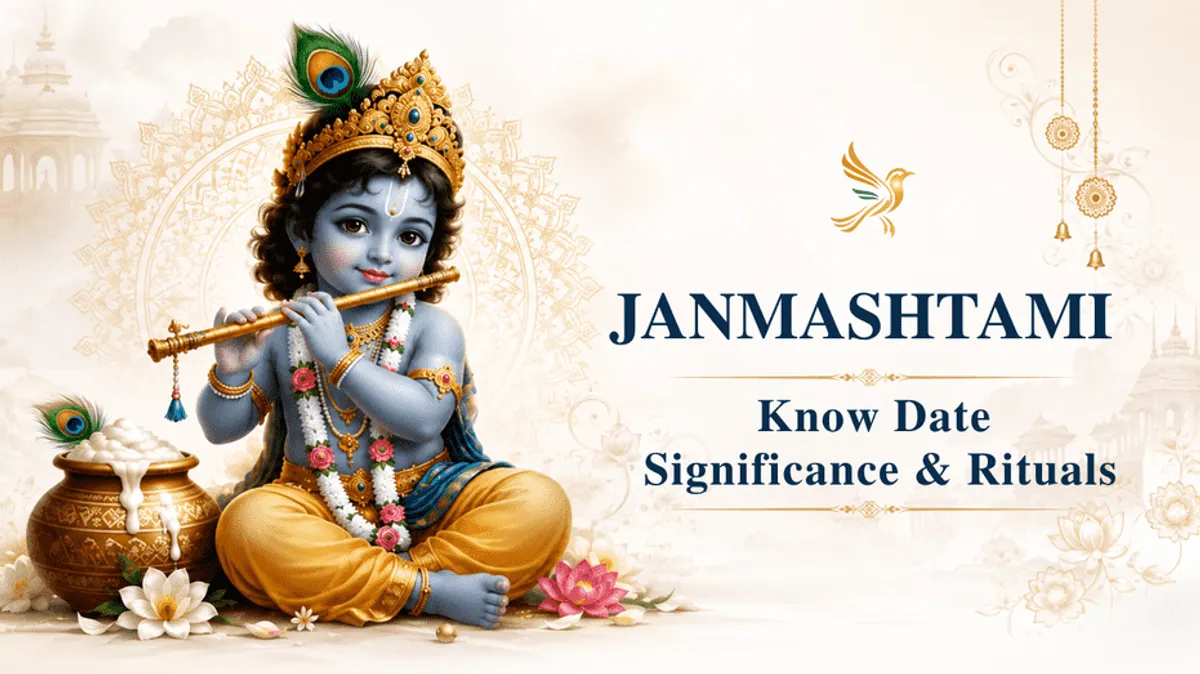
When is Janmashtami 2026?

In 2026, Krishna Janmashtami will be observed on Friday, September 4 by the Smarta tradition. ISKCON and many Vaishnava traditions will observe it on Saturday, September 5.

Janmashtami 2026 Highlights

Janmashtami Event Date & Time
Ashtami Tithi Begins September 4, 2026, 2:25 AM
Ashtami Tithi Ends September 5, 2026, 12:13 AM
Rohini Nakshatra Begins September 4, 2026, 12:29 AM
Rohini Nakshatra Ends September 4, 2026, 11:04 PM
Janmashtami September 4, 2026
Nishita Puja Around midnight, September 4-5
Dahi Handi September 5, 2026

Note: The exact puja and Nishita Kaal timings vary by city. Check your local Panchang for the most accurate timing.

Why Are There Two Dates for Janmashtami in 2026?

Janmashtami is being celebrated on September 4 and September 5, 2026, since the Ashtami Tithi falls on both these days. Ashtami Tithi begins at 2:25 AM on September 4 and ends at 12:13 AM on September 5. Different traditions have different ways of calculating the day when Janmashtami should be celebrated.

The Smarta tradition considers whether Ashtami Tithi is present during Nishita Kaal, the midnight period associated with the birth of Bhagwan Krishna. With Ashtami Tithi falling in the midnight period on September 4, Smartas choose September 4 as Janmashtami.

On the other hand, for the Vaishnava tradition, the presence of Ashtami Tithi at sunrise, along with Rohini Nakshatra, is important. Both these criteria are met on September 5, which is why Vaishnavas observe Janmashtami on September 5.

Why Is Janmashtami Celebrated?

According to Hindu tradition, Bhagwan Krishna was born in Mathura to Devaki and Vasudeva. His birth took place at midnight when Mathura was under the rule of Kansa, Devaki's brother.

Kansa had been warned that Devaki's eighth child would bring his downfall. He imprisoned Devaki and Vasudeva and killed all six of their children. When Devaki conceived her seventh child, Balarama, the embryo was miraculously transferred to Rohini's womb. The prison guards and maids told Kansa that Devaki had a miscarriage (foetal elimination/garbha-srava). Finally, when Bhagwan Krishna, the eighth child, was born, divine events helped Vasudeva carry the newborn Krishna out of the prison and across the Yamuna to Gokul, where he was raised by Yashoda and Nanda.

Janmashtami remembers this divine birth and the hope it represents. Bhagwan Krishna's arrival brought an end to fear and gave people the courage to stand for dharma.

Janmashtami Celebrations in Mathura and Vrindavan

Mathura is closely associated with Krishna's birth, while Vrindavan is remembered as the place of his childhood pastimes. Janmashtami brings these places alive with bhajans, kirtans, temple decorations and midnight celebrations.

At Krishna Janmabhoomi in Mathura, devotees gather for the midnight Janmotsav. Temples across Vrindavan decorate their Krishna idols and hold special pujas and kirtans.

Gokul celebrates Nandotsav on the day after Janmashtami. The celebration remembers the joy of Nanda Baba and the people of Gokul after Krishna's arrival. Dahi Handi and other festive traditions are also seen in different parts of India.

Janmashtami Vrat Rules

Many devotees keep a fast on Janmashtami and continue it until the prescribed Parana time,when the fast is traditionally broken. Some observe a strict nirjala vrat, while others follow a phalahari vrat according to their health and family tradition.

During a phalahari vrat, devotees may have fruits, milk, makhana, sabudana, kuttu, singhara and rajgira preparations. Sendha namak is generally used instead of regular salt. Grains, pulses, onion, garlic, non-vegetarian food and alcohol are avoided during the vrat.

Note: Pregnant women, children, elderly people and those with health concerns should not force themselves to observe a strict fast. 

Janmashtami Puja Samagri:

Keep the puja items ready before the evening so that the midnight celebration remains peaceful and focused on devotion.

  • Bal Gopal or Krishna idol

  • Panchamrit ingredients: milk, curd, ghee, honey and sugar

  • Gangajal

  • Tulsi leaves

  • Roli or kumkum

  • Chandan

  • Akshat

  • Flowers

  • New clothes and shringar items for Bal Gopal

  • Mor pankh and bansuri

  • Makhan-mishri

  • Panjiri

  • Fruits and dry fruits

  • Ghee diya and cotton wicks

  • Dhoop and camphor

  • Shankh

  • Aarti thali

  • Jhula or cradle

Janmashtami Puja Vidhi

  • Start your day by bathing yourself and putting on clean clothes.

  • Take a sankalp to observe the Janmashtami vrat.

  • Clean the temple room. Set up an idol of Bal Gopal or Bhagwan Krishna on a new chowki.

  • Decorate the altar with flowers and Tulsi leaves, and place a jhula for Bal Gopal if you have one.

  • Spend the day in prayer, bhajans and naam jaap. Many people also prefer reading or listening to stories about Bhagwan Krishna's life.

  • Prepare everything before Nishita Kaal (midnight): Panchamrit, Gangajal, flowers, Tulsi leaves, clothes, shringar, and bhog.

  • At midnight, bathe the idol using Panchamrit and then clean it with water and Ganga Jal, if available.

  • After that, dress the idol. Apply chandan, roli, and akshat. 

  • Offer flowers, makhan-mishri, panjiri, fruit, Tulsi leaves in front of Bhagwan Krishna’s charan.

  • Put Bal Gopal in the jhula and gently rock it while singing Bhagwan Krishna bhajans.

  • Blow the shankh to mark the birth of Bhagwan Krishna.

  • Complete the midnight puja with aarti. Then serve prasad and charnamrit.

  • Finally, break the fast at the prescribed parana time.

FAQs

What is the date of Janmashtami in 2026?

Janmashtami will be observed on September 4, 2026, according to the Smarta tradition. ISKCON and many Vaishnava traditions will observe it on September 5.

Why are Tulsi leaves offered to Bhagwan Krishna?

Tulsi is considered extremely dear to Bhagwan Vishnu and Shri Krishna. Also, as per many devotees Bhagwan Krishna puja is incomplete without Tulsi leaves

When is Dahi Handi in 2026?

Dahi Handi will be celebrated on Saturday, September 5, 2026, the day after the main Janmashtami observance.

What to offer Bhagwan Krishna as bhog on Janmashtami?

Devotees commonly offer makhan mishri, peda, kheer, panjiri, fruits, and other sattvic sweets to Bhagwan Krishna.

How can I prepare for Krishna Janmashtami?

You can prepare by arranging essential puja items like Tulsi leaves, diya, incense, and Ganga Jal in advance from trusted platforms like Sanatan Sansaar

Sanatan Sansaar

Reviving Dharma through Seva, Knowledge & Tradition.

Authentic Wisdom
Community Driven
Rooted in Tradition
Trusted & Secure
Our Services
  • Sanatan Bazaar
  • Sanatan Puja
  • Sanatan Seva
  • Divya Jyotish
  • Vedic Vaastu
  • Temples
  • Events
Quick Links
  • Home
  • About Us
  • Contact Us
Legal
  • Disclaimer
  • Terms and Conditions
  • Privacy Policy
  • Refund, Return & Cancellation Policy
  • Shipping Policy
Connect With Us

Building No. 2, Janak Cinema Complex, Janakpuri

New Delhi, India 110058

Mon–Sat: 9:00 AM – 6:00 PM

Get the App

Scan the code or grab it from your store — your spiritual companion, anywhere.

Download on the
App Store
GET IT ON
Google Play
App QR Code
Scan to Download
© 2026 Synonyms Online Pvt. Ltd. All Rights Reserved.ॐMade withfor Dharma & Devotees