

Loading…
Festival
Jayaparvati Vrat 2026: Date, Significance & Rituals
Sanatan Sansaar|24 July 2026|4 min read|
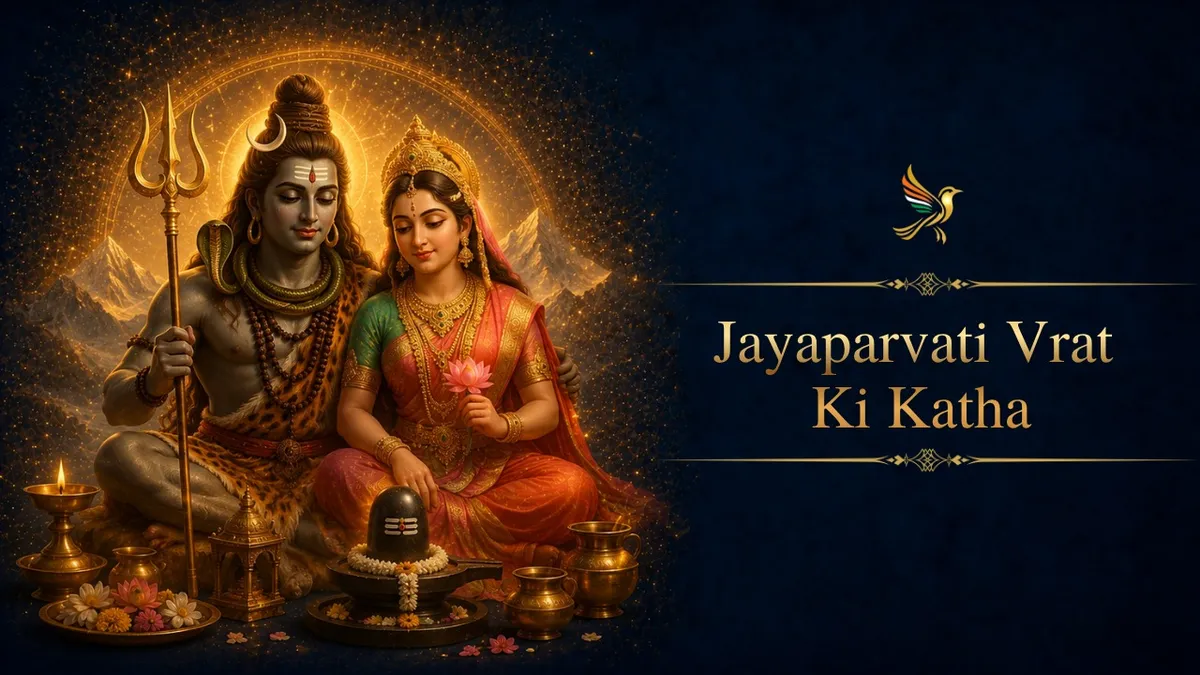
Jayaparvati vrat will be observed from Monday, July 27, 2026, to Saturday, August 1, 2026. This five-day vrat is dedicated to Maa Parvati and Bhagwan Shiv and is observed with great faith, especially in Gujarat, India.
Jayaparvati Vrat 2026 Date & Timings
- Trayodashi Tithi starts at 1:57 PM on July 26 and ends at 4:14 PM on July 27
- Pradosh puja muhurat (evening puja) is from 7:15 PM to 9:20 PM
- Jayaparvati vrat ends on Saturday, August 1, 2026
Jayaparvati Vrat Significance
Jayaparvati vrat is a five-day vrat dedicated to Maa Parvati and Bhagwan Shiv. It is inspired by an old story, the story of how Maa Parvati performed intense tapasya to get Bhagwan Shiv as her husband. Unmarried girls keep this vrat and pray for a husband who is loving and good. Married women keep it too. They pray for their husband's long life and good health.
There is one part of this vrat that stands out. Devotees sow Jawara (wheat or barley seeds) in a small earthen pot. Devotees care for the Jawara for all five days as a symbol of hope, happiness, and new beginnings. They pray that, just like the green shoots grow taller each day, their own family will also grow in peace, prosperity, and happiness.
Jayaparvati Vrat Katha
Maa Parvati wanted to marry Bhagwan Shiva, and for this she did severe tapasya for many years. Life was not easy during this time. She faced hardship after hardship, but her faith never broke, not even once.
Bhagwan Shiva saw her devotion and was moved by it. He accepted Maa Parvati as his wife. This is why, even today, women keep the Jayaparvati Vrat. They pray to Maa Parvati for a happy marriage, a husband who loves them, and a home filled with peace.
There is another story tied to this vrat too. A Brahmin couple, married for years, had no children. One day they found a Shivling deep in a forest, and from that day on, they worshipped Bhagwan Shiva and Maa Parvati with complete faith. Their devotion did not go unanswered. The divine couple blessed them with a child soon after. Even now, this story reminds devotees of one simple truth: faith that stays patient always finds its reward.
What Devotees Do on Jayaparvati Vrat?
For all five days of Jayaparvati Vrat, devotees rise early and take a bath before starting the day with prayers to Maa Parvati and Bhagwan Shiva. Some women keep a strict fast and avoid salt completely. Others stick to fruits, milk, and simple vrat foods, depending on their health and family tradition.
One part of this vrat is special. On the very first day, devotees sow Jawara in a small earthen pot. They worship it every day and take care of it right through the vrat. On the last night, many stay up singing bhajans, reciting “Sarva Mangala Maangalye, Shive Sarvaartha Saadhike | Sharanye Tryambake Gauri, Naaraayanii Namostute” mantra, and listening to the Jayaparvati vrat katha. Once the vrat ends, the Jawara is taken to a river or pond and immersed there, as part of the concluding ritual.
Jayaparvati Vrat Puja Vidhi
- Wake up early
- Take a bath and wear clean clothes
- Clean the puja area
- Sow Jawara in a small earthen pot on the first day
- Place an idol or image of Maa Parvati and Bhagwan Shiv
- Light a diya and incense
- Offer water, milk, Panchamrit, and bilva leaves to Bhagwan Shiv and kumkum, haldi, flowers, and fruits to Maa Parvati
- Wear or offer the Nagla (a cotton thread dipped in vermilion)
- Chant “Om Namah Shivaya” or recite “Om Uma Maheshwaraabhyaam Namah” mantra
- Avoid salt or observe vrat according to your tradition
- On the final day, immerse the Jawara and break the fast
FAQs
When is Jayaparvati Vrat in 2026?
It begins on Monday, July 27, 2026 and concludes on Saturday, August 1.
Who observes Jayaparvati Vrat?
Mostly unmarried girls and married women. Unmarried girls keep it hoping for a good husband. Married women keep it too, but their prayer is different, they want their husband's long life and a happy, prosperous home.
What exactly is Jawara?
It's just wheat or barley seeds, sown in a small earthen pot on day one of the vrat.
What's the Nagla used in this vrat?
It's a plain cotton thread dipped in vermilion. Devotees offer it during the daily worship of the Jawara.
Do people stay up all night for this vrat?
Yes, last night especially. Devotees sing bhajans, listen to the vrat katha, and pray to Maa Parvati and Bhagwan Shiv.