
.png)
12 sections
1 paragraphs
1 images
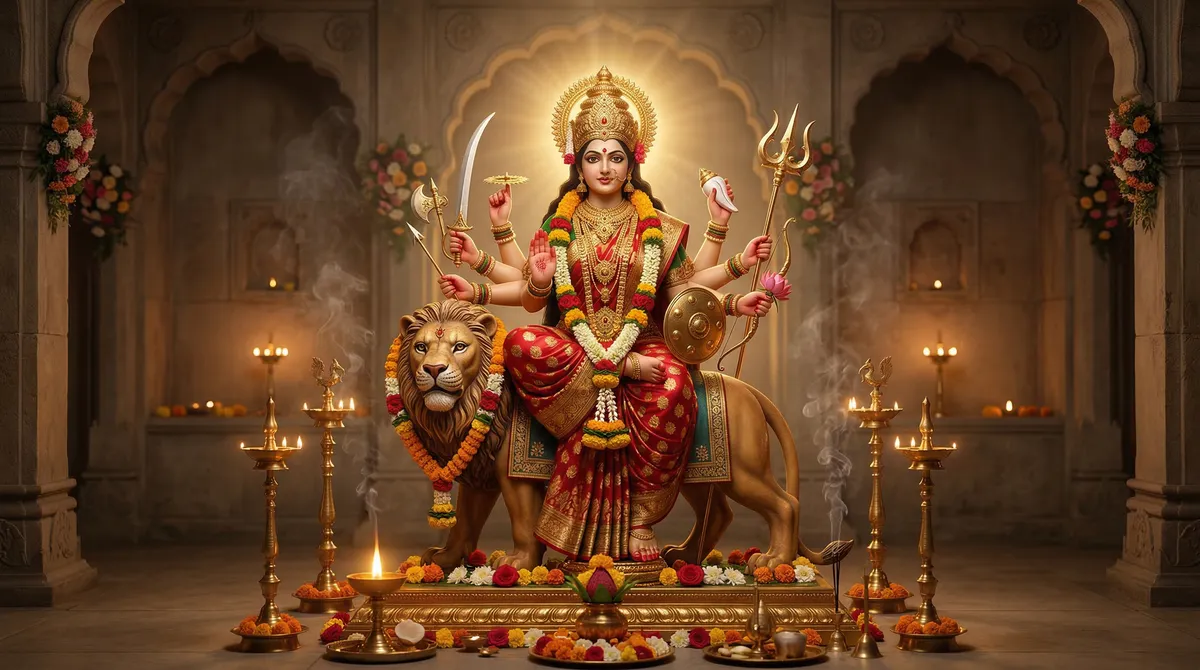
Navratri Vrat is one of the most sacred and widely observed fasts in Hindu tradition. This vrat is dedicated to the nine forms of Maa Durga and is observed to attain purity, devotion, self-discipline, inner strength, and spiritual upliftment. Devotees keep this fast with reverence so that the mind is purified, prayer becomes stronger, and the bond with the Goddess deepens through her grace.
Navratri Vrat is mainly observed twice a year—during Chaitra Navratri and Sharadiya Navratri. This holy period lasts for nine days and is devoted to the worship of the different forms of Maa Durga, prayer, mantra chanting, spiritual practice, and inner purification. This vrat is not limited to controlling food habits alone. It is also a practice of purity in thought, speech, and action. Many devotees spend these nine days in Devi Paath, listening to or reciting Durga Saptashati, mantra chanting, Aarti, and meditation, while trying to stay away from negative thoughts and harmful actions.
Navratri Vrat has deep spiritual importance because it is considered a sacred opportunity for strength, devotion, and self-purification. It encourages discipline in life, simplicity in diet, purity in thoughts, and steadiness in worship. Devotees believe that observing this vrat with a sincere heart brings the grace of Maa Durga, increases inner courage, and removes negativity. It is also seen as a valuable spiritual practice that guides a person toward a more aware, devotional, and balanced way of living.
Devotion toward Maa Durga becomes stronger. Self-discipline and restraint are encouraged. Mental peace and spiritual concentration are gained. Negative thoughts and fear are reduced. Courage, faith, and positivity grow within. A feeling of purity and inner balance is experienced. It inspires regular spiritual practice.
Navratri Vrat is mainly observed twice a year—during Chaitra Navratri and Sharadiya Navratri in the month of Ashwin. Some devotees also observe Gupt Navratri. Each Navratri is devoted to the worship of Maa Durga, self-purification, devotion, and strengthening spiritual awareness.
The method of observing Navratri Vrat may vary according to family tradition and personal ability, but the commonly followed guidelines are: wake up early in the morning and begin the day with prayer; maintain bodily and environmental cleanliness; worship Maa Durga; spend time in mantra chanting, Durga Saptashati, Devi Paath, or devotional reading; follow a simple fasting routine; avoid anger, criticism, and negative actions; and keep the mind calm, sattvic, and devotional throughout the day.
Navratri Vrat can be observed simply and with sincerity. Wake up early in the morning. Bathe and wear clean clothes. Clean the worship area. Offer flowers, a lamp, and prayers to Maa Durga. Take the vow of fasting with devotion. Follow your chosen fasting method throughout the day. Chant Devi mantras or read devotional texts. Spend the day in prayer, simplicity, and self-restraint. Complete the vrat on the ninth day or according to your family tradition.
Food rules during Navratri Vrat may vary according to custom, but most devotees consume simple vrat-friendly foods such as fruits, milk, curd, dry fruits, dishes made with rock salt, sabudana, kuttu flour, singhara flour, potatoes, and light preparations made from fasting ingredients. Some devotees observe a partial fast, while others follow a stricter fast according to their tradition, health, and spiritual practice.
Many devotees avoid regular grains, tamasic food, excessive spices, alcohol, negative speech, anger, criticism, harmful actions, and unnecessary distractions during Navratri Vrat. The central spirit of this vrat is purity, simplicity, restraint, and devotion.
Navratri Vrat is generally completed on Ashtami, Navami, or Dashami according to family tradition and personal vow. Many devotees perform Kanya Pujan, Havan, distribution of prasad, and prayers to the Goddess before ending the fast. Ending the vrat with reverence and awareness is considered important.
Navratri Vrat is not only a fasting method; it is a sacred practice of self-purification, devotion to the Goddess, and spiritual awakening. It teaches the devotee to step back from outer busyness and turn inward through prayer, discipline, and spiritual practice. When observed with sincerity, this vrat brings purity of thought, firmness of faith, and a deeper connection with Maa Durga.
Navratri Vrat is a deeply meaningful spiritual practice observed by countless devotees with reverence and devotion. It is kept for purity, devotion, discipline, inner strength, and mental peace. Observing Navratri Vrat with true faith can become a beautiful path to strengthen prayer, purify the mind, and move closer to the grace of the Goddess.