

Loading…
Ayurveda
Neem in Ayurveda: Importance and Traditional Uses
Sanatan Sansaar|27 March 2026|1 min read|
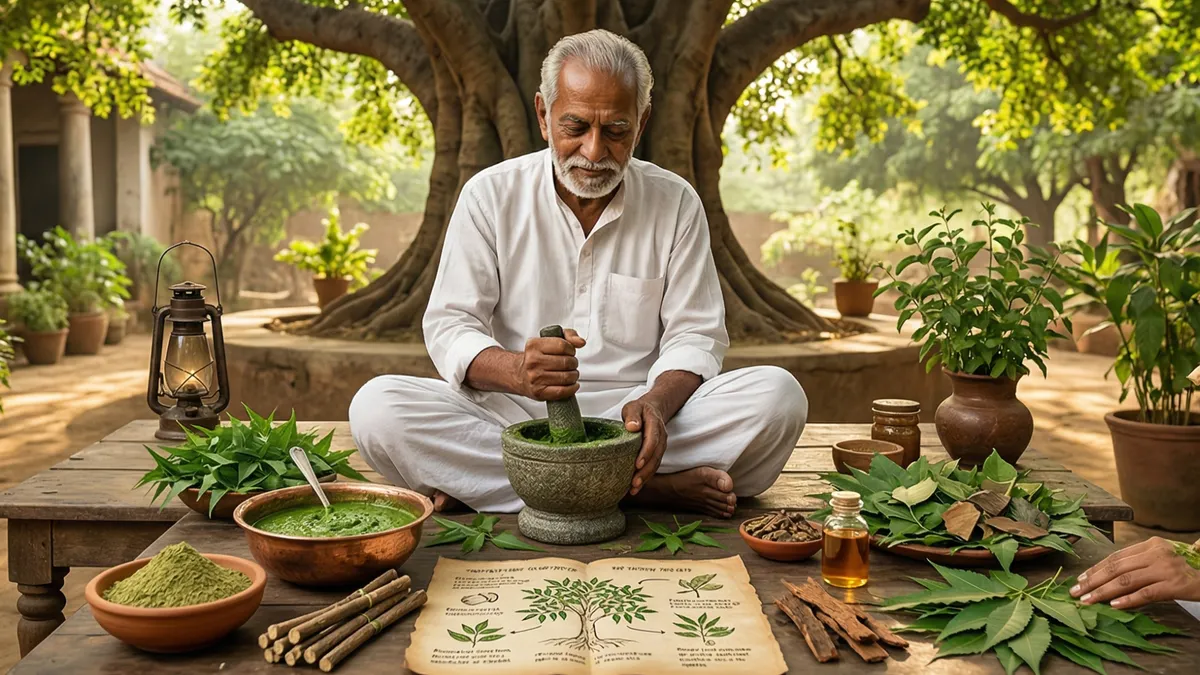
Neem has long been regarded as one of the most respected plants in Ayurveda. Its importance comes from its strong traditional association with cleansing, balance, and protective care. For generations, Neem has been a familiar part of household life and traditional wellness practices, valued for the way it supports everyday discipline and natural living.
In Ayurveda, Neem is not seen as an ordinary plant. It is known for its distinct nature, powerful traditional reputation, and wide place in daily care. Its role reflects the Ayurvedic understanding that nature provides simple yet meaningful support when used with wisdom and moderation.
The Ayurvedic Importance of Neem
Ayurveda gives special attention to herbs and plants that help maintain internal and external balance, and Neem has always held an important place in this tradition. It is often associated with purification, cleansing, and support for a clearer, more balanced state of living. Its importance lies not only in one specific use, but in the broad traditional value attached to it. Neem has been respected in a way that combines practicality with trust. It is often considered one of those plants that represents the strong, protective side of Ayurvedic wisdom.
Why Neem Is So Widely Respected
Neem stands out because of its long-standing reputation in traditional care. Ayurveda values herbs that can support routine living in direct and useful ways, and Neem is known for exactly that. It has traditionally been linked with maintaining cleanliness, managing heat and imbalance, and supporting general care in a natural way. This deep respect also comes from its place in everyday life. Neem has not been limited to formal herbal systems. It has been part of home-based practices, seasonal habits, and household wellness traditions for generations. That continuity gives Neem a special credibility in Ayurvedic culture.
Neem as a Symbol of Cleansing and Balance
One of the central ideas connected with Neem in Ayurveda is cleansing. This does not only refer to physical cleanliness, but also to the broader concept of keeping the body and surroundings balanced and protected. Ayurveda often sees health as something that must be preserved through daily care, and Neem fits naturally into that philosophy. Its traditional role reflects a preference for natural methods that support freshness, order, and disciplined living. Neem is therefore often associated with a kind of practical purity - not something decorative, but something useful, grounded, and deeply traditional.
Traditional Uses of Neem in Ayurveda
Neem has traditionally been used in many forms as part of Ayurvedic and household practices. It is commonly associated with skin care, oral care, seasonal balance, and general cleansing routines. What is especially notable is that these uses are not separate from daily life. They are simple, practical, and closely connected with regular habits. This is one of the reasons Neem remains so important. It is not valued only in theory. It has been used in lived experience, where everyday routines become part of long-term well-being.
Neem and Skin Care Traditions
In Ayurveda, the skin is often seen as a visible reflection of internal balance. Neem has traditionally been appreciated in skin-related practices because of its strong cleansing character. It is commonly associated with care routines meant to support freshness and a clearer condition of the skin. Its importance here comes from Ayurveda’s preference for natural support that works through regular use and patient care rather than quick excess. Neem represents that steady and traditional approach very well.
Neem and Oral Care
Neem has also been closely connected with traditional oral care. In many Indian households, it has long been part of practices related to maintaining cleanliness and freshness in the mouth. Ayurveda values oral care as part of overall daily discipline, not as a separate concern, and Neem has traditionally supported this part of routine life. This reflects an important Ayurvedic principle: health is supported not only through treatment, but also through everyday habits that preserve balance before discomfort develops.
Neem and Seasonal Support
Seasonal shifts often bring visible changes in the body and environment, and Ayurveda pays close attention to these patterns. Neem has traditionally been valued during times when extra cleansing, lightness, and disciplined care feel necessary. Its role in such times reflects the Ayurvedic understanding that the body benefits from natural support when conditions become challenging. Neem is often remembered as one of the plants that helps maintain a sense of order and freshness during such transitions.
Neem and Household Wellness
Neem’s traditional use is not limited to personal care. It has also been associated with the wider home environment. This is one reason it has remained so close to daily life. Ayurveda recognizes that surroundings influence well-being, and Neem has often been included in household practices where cleanliness and protection are given importance. This makes Neem especially interesting in Ayurvedic thought. It bridges the space between personal wellness and environmental care, showing how balance is supported not only within the body but also around it.
The Strong Nature of Neem in Ayurvedic Thought
Every important Ayurvedic plant carries a distinct character, and Neem is often understood as having a strong, sharp, and corrective nature. This gives it a special place among traditional herbs. It is not usually associated with softness alone, but with discipline, cleansing, and firm support. That is part of its identity. Neem represents the kind of natural strength that Ayurveda respects - strength that restores order, supports cleanliness, and helps prevent the buildup of imbalance in daily life.
Neem in Modern Wellness Conversations
Modern life has made people more interested in natural care, plant-based support, and traditional systems of living. In this setting, Neem continues to attract attention because its Ayurvedic value feels practical and timeless. It is not a trend-based ingredient with temporary appeal. It belongs to a much older and more stable tradition of household wellness. Its continued relevance comes from the fact that people still seek the same things Ayurveda always valued: cleanliness, balance, protection, and sustainable daily habits. Neem continues to speak to those needs in a very direct way.
A Traditional Plant with Lasting Relevance
Neem remains meaningful because it represents a form of wisdom that does not feel distant from ordinary life. It reminds us that natural care can be strong without being complicated, and that daily discipline has a lasting impact on wellness. Ayurveda never treats such plants as temporary solutions. It sees them as part of a broader relationship with nature, rhythm, and thoughtful living. Neem is one of the clearest examples of that understanding.
Conclusion
Neem in Ayurveda is valued for its importance in cleansing, balance, household care, and traditional everyday wellness. Its reputation has been built over generations through simple, practical, and meaningful use. It reflects the Ayurvedic belief that natural living is strengthened by regular habits, disciplined care, and respect for what supports balance. Even in modern times, Neem continues to hold its place as a powerful symbol of traditional wisdom. Its lasting presence in Ayurvedic thought shows that some plants remain important not because they are fashionable, but because they continue to serve real and everyday human needs.