

Loading…
Festival
The Wondrous Treasures That Emerged from Samudra Manthan
Sanatan Sansaar|1 July 2026|7 min read|
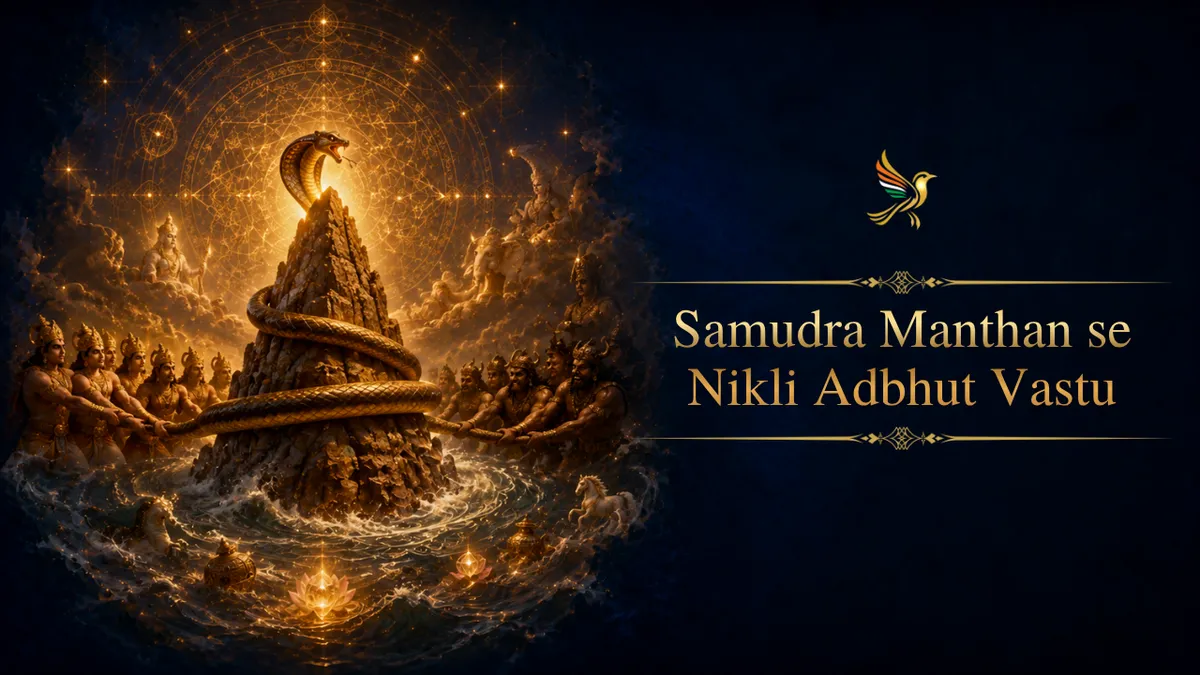
The story of Samudra Manthan is one of the most famous and profound stories in Sanatan Dharma. It is not just the story of a great effort made by the Devas and Asuras, but also a beautiful lesson about life. This story carries patience, struggle, sacrifice, attachment, wisdom, and finally, the attainment of Amrit.
According to traditional beliefs, there was a time when the strength of the Devas began to decline and the influence of the Asuras started increasing. At that time, Bhagwan Vishnu advised the Devas to churn the Ksheer Sagar.
The Asuras were also included in this great churning. Mandarachal Parvat was used as the churning rod, and Vasuki Nag was used as the rope. The Devas stood on one side and the Asuras on the other. In this way, the great Samudra Manthan began.
What is the significance of Samudra Manthan?
Samudra Manthan teaches us that no great reward can be achieved without effort, patience, and struggle. Before Amrit appeared, poison came out first. This shows that whenever a major transformation begins in life, difficulties may appear first.
Bhagwan Shiv held that poison in his throat and protected the entire creation. For this reason, he came to be known as Neelkanth. This incident teaches us that true greatness lies in sacrifice, patience, and responsibility.
What Were the Wondrous Things That Emerged from Samudra Manthan?
Many divine objects and powers emerged from Samudra Manthan. These are also known as the Ratnas of Samudra Manthan. Different traditions may mention slightly different names, but their deeper meaning remains highly significant.
Halahal Vish
The first thing that emerged from Samudra Manthan was Halahal Vish. This poison was so dangerous that it could have put the entire creation in danger. At that moment, Bhagwan Shiv held the poison in his throat and protected the world. Halahal Vish teaches us that difficulties may arise at the beginning of great work. When we bring a major change into our lives, the first things that may come out are our inner fear, anger, ego, and weakness. At such times, patience becomes our greatest support.
Kamadhenu
Kamadhenu, the divine cow, emerged from Samudra Manthan. Kamadhenu is considered a symbol of service, nourishment, prosperity, and dharma. In Sanatan tradition, Gau Mata is given special respect with this very sentiment. Kamadhenu teaches us the value of care, compassion, and service. Prosperity does not come only from wealth. True prosperity comes from service, nourishment, and compassion towards others.
Uchchaihshravas
Uchchaihshravas, the divine horse, also emerged from Samudra Manthan. He is considered a symbol of speed, strength, movement, and royal glory. Uchchaihshravas teaches us that power and speed are beautiful, but they must be used with wisdom. Moving ahead quickly is good, but the direction must be right. Speed without wisdom may lead one in the wrong direction.
Airavat
Airavat, the divine elephant, emerged from Samudra Manthan and became the vehicle of Indra Dev. Airavat represents strength, stability, dignity, and patience. Airavat teaches us that true strength is calm, steady, and responsible. Strength does not mean merely showing power. The right use of strength lies in protection, balance, and dignity.
Kaustubh Mani
Kaustubh Mani is considered one of the most special divine gems that emerged from Samudra Manthan. Bhagwan Vishnu wore it. It is regarded as a symbol of purity, divine brilliance, and excellence. Kaustubh Mani teaches us that true brilliance is not found in outer shine but in inner purity. A person’s true value is recognized through conduct, truth, and balance.
Kalpavriksha
Kalpavriksha also emerged from Samudra Manthan. It is considered a divine wish-fulfilling tree. It represents the generosity of nature and the blessings of creation. Kalpavriksha reminds us that nature gives us a lot, but it must also be respected. When human beings live in balance with nature, both prosperity and peace come into being.
Apsaras
Apsaras also emerged from Samudra Manthan. They are considered symbols of art, beauty, music, and the joy of life. The Apsaras teach us that life is not only about power and wealth. Beauty, art, and joy also have an important place. To make life complete, art, emotion, and beauty are needed along with action.
Devi Lakshmi
The appearance of Devi Lakshmi from Samudra Manthan is one of the most important events in this story. Devi Lakshmi is the goddess of wealth, prosperity, fortune, and auspiciousness. She chose Bhagwan Vishnu. Devi Lakshmi teaches us that lasting prosperity stays where there is dharma, balance, and protection. Wealth becomes truly auspicious only when it is connected with dharma and dignity.
Varuni Devi
Varuni Devi also emerged from Samudra Manthan. She is associated with enjoyment, attraction, and worldly attachment. Varuni Devi reminds us that not everything that appears attractive is necessarily beneficial. Pleasure and enjoyment have their place in life, but without wisdom, the same pleasure can become bondage.
Chandra Dev
Chandra Dev also emerged from Samudra Manthan. Bhagwan Shiv placed him on his head. Chandra represents coolness, the mind, and emotional balance. Chandra Dev teaches us that keeping the mind calm and balanced is very important. Along with power and penance, peace of mind is also necessary. Without peace, spiritual practice feels incomplete.
Shankh
The divine Shankh also emerged from Samudra Manthan. Shankh is considered very sacred in worship. The sound of the Shankh is regarded as a symbol of auspiciousness, purity, and the announcement of dharma. The Shankh represents a sacred beginning, purity, and positive energy. When the right resolution is taken in life, it awakens new energy within us, just like the sound of a Shankh.
Dhanvantari
Bhagwan Dhanvantari emerged from Samudra Manthan carrying the Amrit Kalash. He is regarded as the deity of Ayurveda and health. Dhanvantari teaches us that health is the greatest wealth in life. Wealth, strength, and success become meaningful only when the body and mind are healthy.
Amrit Kalash
At the end of Samudra Manthan, the Amrit Kalash appeared. The entire churning had taken place for this Amrit. A conflict began between the Devas and Asuras over Amrit. Then Bhagwan Vishnu took the form of Mohini and gave the Amrit to the Devas. Amrit Kalash teaches us that a great reward is received by the one who walks on the path of dharma, discipline, and dignity. Amrit is not only a symbol of immortality. It is also a symbol of truth, knowledge, and inner peace.
Churning the Ocean Within
Samudra Manthan is not only a story from the Puranas. It is also a symbol of our own life. When we look within ourselves, the first thing that often comes out is our inner poison. Anger, ego, greed, fear, and confusion. But if we remain patient and continue walking on the right path, then from the same inner churning, wisdom, peace, strength, health, prosperity, and amrit-like truth can also emerge.
The Lesson of Patience and Wisdom
Samudra Manthan teaches us that the most valuable things in life do not come instantly. First comes the test. Then patience is needed. Then sacrifice is needed. And finally, Amrit is received through true worthiness.
From Story to Life
Samudra Manthan helps us understand that every person has an ocean within. When a person churns this inner ocean, poison appears first and treasures come later. That is why one should not be afraid of difficult times. With patience, faith, and the right path, even life can reveal Amrit like truth.
FAQs
What is Samudra Manthan?
Samudra Manthan was the divine churning of the Ksheer Sagar, performed by the Devas and Asuras to obtain Amrit.
Who advised the Devas to perform Samudra Manthan?
According to traditional beliefs, Bhagwan Vishnu advised the Devas to perform Samudra Manthan.
What was used as the churning rod and the rope in Samudra Manthan?
Mandarachal Parvat was used as the churning rod, and Vasuki Nag was used as the rope.
What came out first from Samudra Manthan?
Halahal Vish came out first from Samudra Manthan.
Why is Bhagwan Shiv called Neelkanth?
Bhagwan Shiva held the Halahal Vish in his throat. Because of this, he is called Neelkanth.
When did Devi Lakshmi appear from Samudra Manthan?
Devi Lakshmi appeared during Samudra Manthan and chose Bhagwan Vishnu.
Why is Dhanvantari Ji connected with Samudra Manthan?
Bhagwan Dhanvantari emerged from Samudra Manthan carrying the Amrit Kalash. He is regarded as the deity of Ayurveda and health.
What is the main message of Samudra Manthan?
The main message of Samudra Manthan is that before receiving amrit-like rewards in life, one has to face difficulties. True attainment comes through patience, sacrifice, and the path of dharma.