

Loading…
Stories
Why Is Durva Offered to Lord Ganesha?
Sanatan Sansaar|28 July 2026|7 min read|
Overview
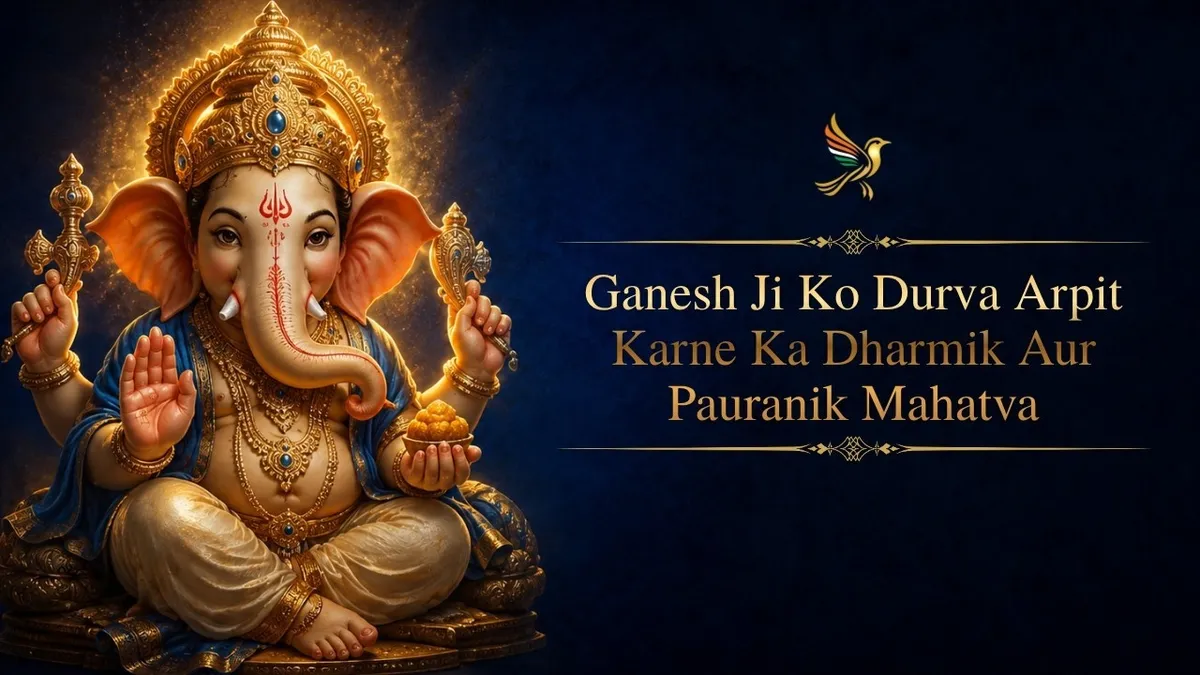
Whenever a Ganpati puja is set up at home, along with modaks, vermillion, and red flowers, there's almost always one more thing in the plate fresh, green durva grass. Many of us have grown up seeing durva being offered during puja, but few actually know why this particular grass is so dear to Lord Ganesha. Let's take a closer look at the story and meaning behind it.
Durva Is More Than Just Grass
In Sanatan tradition, everything carries a deeper meaning, and durva is no exception. It may look like an ordinary blade of grass, but it's regarded as a symbol of devotion, humility, and surrender. Whether it's Ganesh Chaturthi, Sankashti Chaturthi, Vinayaka Chaturthi, or the regular Wednesday puja, devotees offer durva to Ganpati ji first, before anything else. This tradition has been passed down through generations.
Lord Ganesha is revered in Sanatan Dharma as the deity who is worshipped first and the remover of obstacles. Before starting any auspicious task, people remember him so that the work is completed without hindrance and is blessed with wisdom and good judgement. It's believed that the durva offered during puja should be fresh, tender, and free of roots. This isn't just a ritual – it's also seen as a way of surrendering one's inner anger, ego, and mental unrest at the feet of the deity.
The Story of Analasura
The most well-known story connected to durva is that of a demon named Analasura. According to popular belief, this demon was so powerful that the fire emanating from his body terrified gods, sages, and ordinary people alike. When his terror grew unbearable, the gods sought refuge with Lord Ganesha.
Ganesha took on his massive form and swallowed Analasura, putting an end to him. But after swallowing the demon, an unbearable heat began building up inside his body. The gods tried everything—sandalwood paste, lotus flowers, and cool water – but nothing worked. Finally, the sages offered him fresh green durva grass, and it's said that its cooling nature helped soothe the intense heat within him. From that day on, durva became one of Lord Ganesha's most cherished offerings. The story varies slightly across regions, but the core idea remains the same.
The Deeper Lesson of Durva
Looked at closely, durva isn't just a plant it carries a life lesson too. No matter how many times it's cut, it grows back again. This is perhaps why it's seen as a symbol of patience, resilience, and the ability to rise again after setbacks. Its cooling nature also reminds us how important it is to stay away from anger and jealousy and live with a calm, balanced mind. Since Ganesha is regarded as the deity of wisdom and intellect, offering him durva is also seen as a personal resolve to cultivate these same qualities within oneself.
Why Exactly 21 Blades of Durva?
It's commonly seen that exactly 21 blades of durva are offered during Ganesh puja, not just one or two. There's a reasoning behind this number as well the five senses of perception, five organs of action, five vital life forces, five subtle elements, and the mind add up to 21. So offering 21 blades of durva symbolises surrendering one's entire being at Ganpati ji's feet. Naturally, the exact method can vary by region and family in some places a single bunch of 21 blades is tied together and offered, while elsewhere 21 small individual bundles are offered separately.
How to Offer Durva Properly
The most important thing while offering durva during puja is devotion and cleanliness. One should bathe, wear clean clothes, and keep the puja space tidy before beginning. The durva should always be fresh, green, and without roots. It's considered proper to wash it with clean water before offering it to the deity.
While offering durva, one can chant the mantra "Om Gam Ganapataye Namah." After that, depending on one's means, modaks, laddoos, fruits, or any other simple, sattvic offering can be made. The purpose of the puja shouldn't be limited to asking for one's wishes to come true it should also be about seeking the wisdom and courage to face life's challenges and make the right choices.
Is Durva Offered Only on Wednesdays?
No. Wednesday is considered a special day for worshipping Lord Ganesha, which is why offering durva on this day is more common. But that doesn't mean durva can't be offered on other days. It can be offered with devotion on Ganesh Chaturthi, Sankashti Chaturthi, Vinayaka Chaturthi, or at the start of any auspicious work. Devotion isn't bound to a particular day it's a matter of faith and sincerity.
In the End
One of durva's greatest qualities is its simplicity. The fact that it keeps growing back no matter how often it's cut teaches us to rise again after hardships. Its greenness inspires hope, while its cooling nature signals the need to keep anger and unrest at bay.
Offering durva to Ganesha isn't just a ritual - it's also a way of keeping life balanced and positive. The story of Analasura shows us just how significant durva's cooling nature is, and the way it keeps regrowing teaches us patience and the value of continuous effort.
One thing worth remembering is this: offering durva isn't a shortcut to a miracle. Sanatan tradition has always emphasised that along with devotion, good deeds, honesty, and humility matter just as much. So the next time you offer durva to Ganpati bappa, don't just pray for material comforts ask for the wisdom and understanding to face every difficulty in life with courage.
In the end, it can be said that pleasing the divine doesn't require expensive things it requires a sincere heart and pure intent. Even a small blade of durva offered to Ganesha teaches us that humility, patience, and good deeds are truly life's greatest wealth. And it's only when worship stops being a mere ritual and becomes part of how we conduct ourselves that it bears its true fruit.
FAQs
Why is durva offered to Lord Ganesha?
It's believed that after Ganesha swallowed the demon Analasura, an unbearable heat built up inside his body, and it was the cooling nature of durva that calmed it. Since then, durva has been one of his most beloved offerings, also seen as a symbol of devotion and surrender.
Why are exactly 21 blades of durva offered during Ganesh puja?
The five senses of perception, five organs of action, five vital life forces, five subtle elements, and the mind add up to 21. So offering 21 blades of durva symbolizes surrendering one's entire being at Ganpati ji's feet.
Can durva be offered only on Wednesdays?
No. Wednesday is considered special for Ganesha worship, but durva can be offered with devotion on Ganesh Chaturthi, Sankashti Chaturthi, Vinayaka Chaturthi, or at the start of any auspicious work.
What kind of durva should be used for puja?
The durva should always be fresh, green, and without roots. It should be washed with clean water before being offered to the deity.
Which mantra is chanted while offering durva?
The mantra "Om Gam Ganapataye Namah" can be chanted while offering durva.
What is the story of Analasura?
According to the story, a demon named Analasura was spreading terror with the fire from his body. On the gods' request, Ganesha swallowed him, which caused immense heat to build up inside his body a heat that was finally calmed by the durva offered by the sages.
What lesson does durva teach us?
Durva grows back no matter how often it's cut, which is why it's seen as a symbol of patience, resilience, and never giving up. Its cooling nature also teaches us to stay calm and away from anger and unrest.
Is offering durva a guarantee of a miracle?
No. Offering durva is a way of expressing devotion, not a miraculous remedy. Sanatan tradition has always held that along with devotion, good deeds, honesty, and humility matter just as much.