

Loading…
Festival
5 Biggest Myths About Ekadashi
Sanatan Sansaar|10 July 2026|6 min read|
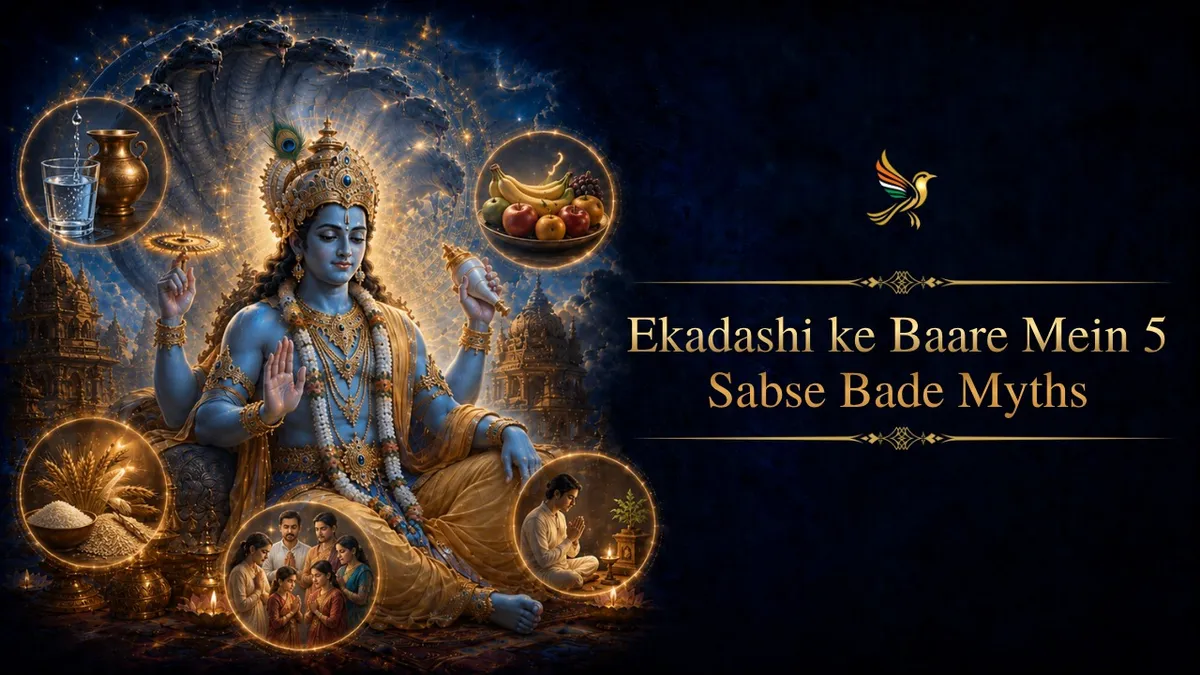
Ekadashi is considered a sacred day in Sanatan Dharma for devotion to Bhagwan Vishnu, vrat, japa, discipline, and self-reflection. There are generally two Ekadashis in every lunar month—one in Shukla Paksha and one in Krishna Paksha. Ekadashi is not just a date in the Panchang. It is an opportunity for devotees to calm the mind, bring discipline into life, and spend time remembering Bhagwan Vishnu.
Over time, many myths have developed around Ekadashi. Some people think it is only a day of fasting. Some consider it too difficult. Some avoid observing the vrat because they fear making a small mistake. In reality, Ekadashi is not a day of fear. It is a day of devotion, faith, discipline, and purity of the mind.
Why is it important to understand Ekadashi correctly?
It is important to understand Ekadashi correctly because it is not limited only to food rules. It is also connected with the mind, speech, conduct, devotion, and self-discipline.
When Ekadashi is seen only as a set of strict rules, fear and confusion arise in the devotee’s mind. But when Ekadashi is understood as an opportunity to connect with Bhagwan Vishnu, the vrat becomes easier, more beautiful, and more meaningful. Ekadashi teaches us that in life, it is also important to pause, control the mind, and remember Bhagwan.
Why is this the biggest misconception?
Many people believe that Ekadashi vrat only means remaining hungry throughout the day. This is one of the biggest myths. The real meaning of vrat is sankalp. When a devotee observes the Ekadashi vrat, they do not only give up food but also try to keep their thoughts, speech, and actions sattvik.
If a person stays hungry the whole day but carries anger, jealousy, lies, backbiting, or ego in the mind, then the deeper meaning of the vrat remains incomplete. The purpose of Ekadashi is not only to keep the stomach empty. Its purpose is to connect the mind with Bhagwan Vishnu.
Myth 2: Every Ekadashi must be observed as nirjala
Should every Ekadashi be observed as nirjala?
Many people think that every Ekadashi must be observed without water. This is also a big misconception. Nirjala vrat is especially associated with Nirjala Ekadashi. It is not compulsory for everyone to remain without water on every Ekadashi. On regular Ekadashi days, many devotees observe fruit fasting. Some take milk or fruits. Some follow a simple sattvik vrat according to their health and capacity.
Senior citizens, pregnant women, sick people, or those dealing with health issues should take proper care of their health before observing a difficult fast. Bhagwan sees the devotion behind the vrat. Causing unnecessary hardship to the body is not the purpose of fasting.
Myth 3: If a mistake happens during the vrat, everything becomes useless
Why does the fear of mistakes increase?
Many devotees avoid observing the vrat because they fear making a mistake. They feel that if some puja material is missed, if a mantra is not pronounced correctly, or if a rule is unknowingly broken, the entire vrat will become useless. This fear takes the devotee away from Bhagwan instead of bringing them closer. The spirit of Ekadashi is rooted in shraddha, not fear.
If a mistake happens unknowingly, one can ask Bhagwan Vishnu for forgiveness and continue the vrat and puja with devotion. Yes, deliberate carelessness is a different matter. But one should not be afraid of small mistakes made unknowingly. A diya, Tulsi leaves, sincere name chanting, and a humble heart make the puja meaningful.
Myth 4: Ekadashi is only for elderly or highly religious people.
Is Ekadashi only for the elderly?
Many young people think that vrats like Ekadashi are only for grandparents or highly religious people. This thought is also not correct. Ekadashi is for every person who wants peace, discipline, and balance in life.
In today’s time, stress, rush, overthinking, irregular routines, and mental tiredness have increased a lot. In such a situation, Ekadashi gives a person an opportunity to pause and look within.
Young people can also connect Ekadashi with their lives. Even if they cannot observe a complete fast, they can eat sattvik food, chant the name of Bhagwan Vishnu, meditate for some time, help someone, and keep their thoughts positive. Ekadashi is not connected with age. It is connected with bhav.
Myth 5: Ekadashi is only about food rules
Is Ekadashi only a food rule?
Many discussions around Ekadashi remain stuck only on food. What to eat, what not to eat, whether to avoid rice, whether to take fruits, and so on. Food rules have their own importance, but Ekadashi is not limited only to food rules.
Ekadashi is deeply connected with the purity of the mind. On this day, devotees should try to avoid anger, lies, backbiting, harsh speech, unnecessary arguments, and negative thoughts. If the food is sattvic but the speech is harsh, the spirit of the vrat becomes weak. If the stomach is empty but the mind is full of ego, the sadhana remains incomplete.
What should be done on Ekadashi?
How to observe Ekadashi with the right bhav?
Ekadashi should not be seen as a difficult burden. It should be observed as an opportunity to connect with Bhagwan Vishnu.
What devotees can do on Ekadashi
• Wake up early and take a bath.
• Worship Bhagwan Vishnu with devotion.
• Offer Tulsi leaves, flowers, fruits, and a diya.
• Chant the mantra “Om Namo Bhagavate Vasudevaya.”
• Avoid anger, harsh speech, and negative thoughts.
• Spend time in prayer, japa, reading, or satsang.
• Do charity or seva according to your capacity.
• Observe the vrat according to your health and ability.
• Keep the mind peaceful and sattvic throughout the day.
The most important point
The main essence of Ekadashi is remembering Bhagwan Vishnu, purifying the mind, practicing self-control, and taking a noble sankalp.
The true message of Ekadashi
Ekadashi is not a day of hunger. It is a day of bhakti. It is not a day of fear. It is a day of faith. It is not a day of harshness. It is a day of discipline and peace. When a devotee remembers Bhagwan Vishnu with a sincere heart, keeps the mind calm, and tries to bring purity into life, only then is the true spirit of Ekadashi fulfilled.
Ekadashi teaches us that a vrat is not only about food but also about bhav. Puja is not only about materials but also about shraddha. And bhakti is not limited to the temple. It should also be reflected in our thoughts, behavior, and lifestyle.
FAQs
Is Ekadashi only about staying hungry?
No. Ekadashi is not only about staying hungry. It is a day of devotion, discipline, purity of mind, and remembrance of Bhagwan Vishnu.
Is Nirjala Vrat compulsory on every Ekadashi?
No. The Nirjala fast is especially associated with Nirjala Ekadashi. On other Ekadashi days, devotees can observe the vrat according to their capacity, health, and tradition.
What should I do if a mistake happens during the vrat?
If a mistake happens unknowingly, there is no need to fear. Ask Bhagwan Vishnu for forgiveness and continue the vrat with devotion.
Can young people also observe Ekadashi Vrat?
Yes. Young people can also observe Ekadashi according to their faith and capacity. They can connect with this day through sattvik food, japa, meditation, and positive conduct.
What is the real purpose of Ekadashi?
The real purpose of Ekadashi is to remember Bhagwan Vishnu, practice self-control, purify the mind, and lead a sattvik life.
What If I cannot complete the full vrat?
If you cannot complete the full vrat due to health or any other reason, do not worry. Ekadashi can also be observed with sattvik food, japa, prayer, and devotion.