

Loading…
Ashadha Gupt Navratri 2026 Dates
|
Day |
Date |
Puja |
|
Day 1 |
15 July 2026 (Wednesday) |
Ghatasthapana, Maa Shailputri Puja |
|
Day 2 |
16 July 2026 (Thursday) |
Maa Brahmacharini Puja |
|
Day 3 |
17 July 2026 (Friday) |
Maa Chandraghanta Puja, Maa Kushmanda Puja |
|
Day 4 |
18 July 2026 (Saturday) |
Maa Skandamata Puja |
|
Day 5 |
19 July 2026 (Sunday) |
Maa Katyayani Puja |
|
Day 6 |
20 July 2026 (Monday) |
Maa Kalaratri Puja |
|
Day 7 |
21 July 2026 (Tuesday) |
Durga Ashtami, Maa Mahagauri Puja |
|
Day 8 |
22 July 2026 (Wednesday) |
Maa Siddhidatri Puja |
|
Day 9 |
23 July 2026 (Thursday) |
Navratri Parana |
What is the Significance of Ashadha Gupt Navratri?
Ashadha Gupt Navratri is one of the four Navratris observed every year in Sanatan Dharma. It is celebrated during the Shukla Paksha of the Ashadha month and is also known as Varahi Navratri, Gayatri Navratri, Shakambari Navratri, and Bhadrakali Navratri in different parts of India.
Unlike Chaitra and Sharad Navratri, in ancient times, Ashadha Gupt Navratri was observed in secrecy by saints, sadhaks, and tantric practitioners, which is why it came to be known as Gupt (hidden) Navratri. These nine days are considered especially powerful for the worship of the Dus Mahavidyas (the ten divine forms of Adi Shakti): Maa Kali, Tara Devi, Tripura Sundari, Bhuvaneshwari, Chhinnamasta, Tripura Bhairavi, Maa Dhumavati, Maa Baglamukhi, Matangi, and Kamala Devi. It is believed that sincere worship and sadhana performed during this sacred period help devotees fulfil their desires.
What is the Story Behind Ashadha Gupt Navratri?
There was a young prince named Sudarshan from the kingdom of Kosala. After a conspiracy against the royal family, Sudarshan and his mother fled to the forest to save themselves.
In the forest, Sudarshan heard a sound and, being a young boy, playfully kept imitating it. The sound that he heard was "Kleem". Without knowing that it was the sacred Beej Mantra of Maa Durga, Sudarshan kept repeating it. As it was the time of Gupt Navratri, Maa Durga was pleased by his innocent devotion and blessed him. In time, Sudarshan returned to his kingdom, regained his throne, and lived a life of honour and prosperity.
What Devotees Do on Ashadha Gupt Navratri?
Devotees wake up early in the morning, take a bath, and wear clean clothes. Many people keep a vrat throughout the nine days and consume only fruits, milk, and simple sattvic food as part of the falahar vrat. Sanatanis also avoid onion, garlic, and other tamasic foods during this sacred period.
Every day, devotees worship Maa Durga and her divine forms. They spend time chanting “Om Aim Hreem Kleem Chamundayai Vichche”, reciting “Durga Saptashati,” or listening to bhajans with devotion.
Some devotees also donate food, clothes, and other essentials. Those who wish to participate in such devotional activities can also explore the sacred Sevas arranged by Sanatan Sansaar for this holy occasion.
Ashadha Gupt Navratri Puja Vidhi at Home
● Wake up early
● Take a bath and wear clean clothes
● Clean the puja area
● Perform Ghatasthapana (Kalash Sthapana) on the first day of Navratri
● Place an idol or image of Maa Durga
● Light a diya and incense and offer kumkum, flowers, fruits, coconut, and prasad
● Chant "Om Aim Hreem Kleem Chamundayai Vichche" or recite “Durga Saptashati”
● Pray to Maa Durga
● End the puja with aarti
Frequently Asked Questions
Why is Ashadha Gupt Navratri also called Varahi Navratri?
Ashadha Gupt Navratri is also known as Varahi Navratri because many devotees worship Maa Varahi (one of the Saptamatrikas) during these nine days.
Who can observe Ashadha Gupt Navratri?
Traditionally, it was observed by saints and sadhaks, but today anyone can observe Ashadha Gupt Navratri with faith and devotion.
What should be avoided during Ashadha Gupt Navratri?
Devotees should avoid:
● Eating tamasic food and alcohol
● Wearing leather items
● Anger, foul language, and negative thinking
● Cutting hair and nails
Can I wear black clothes during Ashadha Gupt Navratri?
As per traditional beliefs, devotees normally do not wear black clothes during Gupt Navratri.
Festival
Ashadha Gupt Navratri 2026: Date & Rituals
Sanatan Sansaar|15 July 2026|3 min read|
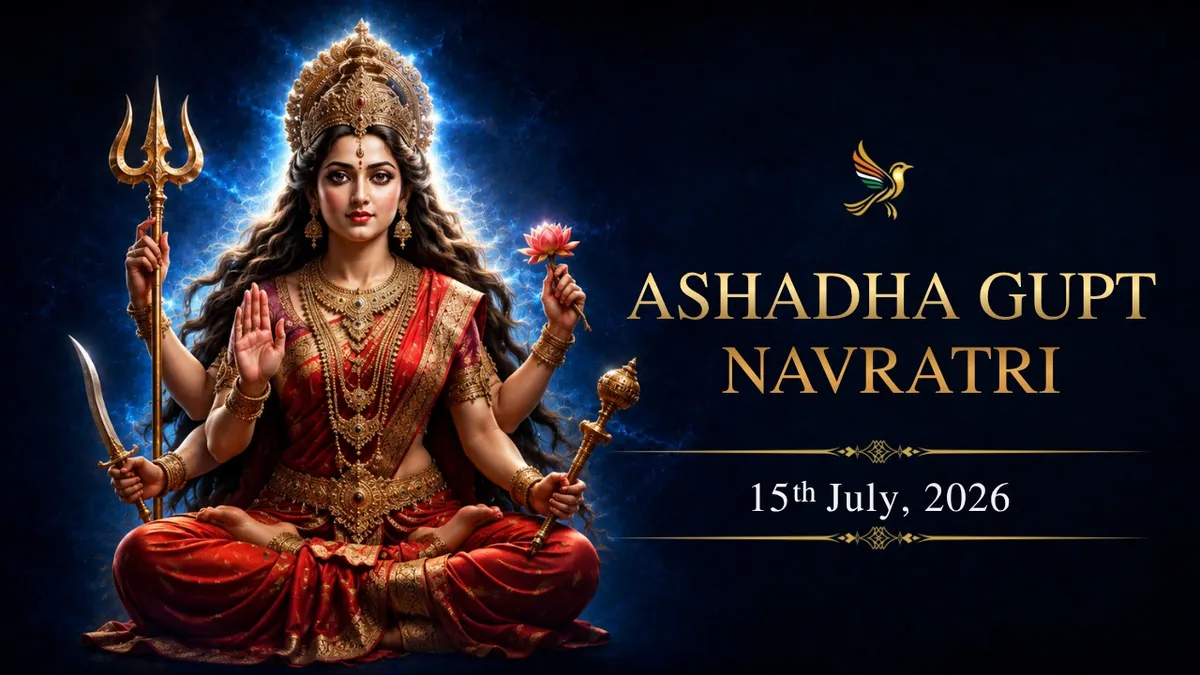
Ashadha Gupt Navratri will begin on Wednesday, 15 July 2026, and conclude on Thursday, 23 July 2026. This sacred nine-day festival is dedicated to the worship of Maa Durga and her divine forms.
Ashadha Gupt Navratri 2026 Dates
| Day | Date | Puja |
| Day 1 | 15 July 2026 (Wednesday) | Ghatasthapana, Maa Shailputri Puja |
| Day 2 | 16 July 2026 (Thursday) | Maa Brahmacharini Puja |
| Day 3 | 17 July 2026 (Friday) | Maa Chandraghanta Puja, Maa Kushmanda Puja |
| Day 4 | 18 July 2026 (Saturday) | Maa Skandamata Puja |
| Day 5 | 19 July 2026 (Sunday) | Maa Katyayani Puja |
| Day 6 | 20 July 2026 (Monday) | Maa Kalaratri Puja |
| Day 7 | 21 July 2026 (Tuesday) | Durga Ashtami, Maa Mahagauri Puja |
| Day 8 | 22 July 2026 (Wednesday) | Maa Siddhidatri Puja |
| Day 9 | 23 July 2026 (Thursday) | Navratri Parana |
What is the Significance of Ashadha Gupt Navratri?
Ashadha Gupt Navratri is one of the four Navratris observed every year in Sanatan Dharma. It is celebrated during the Shukla Paksha of the Ashadha month and is also known as Varahi Navratri, Gayatri Navratri, Shakambari Navratri, and Bhadrakali Navratri in different parts of India.
Unlike Chaitra and Sharad Navratri, in ancient times, Ashadha Gupt Navratri was observed in secrecy by saints, sadhaks, and tantric practitioners, which is why it came to be known as Gupt (hidden) Navratri. These nine days are considered especially powerful for the worship of the Dus Mahavidyas (the ten divine forms of Adi Shakti): Maa Kali, Tara Devi, Tripura Sundari, Bhuvaneshwari, Chhinnamasta, Tripura Bhairavi, Maa Dhumavati, Maa Baglamukhi, Matangi, and Kamala Devi. It is believed that sincere worship and sadhana performed during this sacred period help devotees fulfil their desires.
What is the Story Behind Ashadha Gupt Navratri?
There was a young prince named Sudarshan from the kingdom of Kosala. After a conspiracy against the royal family, Sudarshan and his mother fled to the forest to save themselves.
In the forest, Sudarshan heard a sound and, being a young boy, playfully kept imitating it. The sound that he heard was "Kleem". Without knowing that it was the sacred Beej Mantra of Maa Durga, Sudarshan kept repeating it. As it was the time of Gupt Navratri, Maa Durga was pleased by his innocent devotion and blessed him. In time, Sudarshan returned to his kingdom, regained his throne, and lived a life of honour and prosperity.
What Devotees Do on Ashadha Gupt Navratri?
Devotees wake up early in the morning, take a bath, and wear clean clothes. Many people keep a vrat throughout the nine days and consume only fruits, milk, and simple sattvic food as part of the falahar vrat. Sanatanis also avoid onion, garlic, and other tamasic foods during this sacred period.
Every day, devotees worship Maa Durga and her divine forms. They spend time chanting “Om Aim Hreem Kleem Chamundayai Vichche”, reciting “Durga Saptashati,” or listening to bhajans with devotion.
Some devotees also donate food, clothes, and other essentials. Those who wish to participate in such devotional activities can also explore the sacred Sevas arranged by Sanatan Sansaar for this holy occasion.
Ashadha Gupt Navratri Puja Vidhi at Home
- Wake up early
- Take a bath and wear clean clothes
- Clean the puja area
- Perform Ghatasthapana (Kalash Sthapana) on the first day of Navratri
- Place an idol or image of Maa Durga
- Light a diya and incense and offer kumkum, flowers, fruits, coconut, and prasad
- Chant "Om Aim Hreem Kleem Chamundayai Vichche" or recite “Durga Saptashati”
- Pray to Maa Durga
- End the puja with aarti
FAQs
Why is Ashadha Gupt Navratri also called Varahi Navratri?
Ashadha Gupt Navratri is also known as Varahi Navratri because many devotees worship Maa Varahi (one of the Saptamatrikas) during these nine days.
Who can observe Ashadha Gupt Navratri?
Traditionally, it was observed by saints and sadhaks, but today anyone can observe Ashadha Gupt Navratri with faith and devotion.
What should be avoided during Ashadha Gupt Navratri?
Devotees should avoid:
- Eating tamasic food and alcohol
- Wearing leather items
- Anger, foul language, and negative thinking
- Cutting hair and nails
Can I wear black clothes during Ashadha Gupt Navratri?
As per traditional beliefs, devotees normally do not wear black clothes during Gupt Navratri.