
Loading…
Navratri 2026 Dates & Tithi
|
Day |
Date |
Tithi |
Maa Durga Form |
Colour |
|
Day 1 |
11 October |
Pratipada |
Maa Shailputri |
Orange |
|
Day 2 |
12 October |
Dwitiya |
Maa Brahmacharini |
White |
|
Day 3 |
13 October |
Tritiya |
Maa Chandraghanta |
Red |
|
Day 4 |
14 October |
Chaturthi |
Maa Kushmanda |
Royal Blue |
|
Day 5 |
15 October |
Panchami |
Maa Skandamata |
Yellow |
|
Day 6 |
16 October |
Shashthi |
Maa Katyayani |
Green |
|
Day 7 |
17 October |
Saptami |
Maa Kalaratri |
Grey |
|
Day 8 |
18 October |
Ashtami |
Maa Mahagauri |
Purple |
|
Day 9 |
19 October |
Navami |
Maa Siddhidatri |
Peacock Green |
|
Vijayadashami |
20 October |
Dashami |
Dussehra |
Red, Saffron/Orange, Yellow, and Green |
Point to Consider: Navratri tithis are based on the “lunar calendar” and hence can vary slightly based on location. Check your local “Panchang” for:
-
Ghatasthapana
-
Ashtami
-
Navami
-
Vijayadashami
What is the Significance of Navratri?
These nine days are dedicated to “Maa Durga and her nine forms.” Each form of the goddess represents a different quality:
-
Maa Shailputri: This form of goddess is worshipped on Day 1. Her name means “daughter of the mountain”. She represents strength and a firm foundation (steady base).
-
Maa Brahmacharini: This form of Maa Durga teaches us about devotion and patience. Her form also reminds us to keep moving forward while remaining calm when life gets hard.
-
Maa Chandraghanta: This form is associated with courage, peace and protection. She reminds devotees to face challenges without “fear.”
-
Maa Kushmanda: This form represents divine energy, positivity and the power that gives life and warmth to creation.
-
Maa Skandamata: She is the mother of “Bhagwan Kartikeya.” Devotees see in her a mother's love, care and protection.
-
Maa Katyayani: This form of Maa Durga represents courage and determination. She always teaches her devotees to stand firmly against what is wrong.
-
Maa Kalaratri: This form might look fierce, but she is the destroyer of fear and darkness. Her worship gives “fearlessness.”
-
Maa Mahagauri: This form represents purity, peace and compassion. Devotees believe worshiping her brings a sense of calmness.
-
Maa Siddhidatri: She is the ninth form of “Navadurga.” Spiritual wisdom, fulfilment and divine grace are linked with her.
The nine forms of Maa Durga remind us that “Shakti takes many forms.” Each day, we bow to a different form and remember a different quality.
How Devotees Celebrate Navratri in Different Parts of India?
Gujarat is known for “Garba” and “Dandiya.” People dance late into the night for all nine days. Over in West Bengal, the festival mostly means “Durga puja.” Large, decorated pandals come up in neighbourhoods.
In many parts of North India, devotees observe vrat, visit Maa Durga temples, perform “Kanya Pujan” and take part in “Ram Leela”. Down south, homes are set up in “Golu,” also called “Bommai Kolu.” Dolls are arranged on steps, and relatives and neighbours visit to see them.
Navratri Puja Samagri
The samagri may vary depending on the family tradition and various other factors. Hence, are the common items that are used in Navratri puja in most of the households:
-
Maa Durga idol or picture
-
Kalash
-
Coconut
-
Mango leaves
-
Roli and kumkum
-
Akshat
-
Flowers
-
Diya and ghee or oil
-
Dhoop or incense
-
Fruits
-
Bhog or prasad
-
Red cloth
-
Moli or sacred thread
-
Betel leaves and supari
Navratri Puja Vidhi at Home
-
Wake up, take a bath and wear clean clothes
-
Clean the puja area and keep the “Kalash” and “Maa Durga” idol or picture
-
Light a diya and begin the puja
-
Offer flowers, kumkum, akshat, and fruits to Maa Durga
-
Recite Durga mantras like “Sarva Mangala Mangalye Shive Sarvartha Sadhike Sharanye Tryambake Gauri Narayani Namostute,” or “Durga Saptashati”
-
Perform Maa Durga's aarti and distribute the prasad
Frequently Asked Questions
When does Navratri 2026 start?
Sharad Navratri 2026 begins on 11 October 2026 (Sunday), with Ghatasthapana.
What is Kanya Pujan during Navratri?
Kanya Pujan is a tradition in which young girls are welcomed and worshipped as manifestations of Maa Durga. Families wash their feet, apply tilak, offer flowers and serve them halwa, puri and kala chana. “Dakshina” (small gifts) may also be offered.
What are the nine forms of Maa Durga?
The nine forms are:
Maa Shailputri
Maa Brahmacharini
Maa Chandraghanta
Maa Kushmanda
Maa Skandamata
Maa Katyayani
Maa Kalaratri
Maa Mahagauri
Maa Siddhidatri
Is Kanya Pujan performed on Ashtami or Navami?
Many families perform Kanya Pujan on “Ashtami.” Meanwhile, others perform it on Navami. Perform it based on your family tradition
What can I eat during the Navratri fast?
Here are some of the common vrat foods:
Fruits
Milk
Dairy products
Nuts
Sabudana
Kuttu
Singhara flour
Samak rice
Potatoes
Sendha namak
Festival
Navratri 2026: Sharadiya Navratri Dates & Durga Puja Vidhi
Sanatan Sansaar|7 October 2026|4 min read|
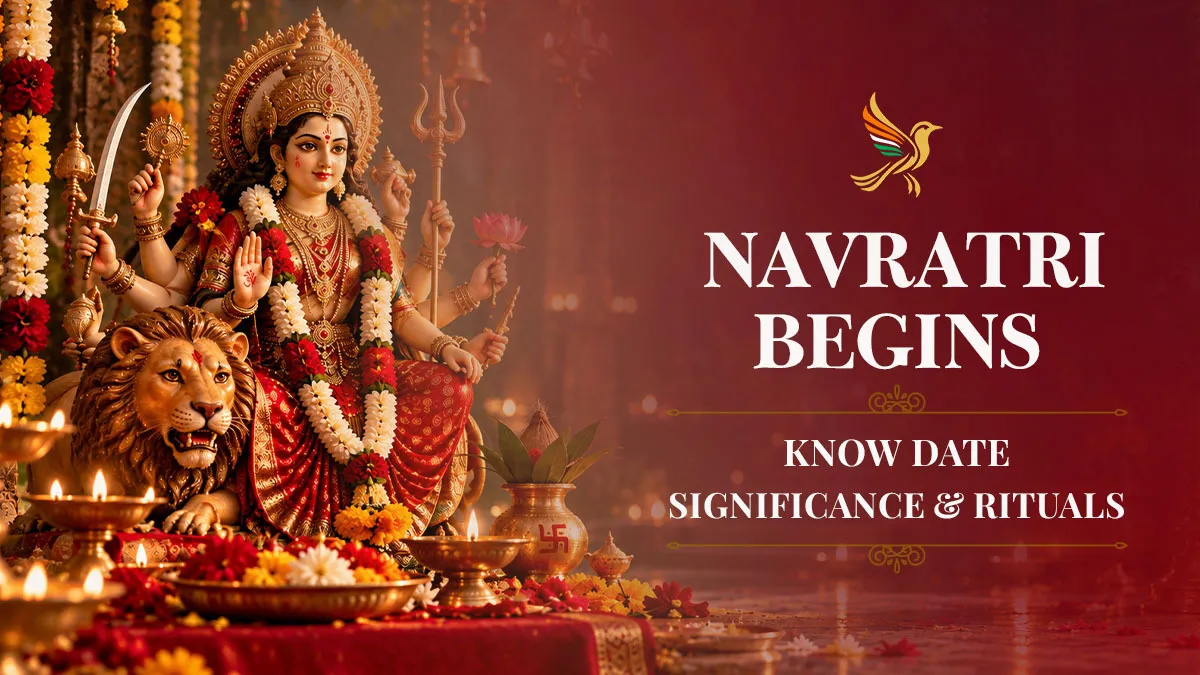
Navratri 2026 will begin on 11 October 2026 (Sunday), with Ghatasthapana and conclude with Vijayadashami on 20 October 2026 (Tuesday). These nine sacred nights are dedicated to the nine forms of “Maa Durga”, known as the “Navadurga.”
Navratri 2026 Dates & Tithi
| Day | Date | Tithi | Maa Durga Form | Colour |
| Day 1 | 11 October | Pratipada | Maa Shailputri | Orange |
| Day 2 | 12 October | Dwitiya | Maa Brahmacharini | White |
| Day 3 | 13 October | Tritiya | Maa Chandraghanta | Red |
| Day 4 | 14 October | Chaturthi | Maa Kushmanda | Royal Blue |
| Day 5 | 15 October | Panchami | Maa Skandamata | Yellow |
| Day 6 | 16 October | Shashthi | Maa Katyayani | Green |
| Day 7 | 17 October | Saptami | Maa Kalaratri | Grey |
| Day 8 | 18 October | Ashtami | Maa Mahagauri | Purple |
| Day 9 | 19 October | Navami | Maa Siddhidatri | Peacock Green |
| Vijayadashami | 20 October | Dashami | Dussehra | Red, Saffron/Orange, Yellow, and Green |
Point to Consider: Navratri tithis are based on the “lunar calendar” and hence can vary slightly based on location. Check your local “Panchang” for:
Ghatasthapana
Ashtami
Navami
Vijayadashami
What is the Significance of Navratri?
These nine days are dedicated to “Maa Durga and her nine forms.” Each form of the goddess represents a different quality:
Maa Shailputri: This form of goddess is worshipped on Day 1. Her name means “daughter of the mountain”. She represents strength and a firm foundation (steady base).
Maa Brahmacharini: This form of Maa Durga teaches us about devotion and patience. Her form also reminds us to keep moving forward while remaining calm when life gets hard.
Maa Chandraghanta: This form is associated with courage, peace and protection. She reminds devotees to face challenges without “fear.”
Maa Kushmanda: This form represents divine energy, positivity and the power that gives life and warmth to creation.
Maa Skandamata: She is the mother of “Bhagwan Kartikeya.” Devotees see in her a mother's love, care and protection.
Maa Katyayani: This form of Maa Durga represents courage and determination. She always teaches her devotees to stand firmly against what is wrong.
Maa Kalaratri: This form might look fierce, but she is the destroyer of fear and darkness. Her worship gives “fearlessness.”
Maa Mahagauri: This form represents purity, peace and compassion. Devotees believe worshiping her brings a sense of calmness.
Maa Siddhidatri: She is the ninth form of “Navadurga.” Spiritual wisdom, fulfilment and divine grace are linked with her.
The nine forms of Maa Durga remind us that “Shakti takes many forms.” Each day, we bow to a different form and remember a different quality.
How Devotees Celebrate Navratri in Different Parts of India?
Gujarat is known for “Garba” and “Dandiya.” People dance late into the night for all nine days. Over in West Bengal, the festival mostly means “Durga puja.” Large, decorated pandals come up in neighbourhoods.
In many parts of North India, devotees observe vrat, visit Maa Durga temples, perform “Kanya Pujan” and take part in “Ram Leela”. Down south, homes are set up in “Golu,” also called “Bommai Kolu.” Dolls are arranged on steps, and relatives and neighbours visit to see them.
Navratri Puja Samagri
The samagri may vary depending on the family tradition and various other factors. Hence, are the common items that are used in Navratri puja in most of the households:
Maa Durga idol or picture
Kalash
Coconut
Mango leaves
Roli and kumkum
Akshat
Flowers
Diya and ghee or oil
Dhoop or incense
Fruits
Bhog or prasad
Red cloth
Moli or sacred thread
Betel leaves and supari
Navratri Puja Vidhi at Home
Wake up, take a bath and wear clean clothes
Clean the puja area and keep the “Kalash” and “Maa Durga” idol or picture
Light a diya and begin the puja
Offer flowers, kumkum, akshat, and fruits to Maa Durga
Recite Durga mantras like “Sarva Mangala Mangalye Shive Sarvartha Sadhike Sharanye Tryambake Gauri Narayani Namostute,” or “Durga Saptashati”
Perform Maa Durga's aarti and distribute the prasad
FAQs
When does Navratri 2026 start?
Sharad Navratri 2026 begins on 11 October 2026 (Sunday), with Ghatasthapana.
What is Kanya Pujan during Navratri?
Kanya Pujan is a tradition in which young girls are welcomed and worshipped as manifestations of Maa Durga. Families wash their feet, apply tilak, offer flowers and serve them halwa, puri and kala chana. “Dakshina” (small gifts) may also be offered.
What are the nine forms of Maa Durga?
The nine forms are:
Maa Shailputri
Maa Brahmacharini
Maa Chandraghanta
Maa Kushmanda
Maa Skandamata
Maa Katyayani
Maa Kalaratri
Maa Mahagauri
Maa Siddhidatri
Is Kanya Pujan performed on Ashtami or Navami?
Many families perform Kanya Pujan on “Ashtami.” Meanwhile, others perform it on Navami. Perform it based on your family tradition
What can I eat during the Navratri fast?
Here are some of the common vrat foods:
Fruits
Milk
Dairy products
Nuts
Sabudana
Kuttu
Singhara flour
Samak rice
Potatoes
Sendha namak