
Sanatan SansaarSanatan SansaarSanatan Sansaar
HomeSanatan BazaarSanatan PujaSanatan Seva
About Us
  1. Home
  2. Sanskar
  3. Raksha Bandhan 2026 Correct Date Shubh Muhurat Bhadra Timings

Raksha Bandhan 2026: Date and Timings

Event

Date & Time

Raksha Bandhan

Friday, August 28, 2026

Purnima Tithi Starts

August 27, 9:08 AM

Purnima Tithi Ends

August 28, 9:48 AM

Rakhi Tying Ceremony Muhurat

5:57 AM to 9:48 AM

Rakhi Tying Ceremony Duration

3 hours and 51 minutes

Bhadra

Ends before sunrise on August 28

Note: The timings above are for New Delhi. A local panchang should be checked for the exact muhurat in other cities because the beginning of the muhurat depends on the local sunrise.

Bhadra Kaal on Raksha Bandhan 2026

Bhadra is an inauspicious time period in Hindu astrology and is associated with Vishti Karana in the Hindu Panchang. Sanatanis generally avoid performing auspicious activities, such as starting new projects or performing sacred rituals like tying a rakhi, during this period because it is believed that activities started or performed during this period bring bad luck or face obstacles.

In 2026, Bhadra falls before the festival morning and ends before sunrise on August 28. Therefore, the rakhi tying muhurat on 28th August is free from Bhadra Kaal and you and your family can begin the rakhi tying ceremony without any worries.

What If You Miss the Morning Muhurat?

If family members are travelling, working, or unable to gather early in the morning, the ceremony can be performed at another suitable time according to the local panchang. Traditionally, Aparahna (the afternoon period) is considered an important time for Raksha Bandhan rituals.

If you miss the morning muhurat, the Aparahna period is approximately 1:05 PM to 2:18 PM in Delhi. It is also advisable to avoid Rahu Kaal when choosing another time. In Delhi, Rahu Kaal on August 28, 2026, is from 10:45 AM to 12:22 PM. Both of these timings can vary based on your location, so before planning the ceremony, check the Aparahna and Rahu Kaal timings. 

What Is the Significance of Raksha Bandhan?

Raksha Bandhan is about love between siblings. It's about care and looking out for one another. The word “Raksha” means protection, while the word “Bandhan” means bond. The rakhi therefore represents the love that binds siblings and the promise to stand by each other, no matter what happens.

On Raksha Bandhan, a sister ties a rakhi on her brother's wrist and prays for his long life. The brother, in return, gives her a gift and promises to protect her no matter what. Also, this sacred ritual isn't only limited to blood siblings, but also to cousins, close friends, or anyone with whom you share that kind of bond. 

There's also a well-known story about how far this bond can stretch beyond family. Rani Karnavati of Mewar sent a rakhi to Mughal Emperor Humayun in 1535 when Chittorgarh was under attack from Bahadur Shah of Gujarat, and asked for help. The story says that Humayun accepted the rakhi and came to her aid. However, most modern historians consider it a popular folk legend or fable rather than established fact.

What Is the Story Behind Raksha Bandhan?

The most popular story links Raksha Bandhan to Bhagwan Krishna and Draupadi. As per the story, Draupadi once tied a piece of cloth around Bhagwan Krishna's injured finger. Touched by her care, Bhagwan Krishna promised to protect her whenever she needed him. This story is often connected with the episode in the Mahabharata when Draupadi was humiliated in the Kuru court. When Dushasana attempted to disrobe her, Draupadi prayed to Krishna. According to the Mahabharata tradition, her garment became endless, protecting her honour.

The second story links Raksha Bandhan to Maa Lakshmi and King Bali. As per the story, Bhagwan Vishnu promised to King Bali that he would protect him and stayed in his kingdom to fulfil this promise. Maa Lakshmi wanted Bhagwan Vishnu to return to Vaikuntha, so she tied a sacred thread around King Bali's wrist, and accepted him as her brother. In return, Bali granted her wish to have Bhagwan Vishnu return to Vaikuntha. 

The third story links Raksha Bandhan to Sachi (the wife of Bhagwan Indra/Indrani) and Bhagwan Indra. Once, Devas were preparing for a battle with the Asuras, Sachi tied a sacred protective thread, believed to have been given by Bhagwan Krishna, around Indra's wrist. It is believed that thread kept Indra safe and helped him win the battle. All these stories together reflect the central spirit of Raksha Bandhan: love, protection, blessings, and the promise to stand by one another.

Raksha Bandhan Puja Vidhi

  • Begin the day early with a bath and by wearing clean clothes.

  • Keep rakhi, roli or kumkum, akshat, a diya, sweets, and a few flowers in the puja thali.

  • Ask the brother to sit facing east or north as per your family traditions.

  • Apply kumkum or roli to your brother's forehead and place akshat over it. 

  • Tie the rakhi on your brother's right wrist and pray for his happiness, health, and well-being. 

  • Light the diya, perform aarti, and offer sweets to your brother.

After this, the brother generally gives a gift to his sister. Remember, a gift can be anything. A warm hug or even a few heartfelt words can make the occasion special. Its value should not be judged by its price.

Frequently Asked Questions

Is Raksha Bandhan on August 27 or August 28?

Raksha Bandhan will be celebrated on August 28, 2026. Purnima Tithi begins at 9:08 AM on August 27, after sunrise, so the festival is not observed on that day. On August 28, Purnima is present at sunrise and continues until 9:48 AM. Hence, Friday, August 28 is the festival date.

Does the Raksha Bandhan muhurat remain the same across India?

The date remains August 28 across India, but the muhurat may differ slightly from one city to another. Local sunrise is one of the factors used to calculate Panchang timings, and sunrise varies from place to place.

What is usually kept in a Raksha Bandhan puja thali?

The puja thali usually has a rakhi, roli or kumkum, akshat, diya, sweets, and flowers. The items may differ from one household to another, as many families follow their own customs.

Is Bhadra on Raksha Bandhan 2026?

Bhadra ends before sunrise on August 28, 2026. It therefore does not overlap with the morning Raksha Bandhan muhurat, so families do not have to wait for Bhadra to end before starting the rakhi ceremony.

Raksha Bandhan 2026: Correct Date, Shubh Muhurat & Bhadra Timings
Festival

Raksha Bandhan 2026: Correct Date, Shubh Muhurat & Bhadra Timings

Raksha Bandhan 2026 will be celebrated on Friday, August 28, 2026. The festival falls on Shravana Purnima, the full moon day of the Hindu month of Shravan. This is the day when brothers and sisters come together to celebrate their bond with love, prayers, rakhi, sweets, and heartfelt blessings.

Sanatan Sansaar|20 August 2026|6 min read|
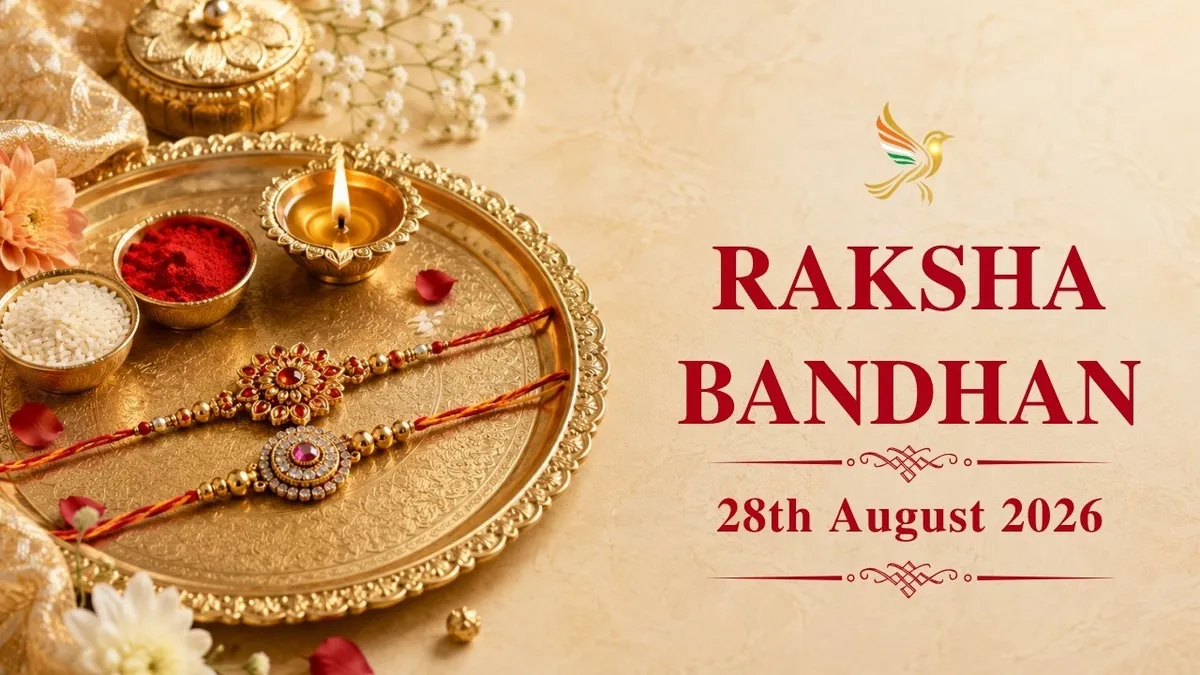
Raksha Bandhan 2026: Date and Timings

Event Date & Time
Raksha Bandhan Friday, August 28, 2026
Purnima Tithi Starts August 27, 9:08 AM
Purnima Tithi Ends August 28, 9:48 AM
Rakhi Tying Ceremony Muhurat 5:57 AM to 9:48 AM
Rakhi Tying Ceremony Duration 3 hours and 51 minutes
Bhadra Ends before sunrise on August 28

Note: The timings above are for New Delhi. A local panchang should be checked for the exact muhurat in other cities because the beginning of the muhurat depends on the local sunrise.

Bhadra Kaal on Raksha Bandhan 2026

Bhadra is an inauspicious time period in Hindu astrology and is associated with Vishti Karana in the Hindu Panchang. Sanatanis generally avoid performing auspicious activities, such as starting new projects or performing sacred rituals like tying a rakhi, during this period because it is believed that activities started or performed during this period bring bad luck or face obstacles.

In 2026, Bhadra falls before the festival morning and ends before sunrise on August 28. Therefore, the rakhi tying muhurat on 28th August is free from Bhadra Kaal and you and your family can begin the rakhi tying ceremony without any worries.

What If You Miss the Morning Muhurat?

If family members are travelling, working, or unable to gather early in the morning, the ceremony can be performed at another suitable time according to the local panchang. Traditionally, Aparahna (the afternoon period) is considered an important time for Raksha Bandhan rituals.

If you miss the morning muhurat, the Aparahna period is approximately 1:05 PM to 2:18 PM in Delhi. It is also advisable to avoid Rahu Kaal when choosing another time. In Delhi, Rahu Kaal on August 28, 2026, is from 10:45 AM to 12:22 PM. Both of these timings can vary based on your location, so before planning the ceremony, check the Aparahna and Rahu Kaal timings. 

What Is the Significance of Raksha Bandhan?

Raksha Bandhan is about love between siblings. It's about care and looking out for one another. The word “Raksha” means protection, while the word “Bandhan” means bond. The rakhi therefore represents the love that binds siblings and the promise to stand by each other, no matter what happens.

On Raksha Bandhan, a sister ties a rakhi on her brother's wrist and prays for his long life. The brother, in return, gives her a gift and promises to protect her no matter what. Also, this sacred ritual isn't only limited to blood siblings, but also to cousins, close friends, or anyone with whom you share that kind of bond. 

There's also a well-known story about how far this bond can stretch beyond family. Rani Karnavati of Mewar sent a rakhi to Mughal Emperor Humayun in 1535 when Chittorgarh was under attack from Bahadur Shah of Gujarat, and asked for help. The story says that Humayun accepted the rakhi and came to her aid. However, most modern historians consider it a popular folk legend or fable rather than established fact.

What Is the Story Behind Raksha Bandhan?

The most popular story links Raksha Bandhan to Bhagwan Krishna and Draupadi. As per the story, Draupadi once tied a piece of cloth around Bhagwan Krishna's injured finger. Touched by her care, Bhagwan Krishna promised to protect her whenever she needed him. This story is often connected with the episode in the Mahabharata when Draupadi was humiliated in the Kuru court. When Dushasana attempted to disrobe her, Draupadi prayed to Krishna. According to the Mahabharata tradition, her garment became endless, protecting her honour.

The second story links Raksha Bandhan to Maa Lakshmi and King Bali. As per the story, Bhagwan Vishnu promised to King Bali that he would protect him and stayed in his kingdom to fulfil this promise. Maa Lakshmi wanted Bhagwan Vishnu to return to Vaikuntha, so she tied a sacred thread around King Bali's wrist, and accepted him as her brother. In return, Bali granted her wish to have Bhagwan Vishnu return to Vaikuntha. 

The third story links Raksha Bandhan to Sachi (the wife of Bhagwan Indra/Indrani) and Bhagwan Indra. Once, Devas were preparing for a battle with the Asuras, Sachi tied a sacred protective thread, believed to have been given by Bhagwan Krishna, around Indra's wrist. It is believed that thread kept Indra safe and helped him win the battle. All these stories together reflect the central spirit of Raksha Bandhan: love, protection, blessings, and the promise to stand by one another.

Raksha Bandhan Puja Vidhi

  • Begin the day early with a bath and by wearing clean clothes.

  • Keep rakhi, roli or kumkum, akshat, a diya, sweets, and a few flowers in the puja thali.

  • Ask the brother to sit facing east or north as per your family traditions.

  • Apply kumkum or roli to your brother's forehead and place akshat over it. 

  • Tie the rakhi on your brother's right wrist and pray for his happiness, health, and well-being. 

  • Light the diya, perform aarti, and offer sweets to your brother.

After this, the brother generally gives a gift to his sister. Remember, a gift can be anything. A warm hug or even a few heartfelt words can make the occasion special. Its value should not be judged by its price.

FAQs

Is Raksha Bandhan on August 27 or August 28?

Raksha Bandhan will be celebrated on August 28, 2026. Purnima Tithi begins at 9:08 AM on August 27, after sunrise, so the festival is not observed on that day. On August 28, Purnima is present at sunrise and continues until 9:48 AM. Hence, Friday, August 28 is the festival date.

Does the Raksha Bandhan muhurat remain the same across India?

The date remains August 28 across India, but the muhurat may differ slightly from one city to another. Local sunrise is one of the factors used to calculate Panchang timings, and sunrise varies from place to place.

What is usually kept in a Raksha Bandhan puja thali?

The puja thali usually has a rakhi, roli or kumkum, akshat, diya, sweets, and flowers. The items may differ from one household to another, as many families follow their own customs.

Is Bhadra on Raksha Bandhan 2026?

Bhadra ends before sunrise on August 28, 2026. It therefore does not overlap with the morning Raksha Bandhan muhurat, so families do not have to wait for Bhadra to end before starting the rakhi ceremony.

Sanatan Sansaar

Reviving Dharma through Seva, Knowledge & Tradition.

Authentic Wisdom
Community Driven
Rooted in Tradition
Trusted & Secure
Our Services
  • Sanatan Bazaar
  • Sanatan Puja
  • Sanatan Seva
  • Divya Jyotish
  • Vedic Vaastu
  • Temples
  • Events
Quick Links
  • Home
  • About Us
  • Contact Us
Legal
  • Disclaimer
  • Terms and Conditions
  • Privacy Policy
  • Refund, Return & Cancellation Policy
  • Shipping Policy
Connect With Us

Building No. 2, Janak Cinema Complex, Janakpuri

New Delhi, India 110058

Mon–Sat: 9:00 AM – 6:00 PM

Get the App

Scan the code or grab it from your store — your spiritual companion, anywhere.

Download on the
App Store
GET IT ON
Google Play
App QR Code
Scan to Download
© 2026 Synonyms Online Pvt. Ltd. All Rights Reserved.ॐMade withfor Dharma & Devotees