

Loading…
1 / 7
Shiv Rudrabhishek Puja
Save with a Package
Shiv Rudrabhishek Puja
Vedic RitualVerified PanditsSankalp Included
Select Variant
Save with a Package
Exclusive Offers
About This Puja
Description
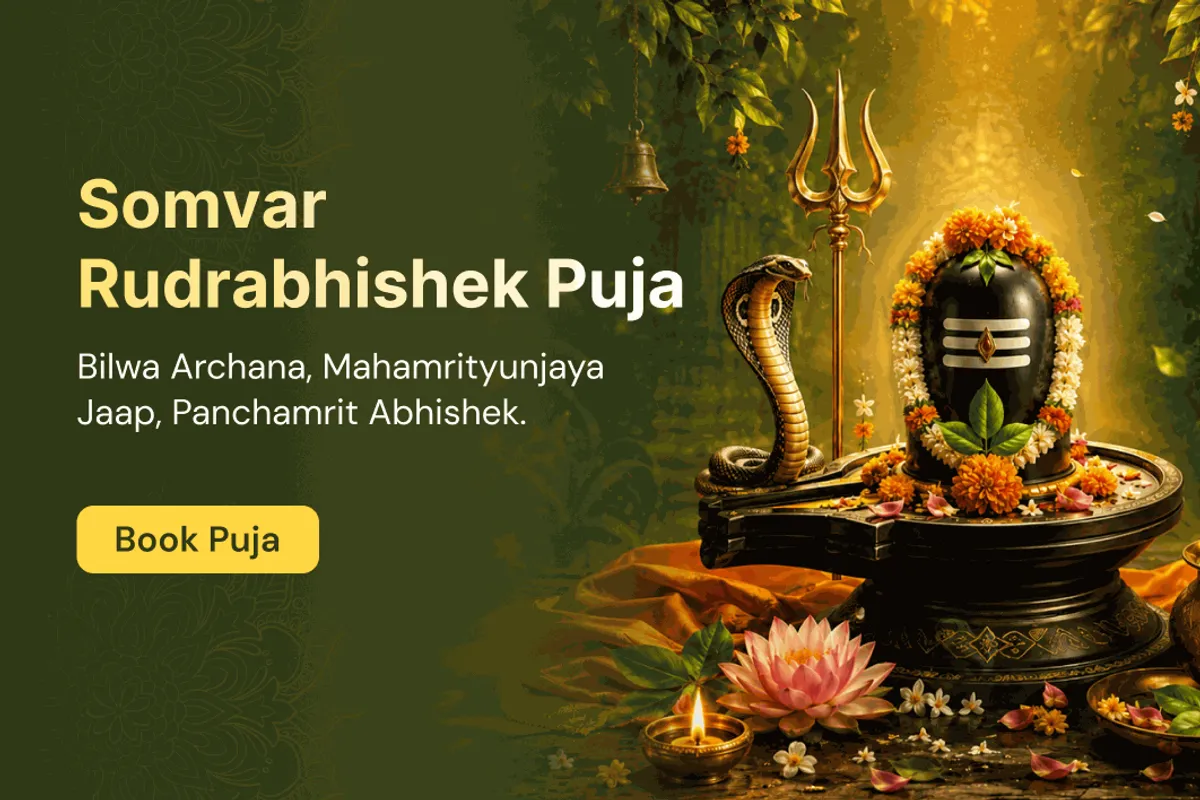
On the sacred day of Lord Shiva, let the most powerful Vedic abhishek wash away what has been holding you back and awaken the life you were always meant to live. The Rudrabhishek puja is performed every Monday at Shri Dhaneshwar Mahadev Temple located in the Gau Ghat area of Ujjain under the guidance of Pujya Acharya Pt. Vasudev ji Shastri. The puja is not performed as a common group ritual. Instead, it is performed especially in your name and for your personal prayer and intention. The puja begins with a Sankalp, where your full name, gotra (ancestral lineage), and personal prayer is offered before Bhagwan Shiv. This sacred step creates a personal spiritual connection between you and the puja being performed. After the Sankalp is completed, Bhagwan Ganesh is worshipped first so that all obstacles are removed before the puja begins. Then the sacred Rudrabhishek puja starts, where the Shivling is bathed with Gangajal, milk, Panchamrit, honey, and ghee while the sound of “Mahamrityunjaya mantra”, “Yajurveda Rudri mantra”, and “Om Namah Shivaya” echoes throughout the temple. As the puja continues, Bilva Patra, dhatura, bhaang, sandalwood, white flowers, incense sticks, diyas, and other sacred offerings are presented to Bhagwan Shiv with devotion. The puja finally concludes with Aarti, where your name and prayers are once again offered before Bhagwan Shiv.
Rudrabhishek Puja Key Highlights
- Performed every Monday at Shri Dhaneshwar Mahadev Temple in Ujjain
- Carried out under the guidance of Pujya Acharya Pt. Vasudev ji Shastri
- Personal Sankalp taken with your full name and gotra
- Mahamrityunjaya and Yajurveda Rudri mantras are recited multiple times
- Complete puja video shared directly on your WhatsApp
Why Perform Rudrabhishek Puja?
At a certain point in life, you might have experienced a situation where despite doing everything right, working harder than everyone around you, staying sincere, and continuing to try despite repeated failures, things still do not move in your favour. The success you hoped for feels distant. Peace slowly disappears, and life starts feeling heavier from within. If this feels familiar and resonates with you, know this: “You are not alone, and neither have you been forgotten or abandoned by Bhagwan Mahadev!” Sometimes, the struggle is not only external. In Sanatan Dharma, it is believed that certain difficulties can arise from karmic burdens, negative energies, inner imbalance, or planetary doshas like Pitra Dosh, Rahu Dosh, or Ketu Dosh that cannot always be resolved through effort alone. This is where the sacred Rudrabhishek puja comes into play. In Sanskrit, the word “Rudra” comes from two roots: “Rut,” which means sorrow or suffering, and “Dra,” meaning to remove or drive away. Because of this, Rudrabhishek is believed to be a sacred ritual dedicated to Bhagwan Shiv that removes pain, negativity, and the emotional heaviness a person may be carrying within. According to Hindu tradition, Bhagwan Shiv drank the deadly Halahal (poison) to protect the entire universe and held it in his throat. Because of this, devotees lovingly offer cooling items like Gangajal, milk, Panchamrit, honey, and ghee during Rudrabhishek puja as an act of devotion. Devotees believe that by making these offerings, Mahadev will bless them with peace, protection, emotional strength, and relief from suffering, as he is also known as Ashutosh, meaning “the one who is easily pleased.” Also, as mentioned in the Shiv Purana: “Abhishekam tu ye kurvanti Rudrasya sakala janah, te sarva paapa nirmuktaah prapnuvanti param padam.” Meaning: “Those who perform Abhishekam (ritual bathing) of Lord Rudra (Shiv ji) are freed from all sorrows and obstacles, and attain the highest state”. These are not just words, but a spiritual belief that has been felt, experienced, and trusted by millions of devotees across thousands of years. And now, it's your turn!
Benefits of Performing Rudrabhishek Puja
- Life regains direction and forward momentum
- Health issues that have persisted begin to find relief
- Karmic debts and doshas accumulated over time begin to be resolved
- Relationships that have been strained or broken begin to heal and soften
- Those seeking children receive Lord Shiv's blessings for progeny and family
- Fear, anxiety, and mental restlessness are replaced by a deep, settled inner calm
- Important decisions become easier to take with a calmer and clearer state of mind
- Negative energies, harmful influences, and evil eyes are neutralised and dissolved
- Long-standing obstacles in career, business, and life begin to dissolve without force
- Financial blockages clear, and new opportunities for wealth emerge from unexpected directions
About Temple
Shri Dhaneshwar Mahadev Temple is located in the Gau Ghat area of Ujjain (one of the seven Moksha-giving cities of India, as per Hinduism), within the sacred grounds of Kubera Dham Ashram. The temple is devoted to Lord Shiv, and is well-known among Indians for its peaceful ambiance and Vedic ceremonies that are carried by knowledgeable and experienced pandits.
Rooted in Sacred India
Every puja is performed in India by verified pandits at sacred temples, following authentic Vedic vidhi. In this way, we are able to play our part in supporting our local priests and the Indian spiritual tradition.
Related Pujas
FAQs
Why should I book Rudrabhishek puja through Sanatan Sansaar?
Not every devotee can travel to Ujjain or personally arrange an authentic Rudrabhishek puja at Shri Dhaneshwar Mahadev Temple. Through Sanatan Sansaar, the puja is performed on your behalf under the guidance of Pujya Acharya Pt. Vasudev ji Shastri. The puja is conducted with a Sankalp, where your full name, gotra, and personal prayers are offered before Bhagwan Shiv. This allows you to stay spiritually connected to the ritual even from your home.
Do I need to buy puja offerings separately and send them to Sanatan Sansaar?
No. There is no need for you to arrange or send any puja samagri. All the required offerings, such as Gangajal, milk, Panchamrit, Bilva Patra, flowers, incense sticks, diyas, etc., are arranged by our team.
Can someone living outside India book this Rudrabhishek puja?
Yes. You can book the Rudrabhishek puja from anywhere in the world.
Is it necessary to fast before Rudrabhishek puja?
While fasting is not mandatory, many devotees choose to observe a fast on Monday out of devotion towards Bhagwan Shiv.
How is online Rudrabhishek puja different from watching a temple video online?
The Rudrabhishek puja conducted through Sanatan Sansaar is not a general temple recording or livestream. The puja is personally performed in your name with your Sankalp, gotra, and prayer before Bhagwan Shiv. And this is what makes it entirely different.
Customer Reviews
Loading reviews...