
Loading…
Festival
Onam 2026: Date, Significance & Rituals
Sanatan Sansaar|19 August 2026|5 min read|
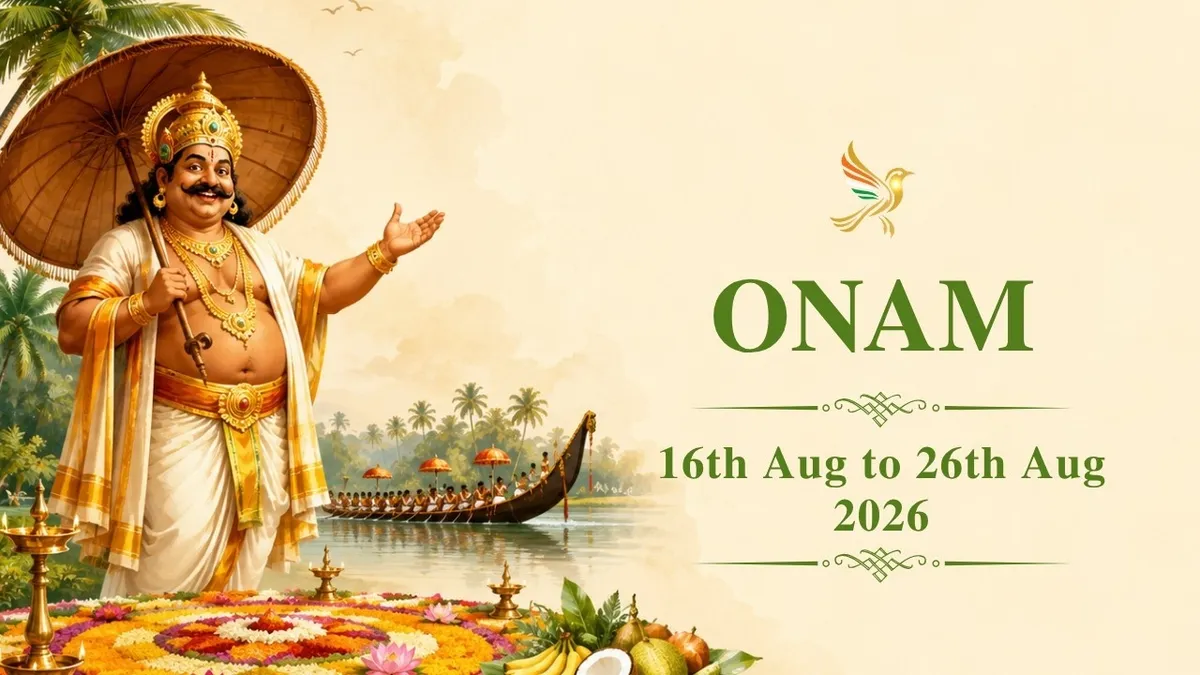
Onam will be celebrated in Kerala from Sunday, August 16, to Wednesday, August 26, 2026. This 10-day festival begins with Atham and culminates in Thiruvonam, the main day of Onam. This festival marks the yearly homecoming of King Mahabali, while also celebrating the harvest season and the joy and prosperity it brings. This year, the Thiruvonam Nakshatra begins at 10:51 PM on August 25 and runs until 12:48 AM on August 27.
Onam Calendar 2026
Each of the ten days leading up to Thiruvonam has its own name, and in many homes, its own small rituals too.
| Date | Festival Day |
| August 16, 2026 | Atham |
| August 17, 2026 | Chithira |
| August 18, 2026 | Chothi |
| August 19, 2026 | Vishakham |
| August 20, 2026 | Anizham |
| August 21, 2026 | Thrikketta |
| August 22, 2026 | Moolam |
| August 23, 2026 | Pooradam |
| August 24, 2026 | Uthradam |
| August 26, 2026 | Thiruvonam |
Onam 2026 Significance
Onam is built around a few core ideas in Kerala: prosperity, gratitude, and people coming together. King Mahabali's reign sits at the centre of this. He's remembered as a fair, generous ruler, and his reign is traditionally remembered as a time of peace and abundance for everyone he ruled. Every year, Onam marks his return, turning the occasion into a joyful reunion between the king and his people.
There's a second layer to Onam that has nothing to do with Mahabali directly: the harvest. Kerala's families use this time to give thanks for what the season has produced. A good harvest and a good year ahead, that's the basic hope behind it.
Onam has also taken on a role beyond religion or season. It works today as a symbol of Kerala itself, of being Malayali. Communities that don't always celebrate the same festivals come together for this one. And for Malayalis outside Kerala, that matters even more. Onam becomes one of the few times a year they feel properly connected to home.
Onam Rituals and Traditions
Pookalam: It is the floral design families create at their doorstep during Onam, using fresh flowers arranged in circular, traditional patterns. As the ten days go on, it tends to grow bigger and more detailed. There's a reason behind it too. It's meant as a welcome for King Mahabali when he returns.
Onam Sadhya: Ask anyone in Kerala and Sadhya is probably the first thing they mention. It's a big vegetarian feast, served on a banana leaf, with rice, vegetables, curries, pickles, papad, and coconut-based dishes all laid out together. Payasam usually rounds off the meal. In many homes, the Sadhya is a family effort, everyone pitching in, which is part of what makes it feel so tied to togetherness.
Onakkodi: New clothes are part of Onam too, known as Onakkodi. People wear them for temple visits, family gatherings, and the main days of celebration.
Vallamkali: The snake boat races, or Vallamkali, are probably Kerala's most recognised Onam tradition outside the state. Long boats packed with rowers move through the backwaters in perfect rhythm, cheered on with traditional songs.
Pulikali: It is a folk performance associated with Thrissur, where performers paint their bodies to look like tigers and take part in dance and street processions.
Traditional Dance and Music: Folk dances, Kathakali, and other cultural performances are also an important part of the Onam festival. These events help keep Kerala's artistic traditions alive as they bring people together during the festive season.
Where Is Onam Celebrated in Kerala?
The festival of Onam is celebrated all across the state of Kerala; however, there are certain places known for their unique traditions related to the celebration of Onam.
Thripunithura: Known for the colourful Athachamayam procession, which traditionally marks the beginning of the Onam season.
Alappuzha: Famous for its backwaters and traditional snake boat races held during the Onam season.
Thrissur: Known for the lively Pulikali celebrations.
Aranmula: Famous for its traditional boat race and cultural celebrations.
Thiruvananthapuram and Kochi: Both cities host cultural programmes, public celebrations, exhibitions, and festive events during Onam.
FAQs
What does a traditional Sadhya include?
A traditional Sadhya can incorporate several vegetarian dishes. All of which are served together on a banana leaf. Some popular preparations include: Rice, Sambar, Avial, Thoran, Olan, Kalan, Pachadi, Pickles, Papad, Banana, and Payasam.
Is Onam only celebrated in Kerala?
Onam is most strongly associated with Kerala, but Malayali communities across India and other parts of the world also celebrate it.
What should I wear on Onam?
Traditional clothes such as Kasavu sarees, mundu, and other Kerala-style outfits are usually worn during Onam. Many families also wear new clothes as part of the Onakkodi tradition.
What is the traditional greeting for Onam?
A common Malayalam greeting is “Onashamsakal,” which means “Onam wishes.”
Is there any fasting during Onam?
Onam is not generally known as a fasting festival
What is the story of King Mahabali and Onam?
King Bali was a virtuous and powerful ruler. He gained control over the three worlds (Triloka) consisting of Bhurloka (Earth), Bhuvarloka (Space) and Svarloka (Heaven). To restore balance, Bhagwan Vishnu took the Vamana Avatar and asked Bali for three steps of land. Bali agreed without hesitation. Bhagwan Vamana then covered the earth and the heavens in two steps. As there was no place left for the third step, Bali offered his own head. Vamana placed his foot on Mahabali's head and sent him to Patala, the netherworld. Pleased with Mahabali's devotion and humility, Bhagwan Vishnu then granted him a boon: he could return once every year to visit his people. Onam is traditionally celebrated as the time of Mahabali's annual visit.