

Loading…
Ayurveda
Tulsi in Ayurveda: Importance and Traditional Uses
Sanatan Sansaar|27 March 2026|1 min read|
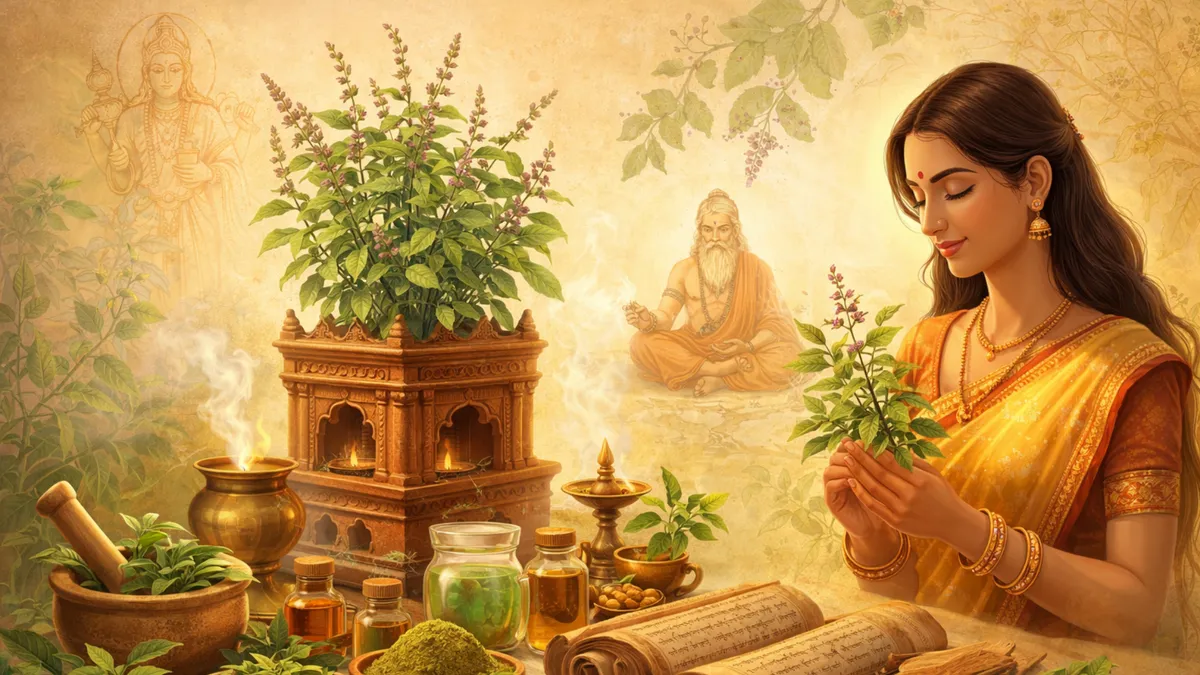
Tulsi holds a deeply respected place in Ayurveda, where it is valued not only as a sacred plant but also as a traditional support for daily well-being. Known for its pure, uplifting presence, Tulsi has been used in Indian households for generations as part of a balanced lifestyle. Its importance goes beyond ritual and tradition, as Ayurveda sees Tulsi as a plant that supports clarity, resilience, and harmony in everyday life.
The Ayurvedic Significance of Tulsi
In Ayurveda, Tulsi is appreciated for its warm, active, and balancing nature. It is often regarded as a plant that helps the body respond better to changing conditions while also supporting inner steadiness. Traditional Ayurvedic thought places great importance on natural herbs that serve more than one purpose, and Tulsi is one of the finest examples of this wisdom. It is not seen as a plant used only in one specific way. Instead, Tulsi is woven into daily life through simple and meaningful practices. Whether taken as part of a morning routine or used during seasonal changes, it is traditionally valued as a gentle yet powerful herb.
Why Tulsi Is So Highly Valued
What makes Tulsi special in Ayurveda is the balance it brings. Many herbs are known for one particular use, but Tulsi is traditionally appreciated for the way it supports the body and mind together. It is often linked with lightness, freshness, and vitality. Its presence in the home has also long been associated with purity and positive energy. This reflects a broader Ayurvedic understanding that wellness is not limited to the body alone. It is connected with the environment, daily habits, emotional balance, and spiritual awareness.
Tulsi as a Part of Daily Living
Ayurveda often encourages simple practices that can be followed consistently, and Tulsi fits beautifully into this approach. It does not need to feel complicated or distant from daily life. In many homes, Tulsi has traditionally been included in teas, herbal preparations, and routine care during changes in weather. Its role in daily living also reflects the Ayurvedic principle that prevention and balance matter as much as care after discomfort appears. Tulsi is therefore often seen as a supportive herb for maintaining steadiness rather than waiting for imbalance to grow.
Traditional Uses of Tulsi in Ayurveda
Tulsi has been traditionally used in Ayurveda in a variety of simple and practical ways. Its uses are rooted in everyday wellness rather than excess. Some of the most well-known traditional uses include support for respiratory comfort, seasonal balance, digestive ease, and daily vitality. It is often used when the weather shifts, when the body feels heavy, or when the mind feels dull and tired. Ayurveda values herbs that can be gently integrated into routine life, and Tulsi is one of the herbs most commonly associated with this kind of supportive role.
Tulsi and Respiratory Comfort
One of the traditional reasons Tulsi is so widely used is its connection with respiratory well-being. In Ayurveda, it is often included in household remedies and herbal preparations meant to support ease during cold weather and seasonal discomfort. Its warming and clarifying nature makes it especially valued in practices that aim to reduce heaviness and support comfortable breathing. This is one of the reasons Tulsi tea and Tulsi-based preparations remain so familiar in traditional wellness routines.
Tulsi and Digestive Balance
Ayurveda places great importance on digestion, because digestion is seen as one of the foundations of health. Tulsi is traditionally appreciated as a herb that supports lightness and helps maintain a more balanced internal state. When daily food habits become irregular or the system feels sluggish, simple herbs are often valued for bringing back a sense of freshness. Tulsi is respected in this traditional context as a plant that supports more ease and balance in routine life.
Tulsi and Mental Clarity
Ayurveda does not separate the mind from the body. It recognizes that a person’s inner state affects overall well-being. Tulsi is traditionally linked with alertness, clarity, and a lighter mental state. Its uplifting quality is one reason it is often associated with freshness not only in the body, but also in the mind. This is especially meaningful in modern life, where people often feel mentally crowded, overstimulated, or emotionally tired. Tulsi represents the Ayurvedic preference for natural support that feels gentle, grounding, and sustainable.
Tulsi and Seasonal Wellness
Seasonal change can affect the body in many ways, and Ayurveda always pays close attention to this. Tulsi has long been valued as a traditional herb used during these transitions. Whether in warm water, herbal infusions, or home-based preparations, it is often included as part of everyday seasonal care. Its role here reflects a broader Ayurvedic truth: small and regular practices often have more lasting value than occasional extreme efforts. Tulsi fits naturally into this philosophy of steady care.
The Sacred and Cultural Value of Tulsi
While Ayurveda values Tulsi for its traditional uses, its importance in Indian life is even wider. Tulsi is also loved for its sacred presence in many homes. This gives it a unique place among herbs. It is not only respected as a plant of daily wellness, but also honored as part of devotional and household tradition. This combination of practical usefulness and spiritual value is one of the reasons Tulsi remains so deeply cherished. It connects well-being with reverence, daily discipline, and a feeling of purity in the home environment.
Tulsi in the Modern World
Even today, Tulsi remains highly relevant. Modern routines often bring stress, irregular eating, poor rest, and constant mental noise. In such a lifestyle, the quiet wisdom of Ayurveda becomes especially meaningful. Tulsi reminds us that wellness can begin with very simple, natural, and consistent habits. Its continued popularity is not only because of tradition, but because it still fits naturally into daily life. It offers a gentle return to balance in a world that often feels rushed and overstimulated.
A Plant That Represents Everyday Ayurvedic Wisdom
Tulsi is one of those rare herbs that reflects the heart of Ayurveda itself. It is simple, natural, respected, and deeply woven into daily life. It teaches that health is not built only through complicated systems, but also through regular care, thoughtful habits, and a closer relationship with nature. That is why Tulsi remains more than just a plant in Ayurvedic understanding. It becomes a symbol of mindful living, traditional wisdom, and the quiet strength of natural support.
Conclusion
Tulsi in Ayurveda is valued for its importance in supporting balance, vitality, freshness, and daily well-being. It has been traditionally used in simple yet meaningful ways that reflect the deeper Ayurvedic principles of rhythm, moderation, and natural care. Its significance lies not only in its traditional uses, but also in the way it connects health, household culture, and mindful living. In today’s fast-moving world, Tulsi continues to stand as a timeless reminder that some of the most powerful forms of support are often the simplest and most natural.